
Blue whale watching in Loreto
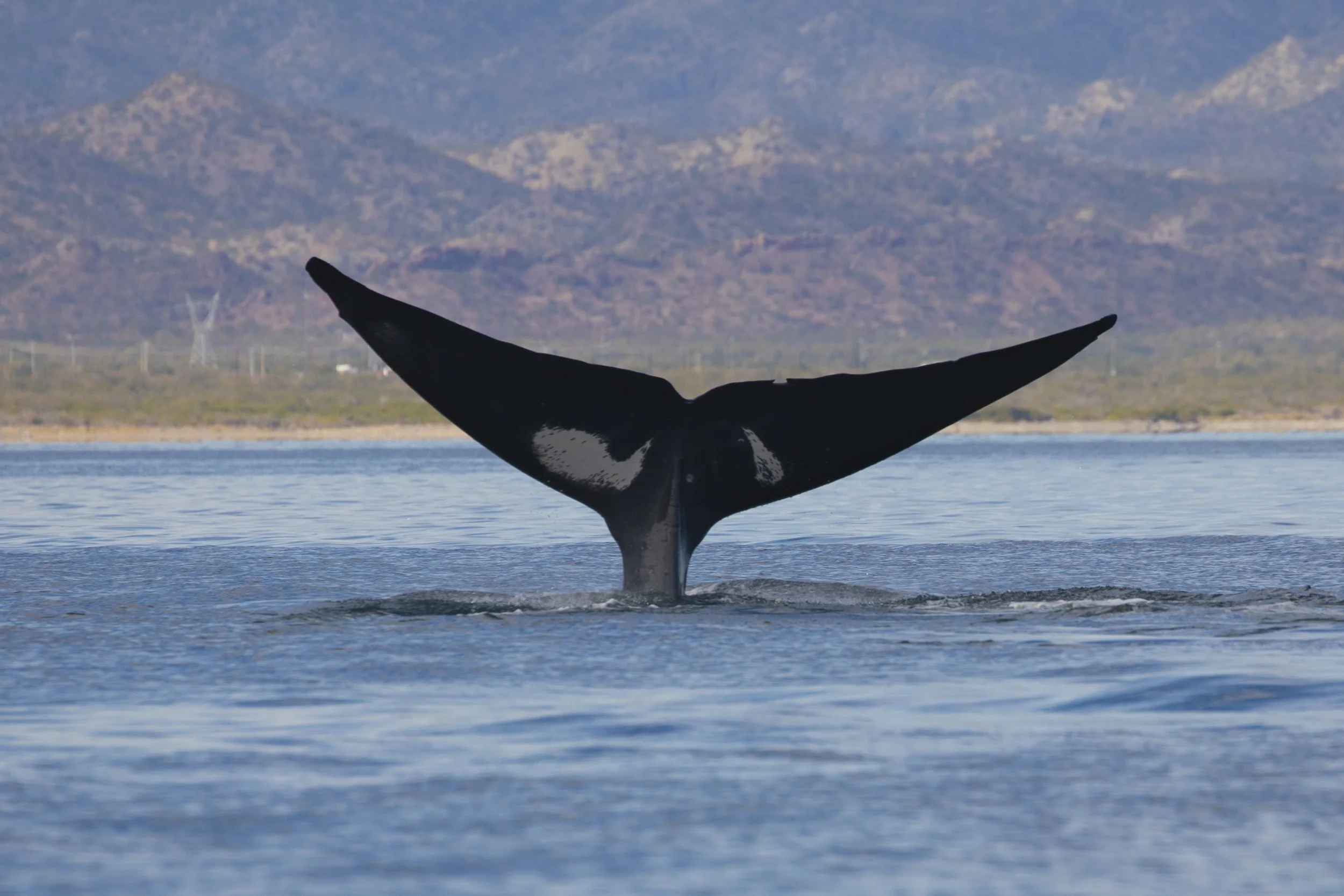
The fluke of a Blue Whale, nicknamed “Calabaza,” photographed in Loreto by Regina Domingo, Baja Adventures expedition leader, during a marine wildlife expedition in Loreto Bay Nationak Park.
The magnificent blue whales, despite being endangered, can be seen along the coasts of both the Pacific and the Gulf of California in Baja California and Baja California Sur during different months of the year. In Loreto, located on the eastern coast in the Gulf of California, we have unparalleled opportunities to witness these gentle giants in their natural habitat every winter, feeding, mating, nursing their calves, and courting from January to April.
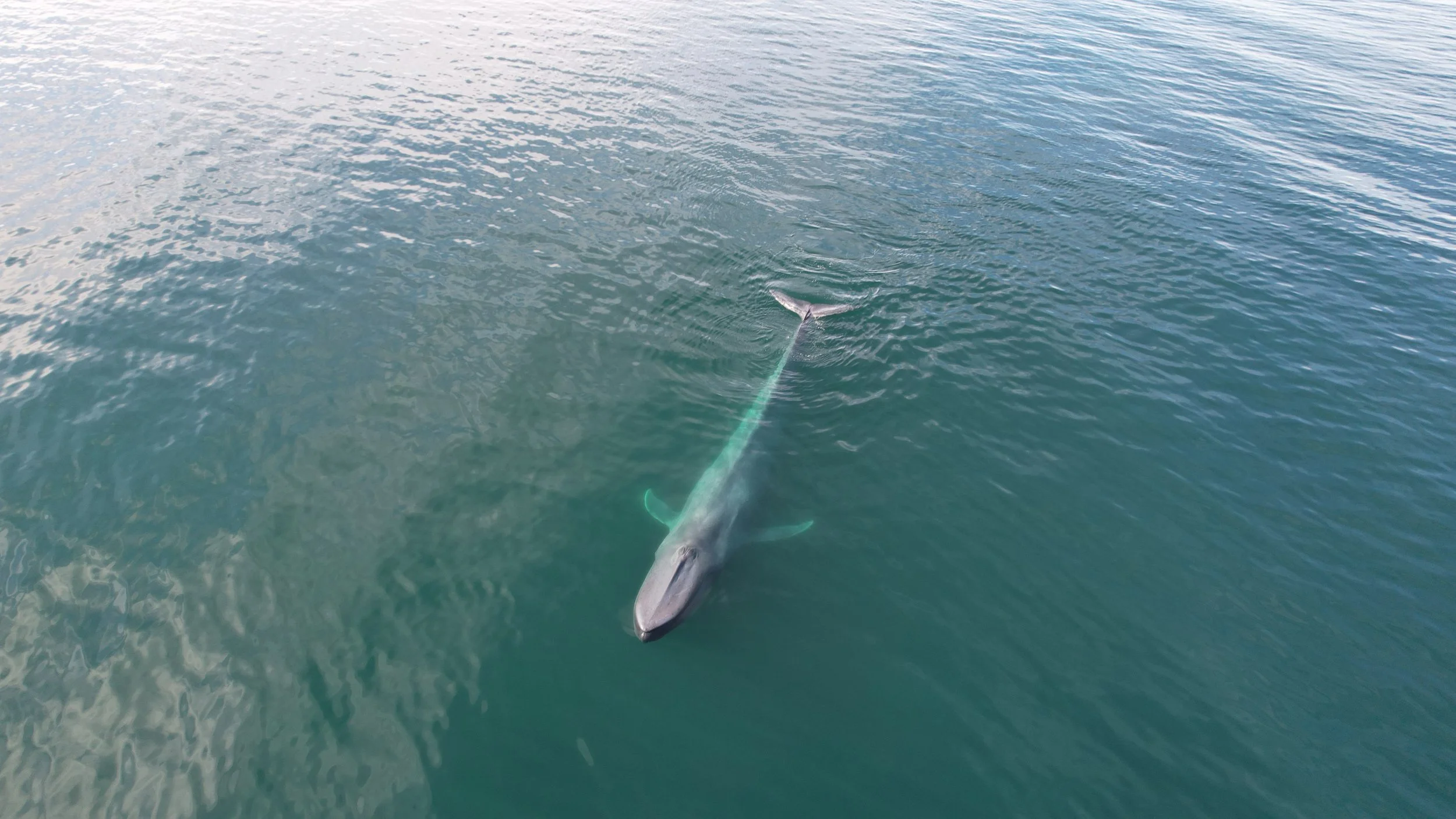
A Blue Whale swimming through the nutrient-rich waters of the Gulf of California near Loreto, Baja California Sur, one of the world’s most remarkable destinations for blue whale encounters.
However, blue whales also utilize other areas along the Pacific coast of Baja California and Baja California Sur to migrate and occasionally feed during different months of the year when krill productivity is abundant. Historical records reveal extensive hunting of blue whales off the Pacific coast of Baja California in the 20th century, especially near Magdalena Bay and Adolfo López Mateos.
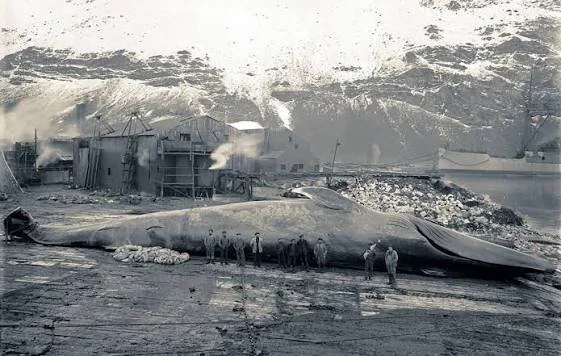
The era of whaling- Natural history museum
Norwegian whalers targeted these majestic creatures, with significant captures recorded between 1913 and 1914, and later in the 1920s and 1930s between March and June. According to reports from the Norwegian whaling fleet, the months of March to June represented the best whaling season along this coast, where 989 blue whales were hunted between 1924 and 1929, and in 1935.Despite past hunting pressures, blue whales are still documented feeding in these locations along the eastern and western coasts of Baja California Sur.
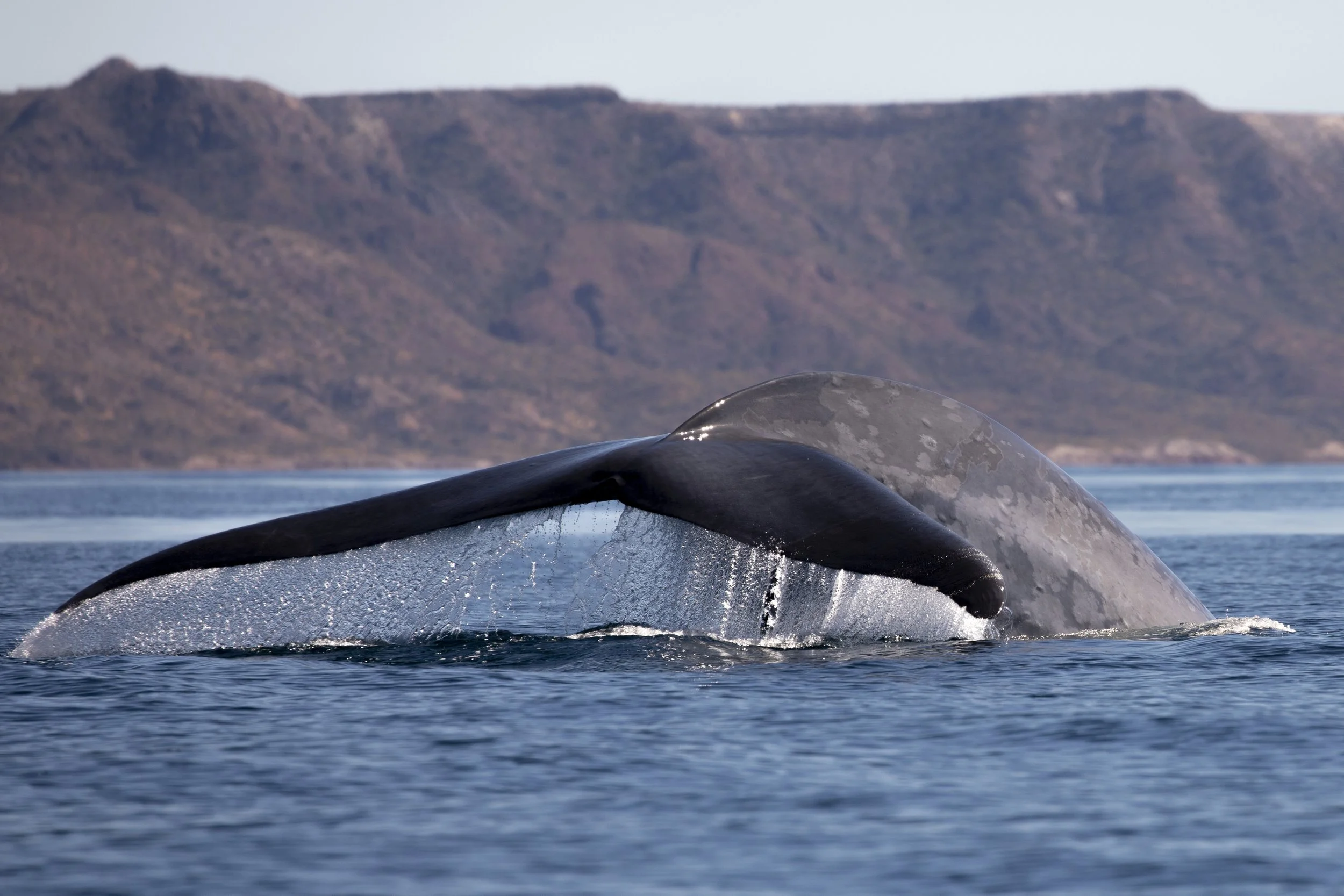
The fluke of a Blue Whale, photographed in Loreto by Regina Domingo, Baja Adventures expedition leader.
Recent observations align with historical hunting patterns, indicating continuous congregations of blue whales in these areas for feeding. It is estimated that between 10,000 and 25,000 blue whales remain. Of these, around 2,800 can be found migrating from the coast of California (USA) to the Gulf of California (Mexico), the largest known population in the world.
This serves as a reminder of the resilience of these endangered creatures and the importance of ongoing conservation efforts.
Our team operates ethical and educational Blue Whale watching expeditions in Loreto throughout the seasons, using a comfortable boats, expert crews, and intentionally small groups to maintain the highest standards of safety, quality, and wildlife observation. We actively monitor cetaceans and contribute citizen science data, including photo-identification of individual whales. Every expedition is designed for both discovery and comfort, with high-quality binoculars, onboard restroom, early-morning coffee and tea, healthy snacks, warm blankets, and a delicious lunch—all while exploring the extraordinary marine wildlife of the Gulf of California.
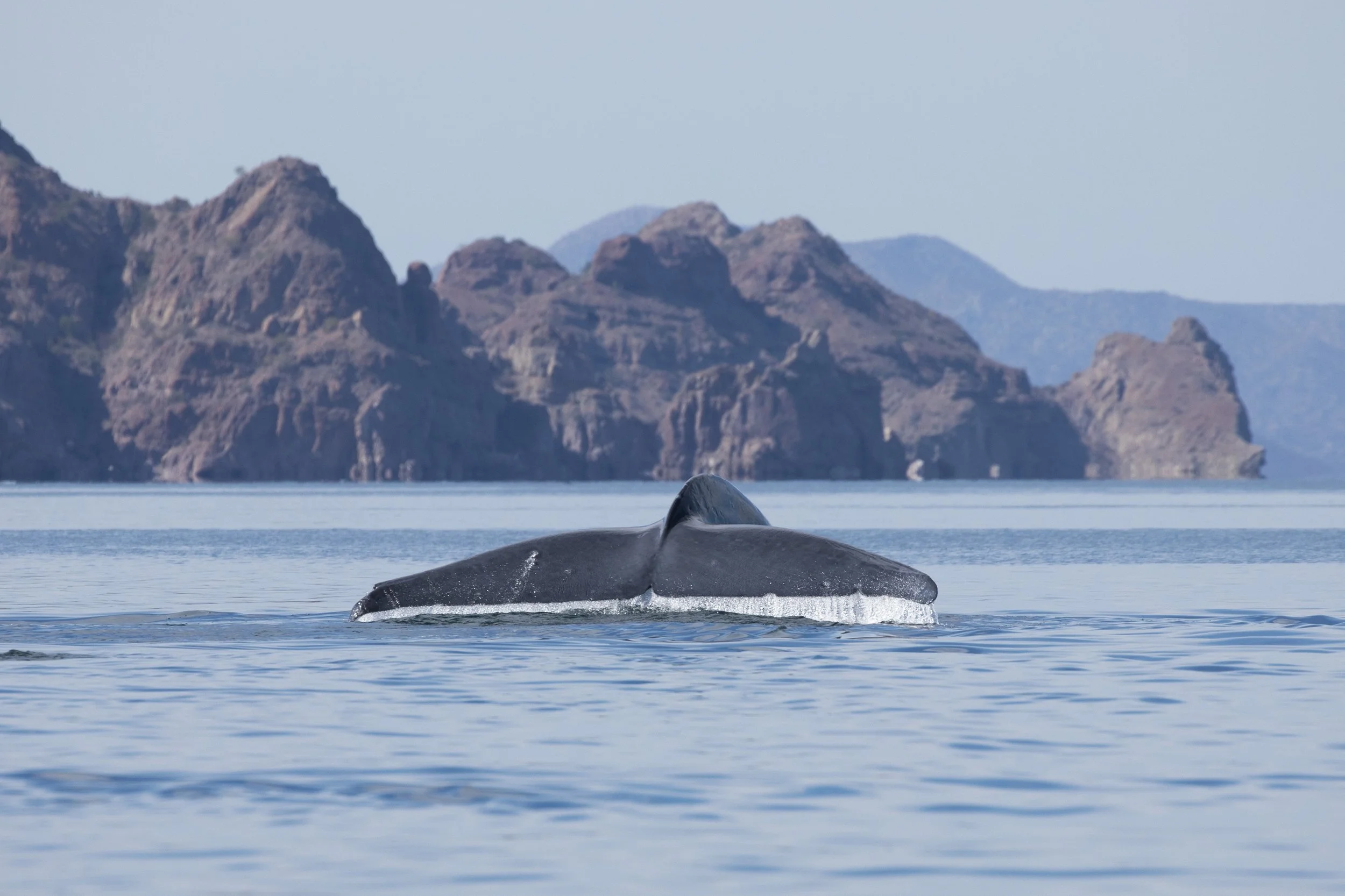
The fluke of a Blue Whale, nicknamed photographed in Loreto by Regina Domingo, Baja Adventures expedition leader, during blue whale expedition in February.
There are moments in life when you meet a wild animal for the very first time and realize you are witnessing something far greater than a tour. To encounter a Blue Whale in the wild, surrounded by the pristine waters of Loreto Bay National Park, is to experience the extraordinary beauty of a living ecosystem. We believe regenerative tourism should do more than take people into nature, it should inspire them to love it, understand it, and help protect it.
When an unforgettable encounter can also contribute to knowledge, conservation, and the future of this magical ecosystem, the journey becomes truly meaningful.