
Orcas of the Gulf of California: A Predator We Are Still Learning to Understand
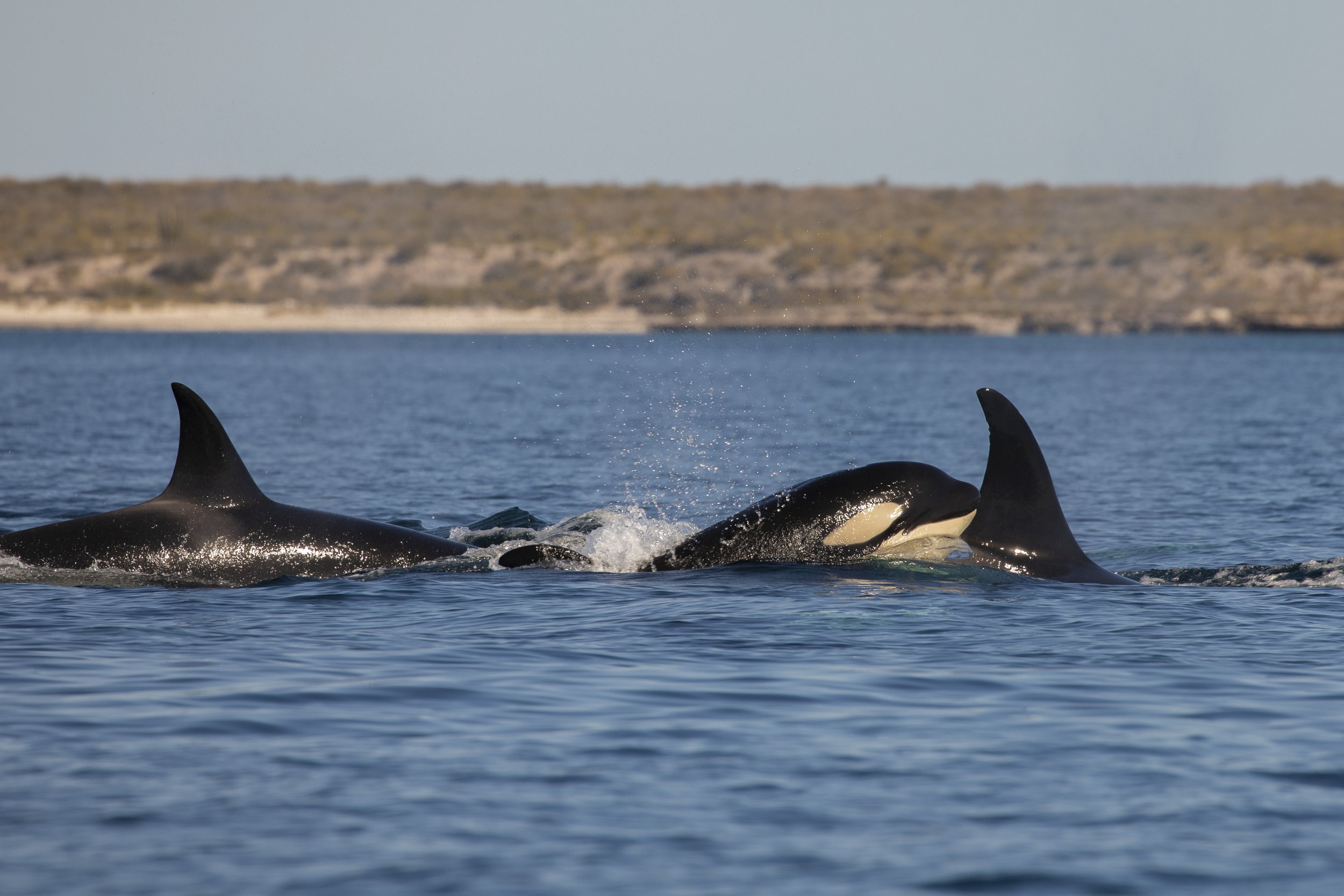
Orcas mother and calf, and a female adult photographed near Carmen Island in Loreto Bay National Park by Regina Domingo, Baja Adventures expedition leader.
Orcas have always captivated the human imagination. Their intelligence, complex social lives, remarkable hunting abilities and position as apex predators make them one of the most fascinating animals in the ocean.
For us at Baja Adventures, however, orcas represent something more: a connection between exploration, science and conservation in the Gulf of California.
After years of observing orcas during our expeditions in the Gulf of California, one thing has become increasingly clear to us:
There is no single way to describe how the orcas we encounter here behave.
Through our own observations, photographic records and expedition data, we have encountered different orca groups showing remarkably different relationships with prey.
We observe orcas that appear strongly associated with hunting marine mammals. We encounter others repeatedly targeting sharks and rays. And then there are groups whose feeding behavior appears much broader, taking advantage of different prey opportunities as they become available.
This diversity in feeding behavior is one of the most fascinating aspects of observing orcas in the Gulf of California.
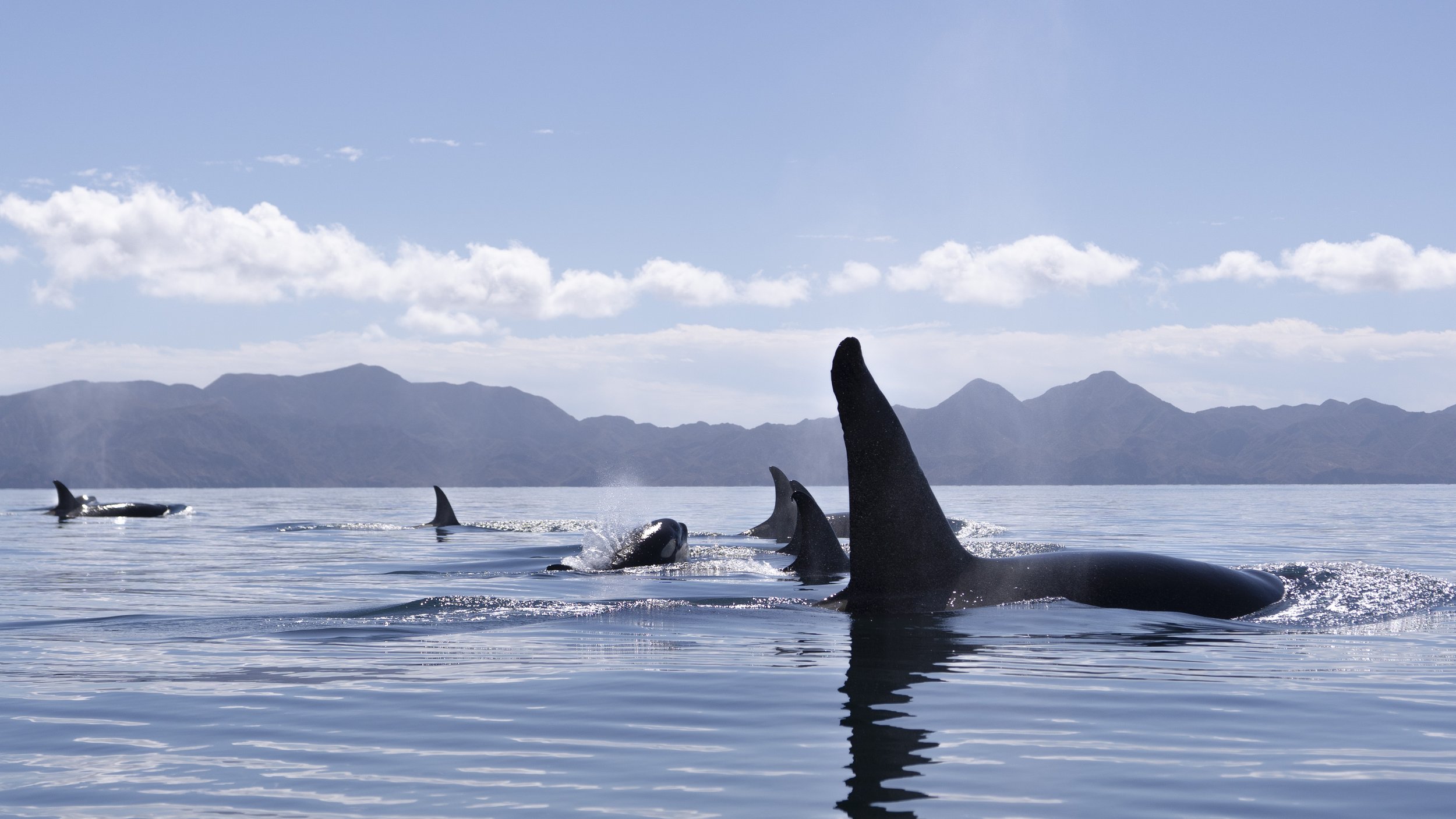
Orca family photo-identification during one of our Long-Distance Marine Expeditions in Loreto, contributing to our ongoing citizen science and wildlife monitoring efforts.
Different Orcas, Different Hunting Strategies
Orcas are apex predators, but being at the top of the food web does not mean that every orca hunts in the same way.
Quite the opposite.
During our expeditions, we have observed differences among the groups and individuals we encounter: what they pursue, how they approach prey, how individuals coordinate during a hunt and how particular behaviors appear repeatedly within certain groups.
Some of the orcas we encounter appear particularly associated with marine-mammal prey, including dolphins and other cetaceans.
Other groups we observe show a strong relationship with elasmobranch prey: sharks and rays. In the Gulf of California, this can include interactions with the seasonal presence and movements of mobula rays and different shark species.
And some groups appear considerably more opportunistic, exploiting different prey depending on what is available in the ecosystem at that moment.
Ecologically, this distinction matters.
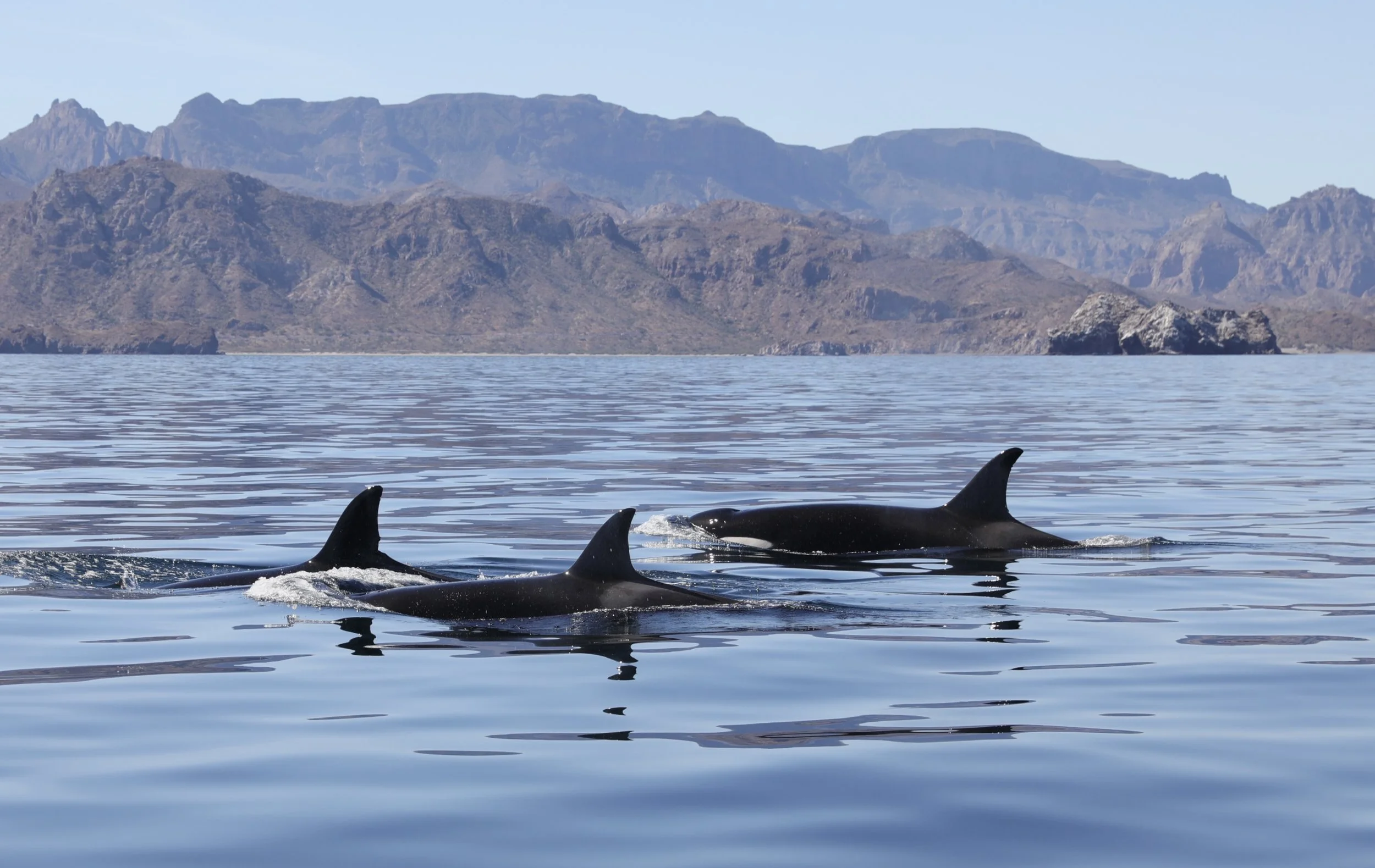
Three adult female orcas photographed in the waters of Loreto by Baja Adventures expedition leader Regina Domingo during one of our marine expeditions.
An orca's presence in a particular area may not simply depend on whether “orcas are in season.” It can depend on which orcas are moving through the region, what they specialize in hunting, where their preferred prey is concentrating and what ecological conditions are occurring at that particular moment.
Orca Culture: Hunting Is More Than Instinct
One of the reasons orca ecology is so extraordinary is that hunting behavior is not simply a matter of instinct.
Orcas are highly social animals. Hunting techniques can be learned, refined and shared within family groups.
This creates something particularly fascinating: culture.
Different groups can develop different ways of exploiting the same ecosystem.
For us in the field, this means that identifying an orca is only part of the story. We are also interested in understanding who that individual is traveling with, what the group is doing, what prey is present, how they hunt and whether we observe those behaviors again in future encounters.
Repeated observations over time can begin to reveal patterns that a single encounter cannot.
This is why long-term observation and citizen-science data are so valuable.
Why We Cannot Predict Orcas in Loreto
We are often asked:
“When is orca season in Loreto?”
Our answer is that orcas can occur throughout the year, but we cannot guarantee when we will encounter them.
And there is an ecological reason for that.
The Gulf of California is not a static environment.
It is an extraordinarily dynamic marine ecosystem where water temperature, currents, productivity and prey distribution change throughout the year. Whales migrate through the region. Dolphins move with feeding opportunities. Mobula rays aggregate seasonally. Sharks and pelagic fishes change their distribution. Schools of fish form, disperse and move.
Predators respond to those dynamics.
And different orca groups may respond differently because they are not necessarily looking for the same prey.
A group specializing in marine mammals may move through the ecosystem differently from orcas targeting sharks and rays. More opportunistic groups may respond to an entirely different combination of prey availability and oceanographic conditions.
That is why trying to reduce orca presence in Loreto to a specific month or predictable calendar does not reflect what we observe in the field.
Their movements are connected to a living food web that is constantly changing.
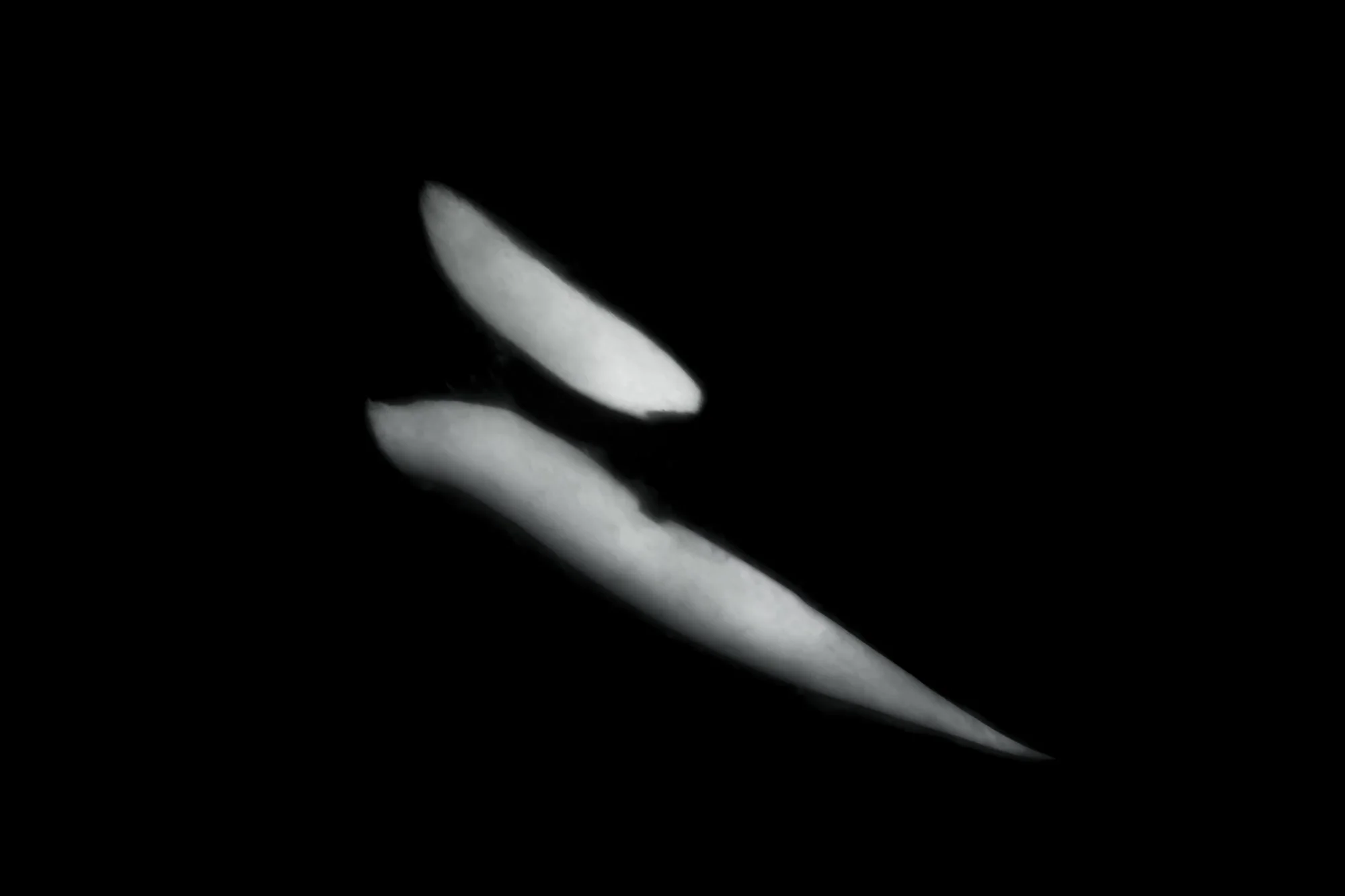
Underwater portrait of an orca photographed by the Nakawe Project team during fieldwork in the Gulf of California.
We Never Guarantee Orcas
At Baja Adventures, we never guarantee orca encounters.
Not because orcas are absent from Loreto, but because they are wild, highly mobile predators responding to ecological dynamics occurring across an enormous marine environment.
For us, that unpredictability is part of what makes encountering them so meaningful.
We do not want to turn wildlife into a checklist.
Our expeditions are designed to explore the ecosystem that makes these encounters possible.
When we leave Loreto aboard La Puma, we observe what the Gulf is telling us that day: wildlife activity, birds, prey concentrations, cetacean movements, ocean conditions and the relationships occurring between species.
Sometimes that story leads us to whales.
Sometimes to dolphins, mobulas, sharks or enormous schools of fish.
And sometimes, unexpectedly, a black dorsal fin appears on the horizon.
Every Encounter Becomes Data
For Baja Adventures and Nakawe Project, an orca encounter does not end when the animals disappear.
Our expeditions incorporate observation, photography and citizen science to help us build a longer-term picture of the wildlife using these waters.
With orcas, we can document characteristics that help us recognize individuals, record associations between animals, location, behavior, prey interactions and environmental context.
Over time, these observations become increasingly valuable.
A photograph taken during one expedition may help us recognize an individual again months or years later. A hunting event can be compared with previous observations of the same group. Repeated encounters can begin to reveal how particular animals use different parts of the Gulf of California.
One observation is an encounter. Repeated observations begin to tell an ecological story.
Why Orcas Are Marine Ambassadors for Baja Adventures
Orcas have become one of the marine ambassadors of Baja Adventures and Nakawe Project because they represent the interconnected nature of the ocean.
To understand an apex predator, we also have to understand its prey.
To understand its prey, we have to understand habitat, productivity, migration, oceanographic conditions and the ecological relationships connecting species throughout the food web.
Protecting these predators therefore cannot be separated from protecting the ecosystems in which they live.
They also have an extraordinary ability to create curiosity.
Seeing an orca in the wild can completely change the way someone looks at the ocean.
That emotional connection is important to our approach to regenerative tourism in Loreto: creating experiences that do more than show people wildlife, encouraging them to understand the ecological processes behind what they are witnessing.
Explore the Ecosystem, Not a Checklist
Our Marine Adventures in Loreto are designed around this philosophy.
We explore rather than chase.
We observe rather than promise.
And we use what we encounter to continue building our understanding of this extraordinary ecosystem.
Orcas can appear throughout the year. But there is no date on the calendar when we can guarantee them, and, ecologically, that makes perfect sense.
Different groups hunt different prey. Prey moves. Ocean conditions change. Seasons transform the ecosystem. Predators respond.
The Gulf of California is always in motion, and the orcas are moving with it.
That is why every encounter remains unpredictable.
And that is exactly why every encounter matters.
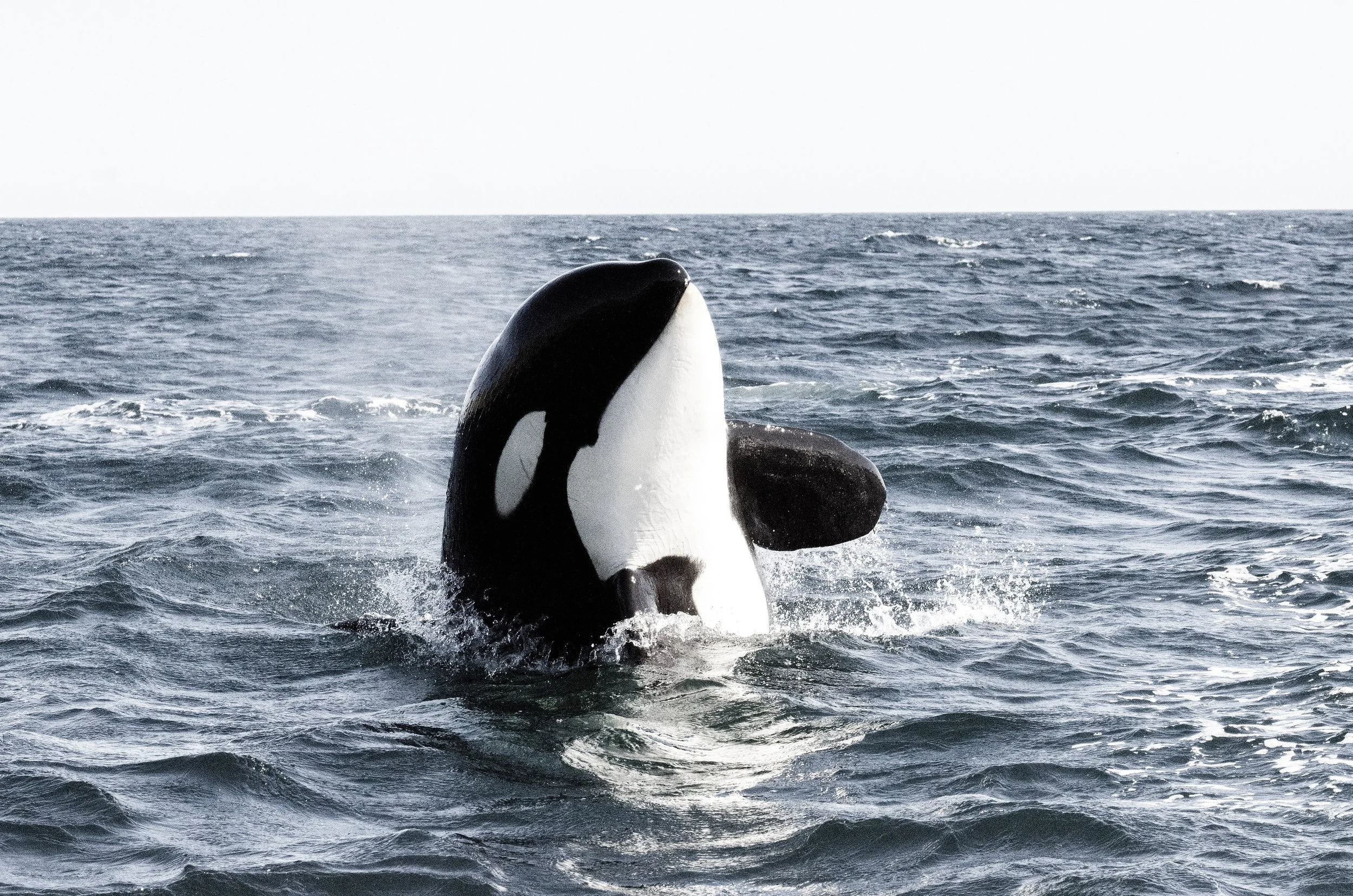
Orca spyhopping in the waters of Loreto, photographed by Regina Domingo, expedition leader at Baja Adventures.
Join a Marine Adventure in Loreto
Explore Loreto Bay National Park and the Gulf of California with our naturalist guides through wildlife observation, citizen science and regenerative tourism.
We cannot tell you exactly what the ocean will show us.
That is the adventure.
Photography and visual material are owned by Baja Adventures and/or our collaborators. Please do not reproduce without permission.