
Blue Whales return to Loreto: The Start of a New whale watching season
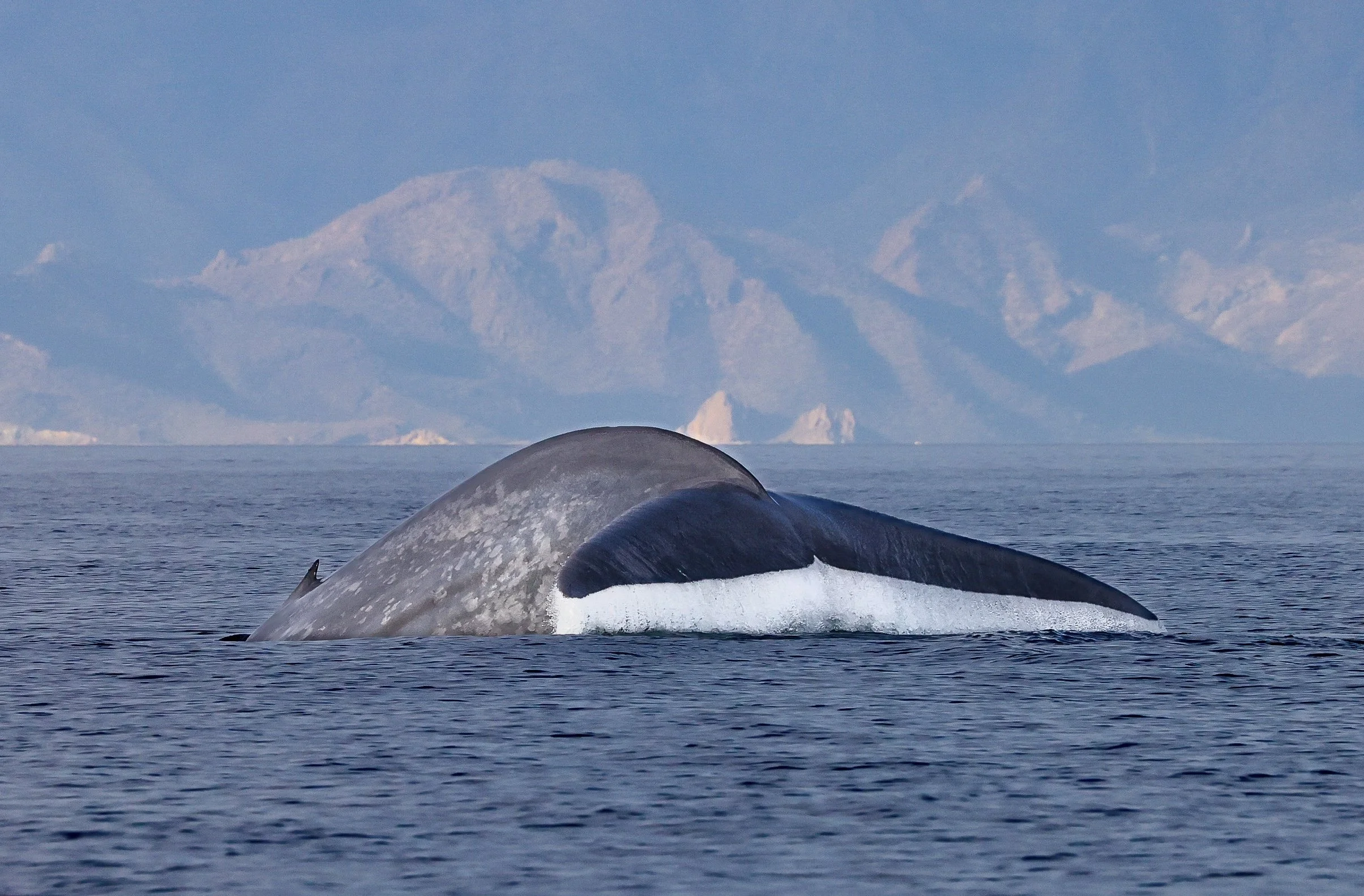
Blue whale photographed in Loreto, Baja California Sur, by our expedition leader and wildlife photographer Regina Domingo
The blue whales have returned to Loreto, filling the Gulf of California, with the heartbeat of the biggest hearts on Earth,welcome to the 2026 blue whale season.
The 2026 blue whale season has officially begun in Loreto Bay National Park. Our first sightings took place on January 15th, and since then we have already observed multiple individual blue whales actively feeding throughout the park. Seeing these giants arrive and settle into feeding behavior is one of the clearest signs that the ecosystem is thriving.
Among the blue whales we have observed this season is Monocular, a well-known female estimated to be at least 30 years old, recognizable by a distinctive eye scar caused by a cookiecutter shark, an individual that has returned to Loreto Bay National Park season after season, reinforcing the importance of this area as a critical feeding habitat.
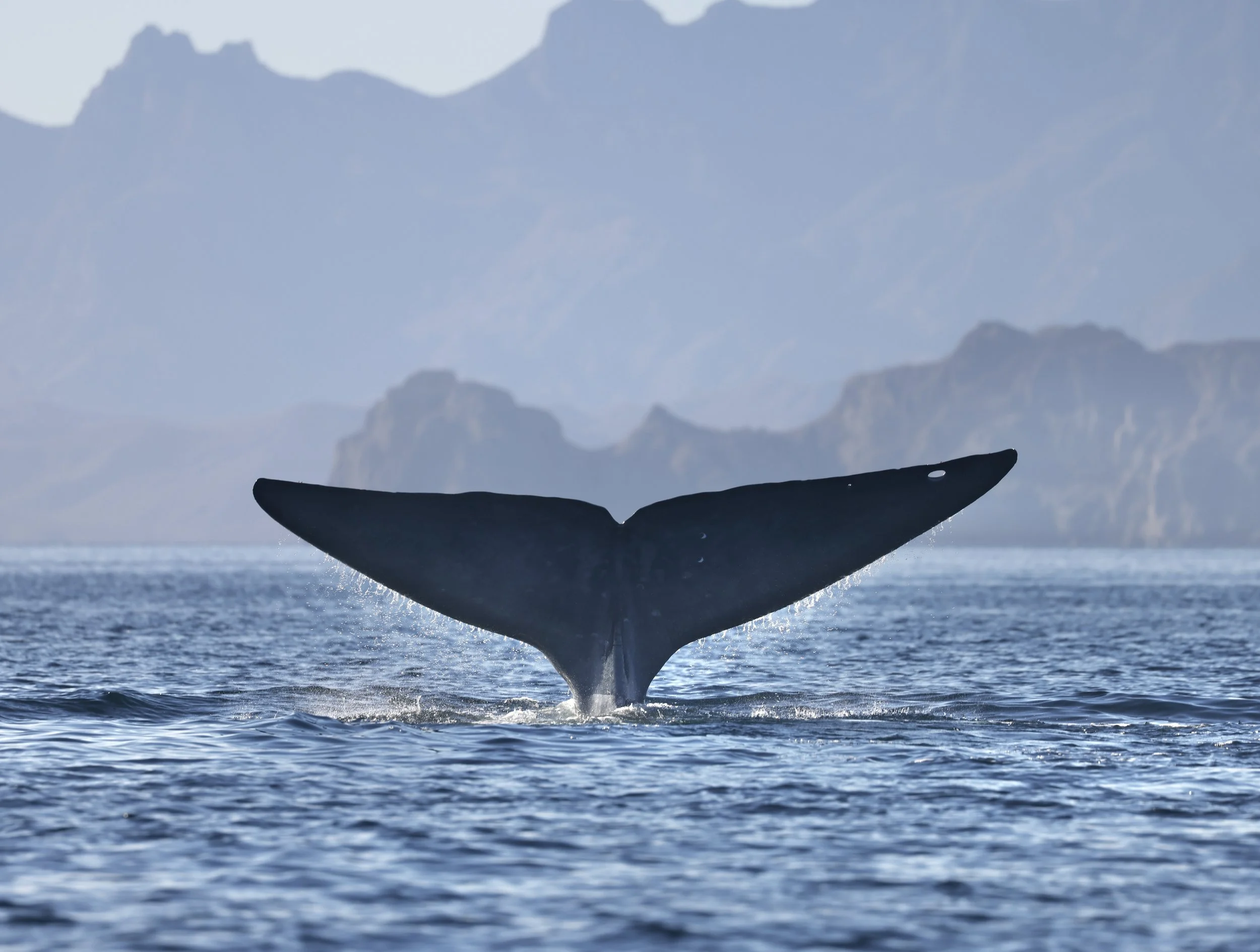
Monocular whale, photographed in Loreto by our expedition leader Regina Domingo.
Alongside blue whales, we have observed humpback whales, including juveniles using different areas of the park, as well as large groups of bottlenose and common dolphins. Over the past weeks, we have also observed orcas moving through Loreto Bay, powerful indicators of a healthy, dynamic marine ecosystem.
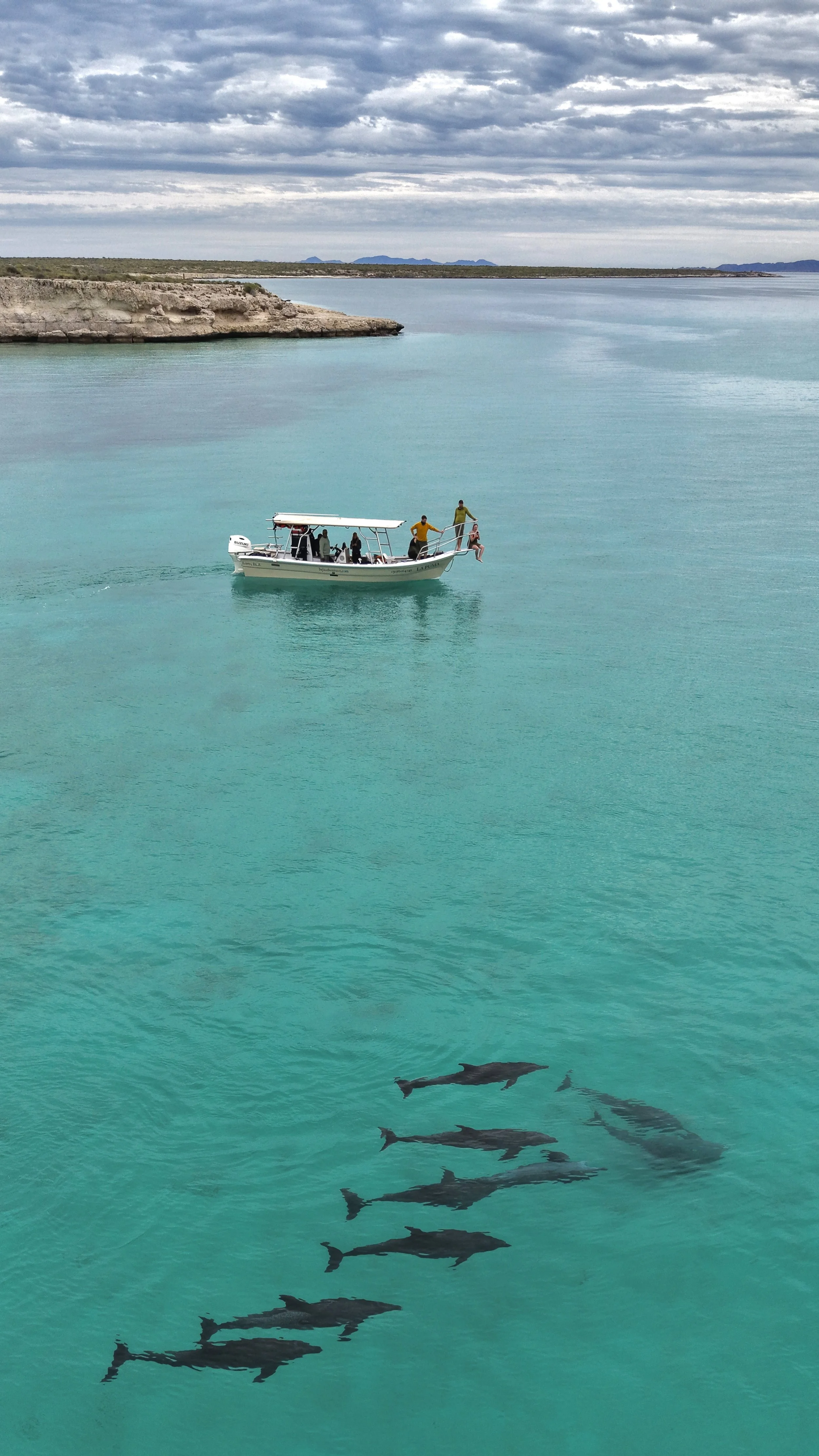
Bottlenose dolphins with our expedition boat La Puma, Baja Adventures, photographed by Leopoldo Sanmiguel.
This season has been preparing itself for months. Back in December, while spending long days on the water, we observed reddish dinoflagellate blooms spreading across the surface, painting the sea in deep rust and copper tones. These blooms are a natural response to winter winds and upwelling, which bring mineral-rich waters to the surface and fuel phytoplankton growth. In the weeks that followed, we began observing krill in good concentrations, and now the blue whales are here to feed.
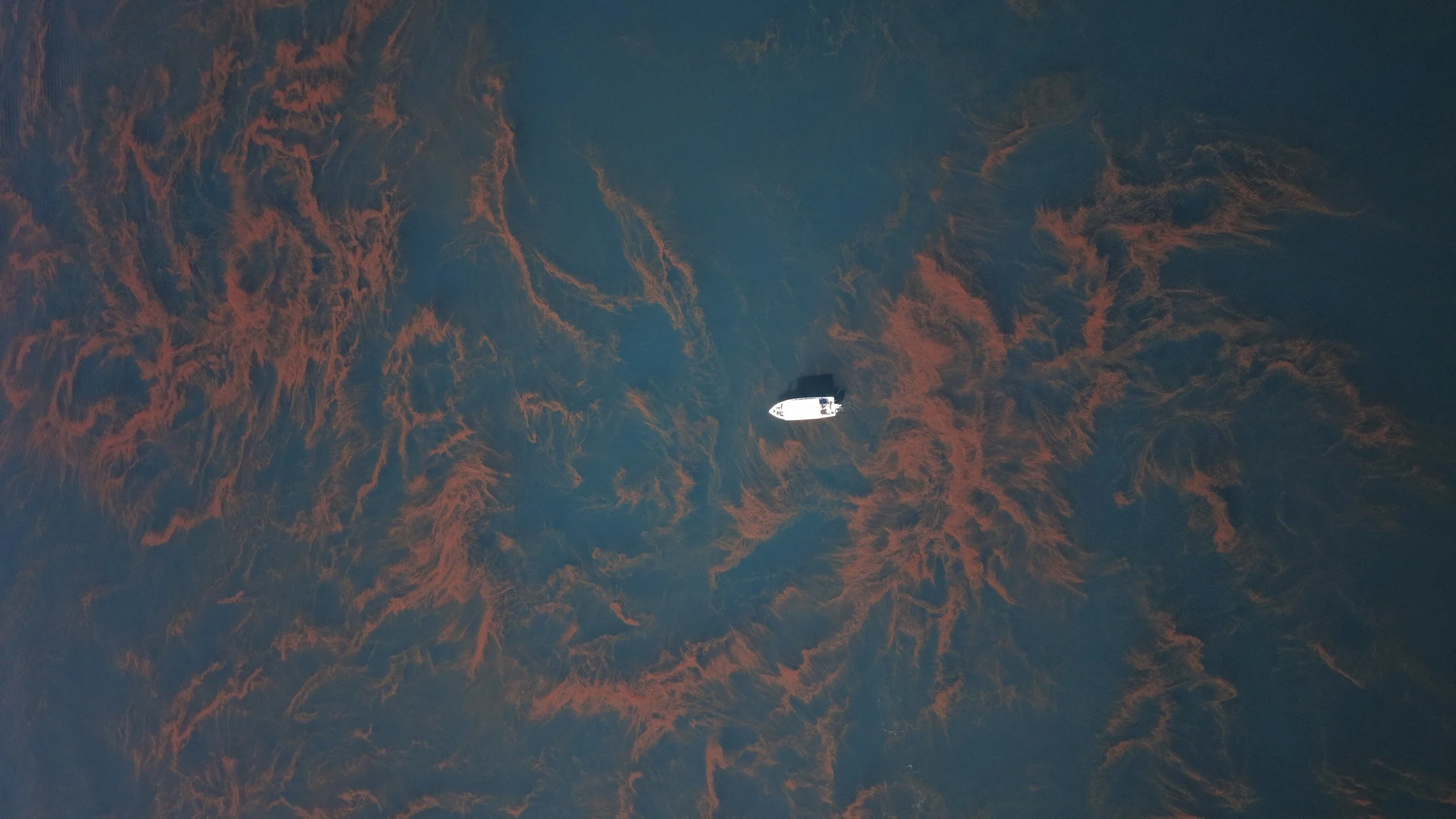
Algae bloom in Loreto, December 2025, photographed by Baja Adventures.
Interestingly, early explorers and historical texts referred to the Gulf of California as the Mar Bermejo, the “reddish sea.” Witnessing these blooms today offers a poetic link to the past — moments when the ocean quite literally changes color, revealing its productivity and life-giving force.
January brought strong winds, which are essential to this cycle. Wind-driven upwelling replenishes nutrients, and once the sea calms, productivity increases. These are the exact conditions blue whales seek when they arrive in Loreto, typically spending around 70 days within the national park before continuing their migration. Last year, the first blue whales arrived around Christmas; this year they arrived later, and we expect them to remain in the area longer as well.
At Baja Adventures, being on the water year-round allows us to understand these seasonal shifts deeply. We witness the park changing day by day — from plankton blooms to krill abundance and the arrival of the largest animals on Earth — and this continuity is essential for providing accurate interpretation and meaningful experiences.
This year, we also introduced an important upgrade to our expedition vessel, La Puma. We designed and built a custom elevated bow structure, which provides a higher vantage point for spotting cetaceans across the vast five-island expanse of Loreto Bay National Park. This upper view significantly improves our ability to locate whales over long distances and increases the quality and safety of our sightings.
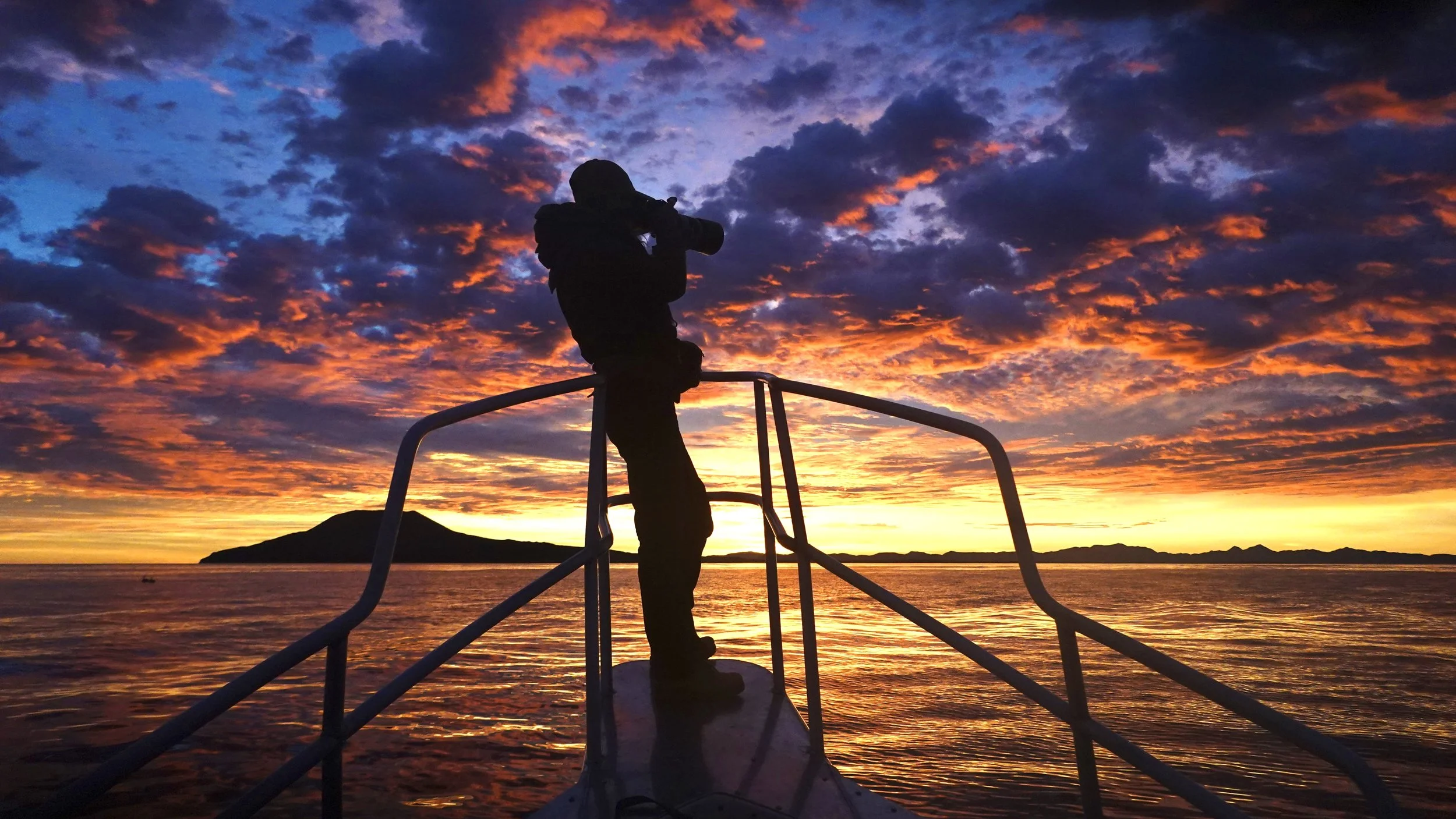
Regina Domingo photographing from the new structure of our expedition boat La Puma.
Beyond guest experience, this structure was also created to support scientific collaboration. It allows our team to assist researchers with behavioral observations, photo-identification, and non-invasive sampling, contributing valuable data to ongoing conservation efforts. We upgrade our gear, equipment, and vessels every year because responsible wildlife tourism must evolve alongside science.
We still have limited availability for itineraries and daily expeditions during March and April 2026. The blue whale season officially runs through April 30th, and these final weeks often offer exceptional encounters. Our 2027 calendar is already open, and we strongly recommend booking in advance if you hope to visit during February, our most demanded month. When a dream calls, especially one involving blue whales, planning ahead matters.
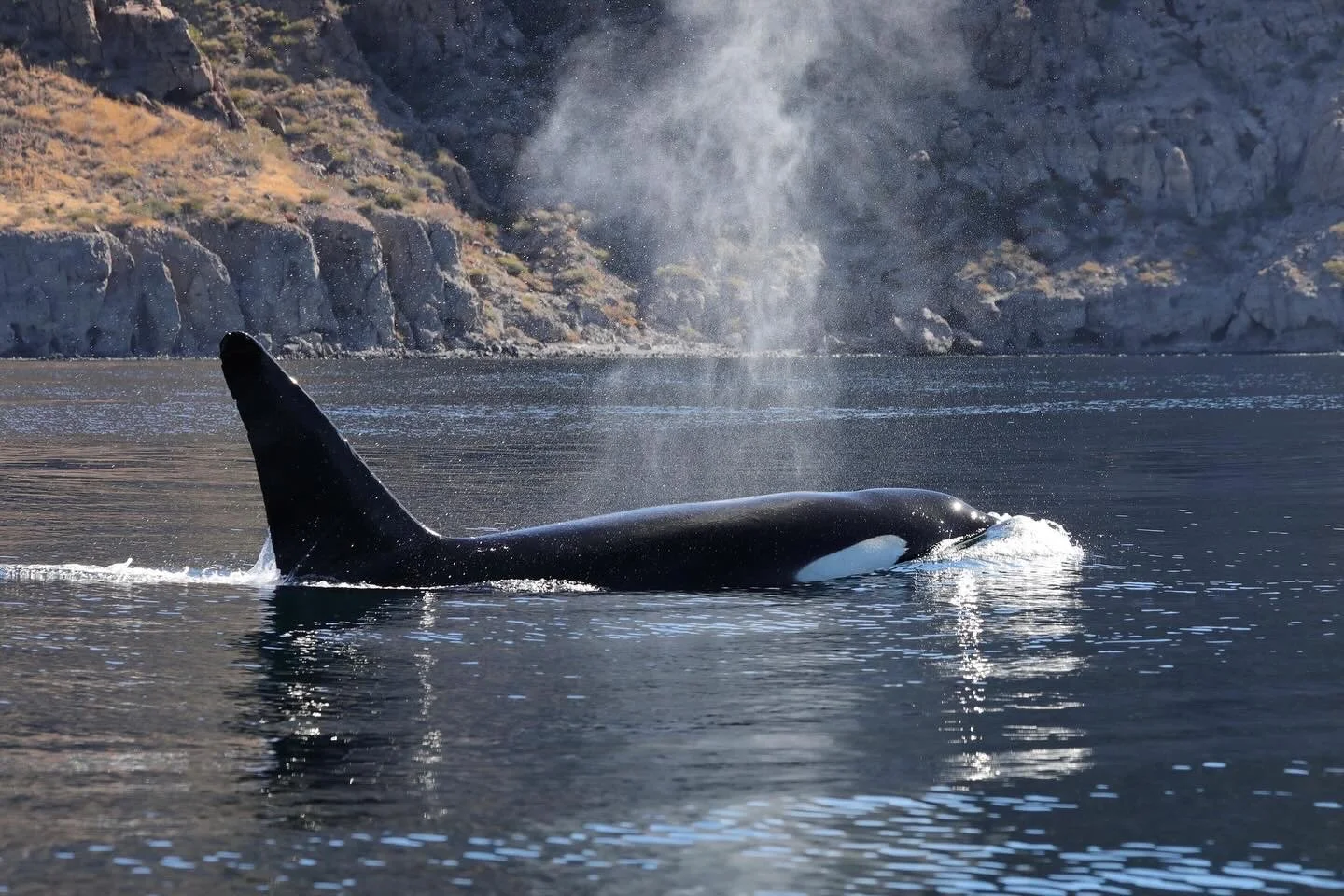
Orca male photographed by our expedition leader Regina Domingo in Loreto Bay National Park
We will continue sharing updates as the season unfolds. It is a privilege to witness these cycles and to welcome explorers from around the world to Loreto, a place where history, biodiversity and regenerative tourism meet.