
Autumn Pelagic Encounters in Loreto: Meet the Sailfish
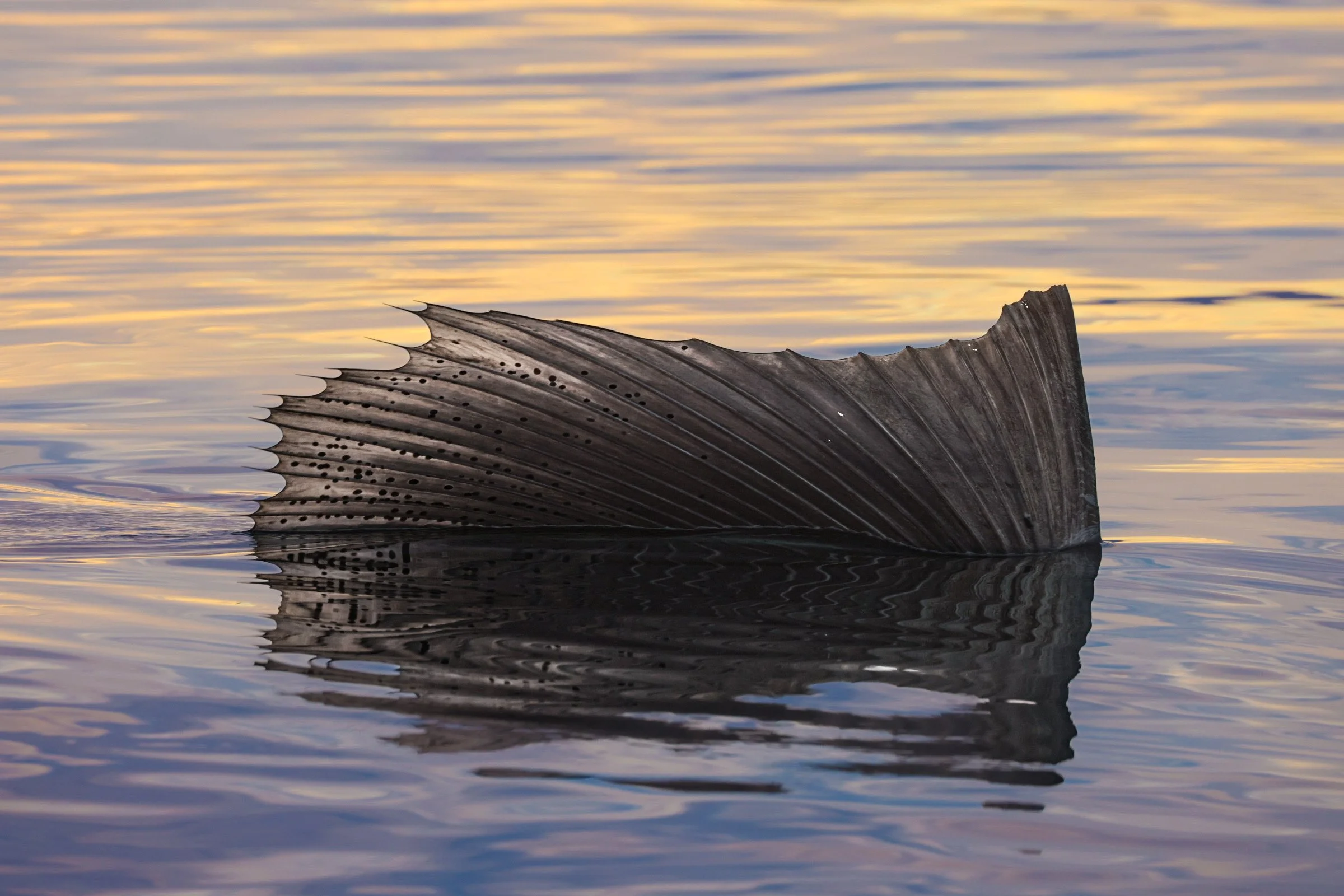
Pacific sailfish (Istiophorus platypterus) encountered during yesterday’s autumn Marine Adventure in Loreto Bay National Park. Photographed by Baja Adventures expedition leader Regina Domingo while documenting the seasonal pelagic wildlife of the Gulf of California.
Yesterday, during one of our Marine Adventures in Loreto Bay National Park, the Gulf of California gave us one of those encounters that immediately makes you look closer: a Pacific sailfish (Istiophorus platypterus) resting near the surface, its extraordinary dorsal fin—or “sail”—clearly visible.
Why are sailfish in Loreto?
Sailfish are pelagic predators, adapted to life in the open ocean and upper layers of the water column. In the Mexican Pacific, their distribution changes seasonally, with scientific studies documenting northward movements toward the Gulf of California during the warmer part of the year and movements southward as the season changes.
That makes an autumn encounter in the Gulf particularly interesting.
This is also a season when we pay close attention to small pelagic fish dynamics. Sardines and other schooling fishes form a fundamental connection between ocean productivity and larger predators. In the Gulf of California, their abundance and distribution are strongly influenced by temperature, winds, upwelling and other oceanographic processes.
Sailfish are opportunistic predators whose diet includes epipelagic fishes and squid, with prey availability influencing what they eat.
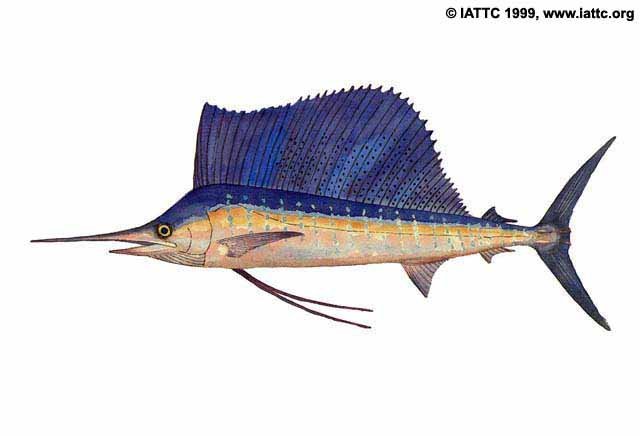
Scientific illustration by iattc.org of the Pacific sailfish (Istiophorus platypterus), a highly specialized pelagic predator seasonally present in the Gulf of California, highlighting its elongated bill, streamlined body and distinctive sail-like dorsal fin.
What is the sail for?
The spectacular dorsal fin is much more than decoration.
Sailfish can raise or fold this large fin depending on behavior. It can play a role in maneuvering and prey-herding, particularly when hunting schooling fishes. The sail may also have functions associated with signaling and thermal exchange, although we should be careful about interpreting a sailfish at the surface as definitively “thermoregulating” from observation alone.
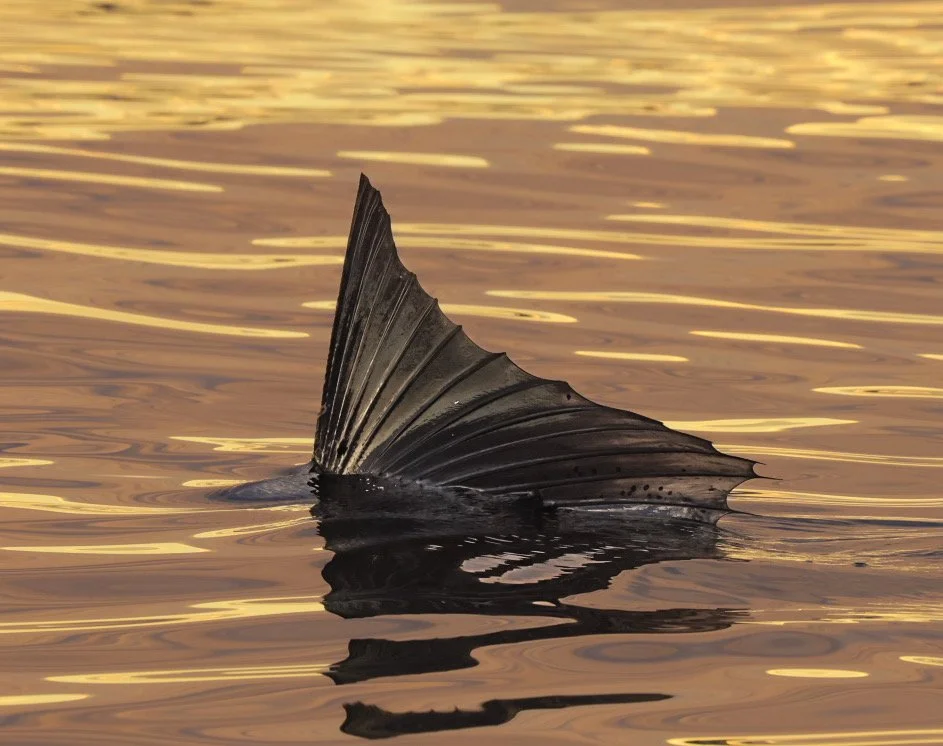
A Pacific sailfish (Istiophorus platypterus) illuminated by golden-hour light, revealing the remarkable shape and detail of its extended dorsal sail. Photographed by Baja Adventures expedition leader Regina Domingo during an autumn Marine Adventure in Loreto Bay National Park.
Recent tracking research shows that sailfish actively use different depths and oceanographic conditions to maintain relatively stable thermal environments.
So what we observed yesterday was fascinating, but scientifically, we would describe it as surface behavior consistent with possible thermoregulatory behavior, rather than claiming thermoregulation as a certainty.
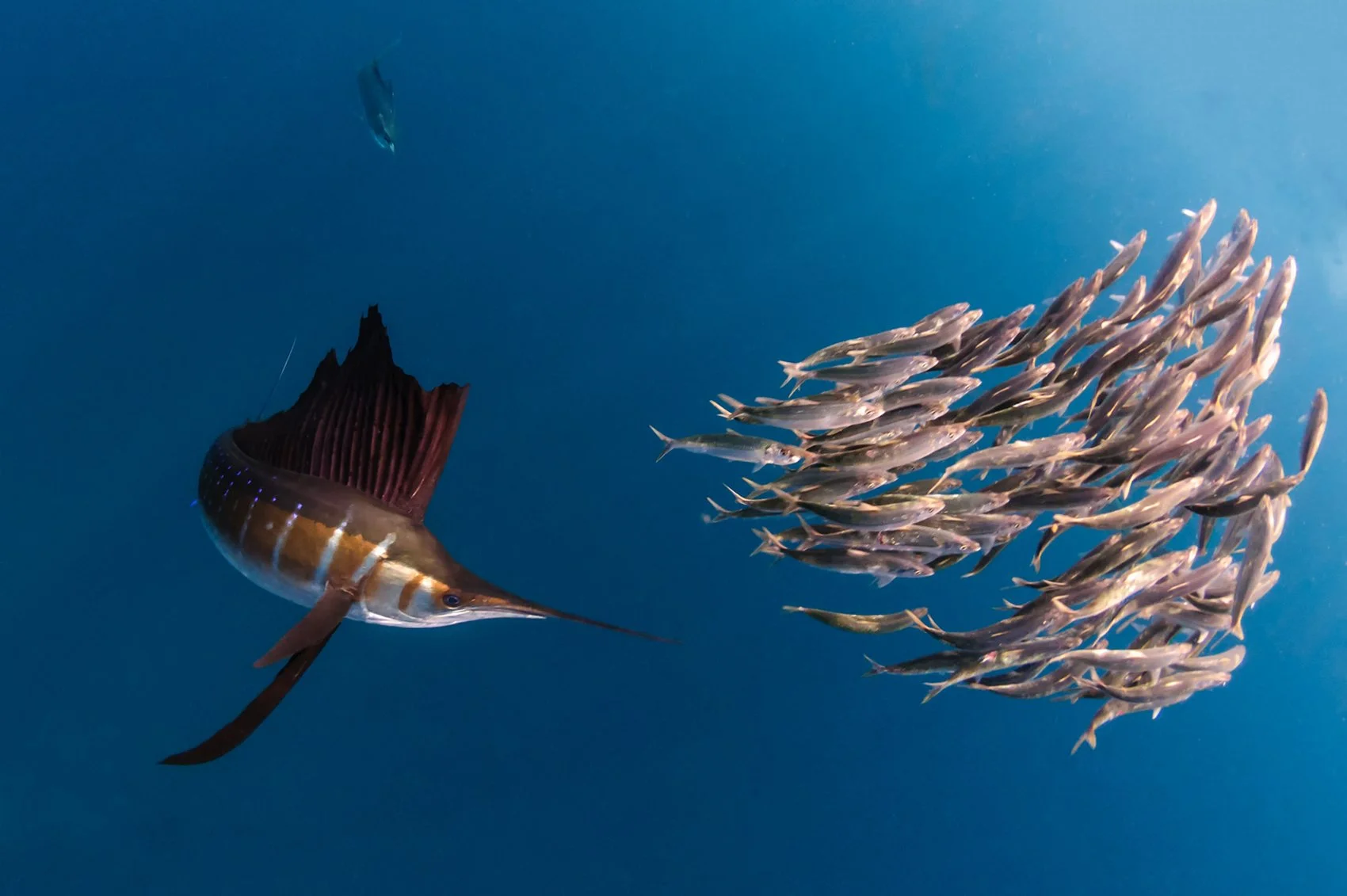
A Sailfish, Istiophorus platypterus, hunting sardines off the coast of Mexico. Source: Peter G. Allinson, M.D. / Marine Photobank.
Why encounters like this matter
Sailfish are part of the Gulf's wider pelagic food web. Their presence connects oceanography, prey availability, small pelagic fishes and large marine predators.
And that is exactly why our autumn expeditions are so interesting.
We aren't searching for a checklist of species. We are observing a constantly changing ecosystem.
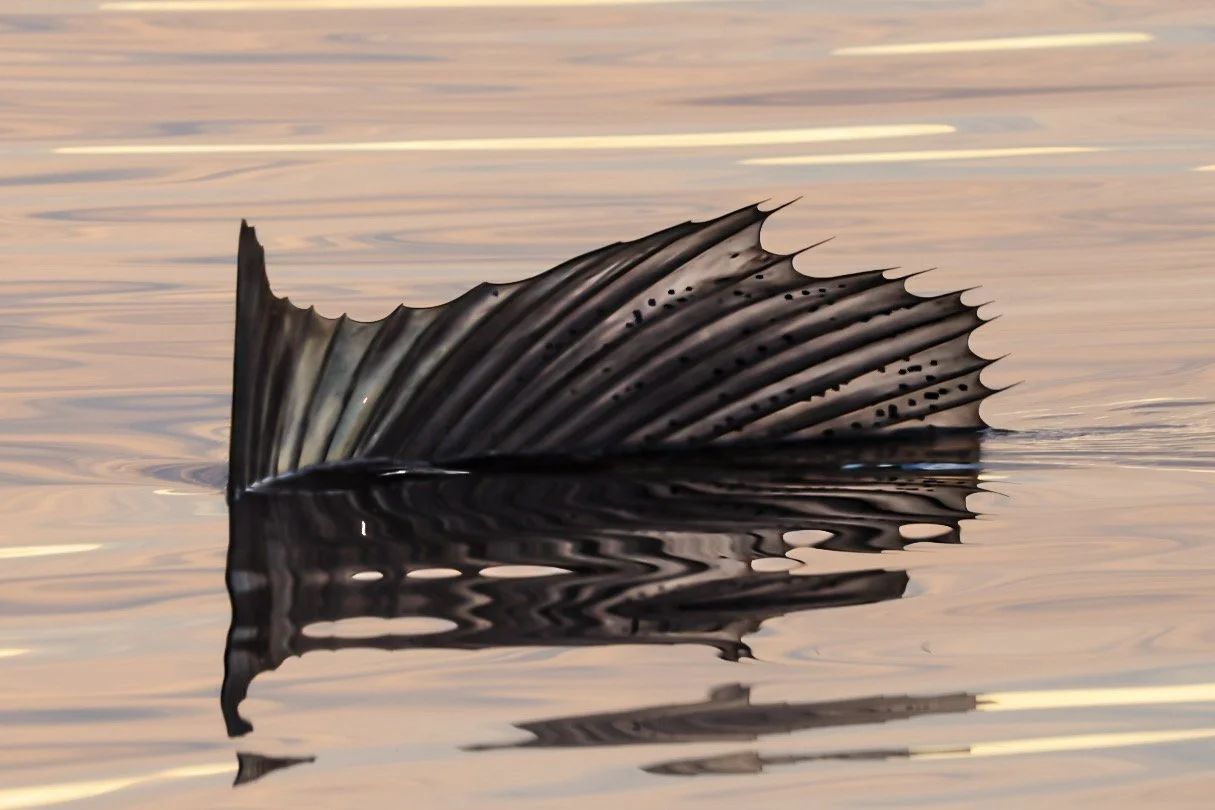
A Pacific sailfish (Istiophorus platypterus) displaying its remarkable dorsal sail at golden hour in Loreto Bay National Park. Photo: Regina Domingo, Baja Adventures.
During our Marine Adventures in Loreto, our team records wildlife observations as part of our citizen-science work, helping us build a better picture of how marine species use Loreto Bay National Park throughout the year.
Yesterday, the sailfish was another piece of that story.
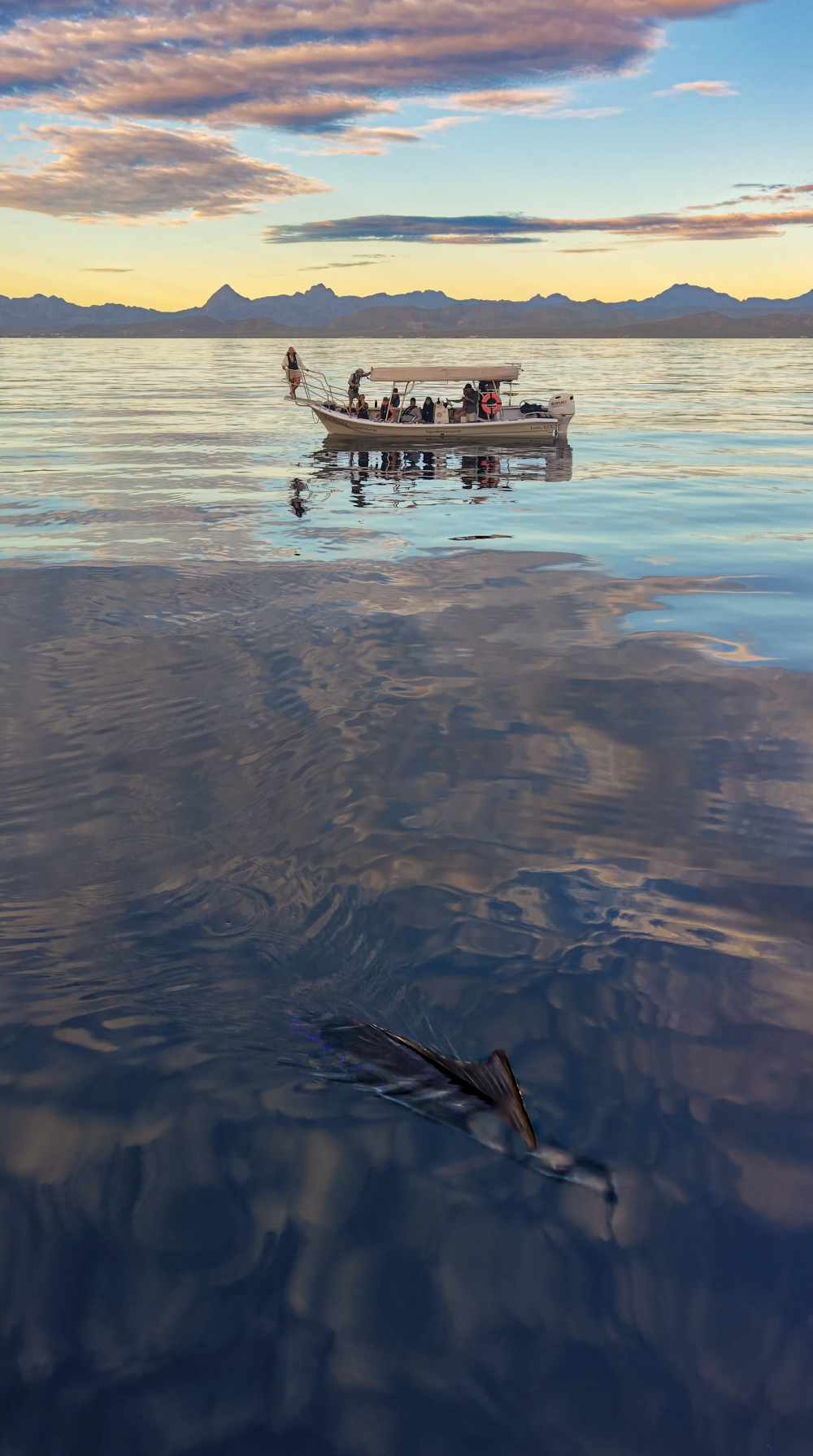
Baja Adventures expedition boat La Puma during a sailfish encounter at sunrise on an autumn Marine Adventure in Loreto Bay National Park
The Gulf of California and Loreto change with the seasons. We go out year-round to understand those changes, and to share them with you.
Autumn marine season in Loreto is just beginning.
Join Baja Adventures as we explore the changing waters of Loreto Bay National Park, following seasonal ocean dynamics, pelagic wildlife and the unexpected encounters that make this time of year so extraordinary.
The species are never guaranteed. The adventure is.