Exploring the whales, seasons, and wild marine ecosystem that make Loreto one of the most extraordinary places in the Gulf of California.
Thanks to our regenerative tourism expeditions and ongoing citizen science efforts, we have documented aggregations of Bryde’s whales in Loreto for three consecutive summers, providing valuable evidence of their seasonal presence in the area. Our photo-identification data has been shared with marine mammal researcher Dr. Lorena Viloria Gómora, from PRIMMA (Programa de Investigación de Mamíferos Marinos), to compare individual whales against her Gulf of California catalog spanning 2003–2016, developed during her doctoral research. This collaboration may help identify previously documented individuals, reveal potential resightings, and contribute to a better understanding of Bryde’s whale movements and seasonal habitat use in the Gulf of California. It is a powerful reminder that responsible tourism can actively contribute to marine conservation and scientific knowledge.
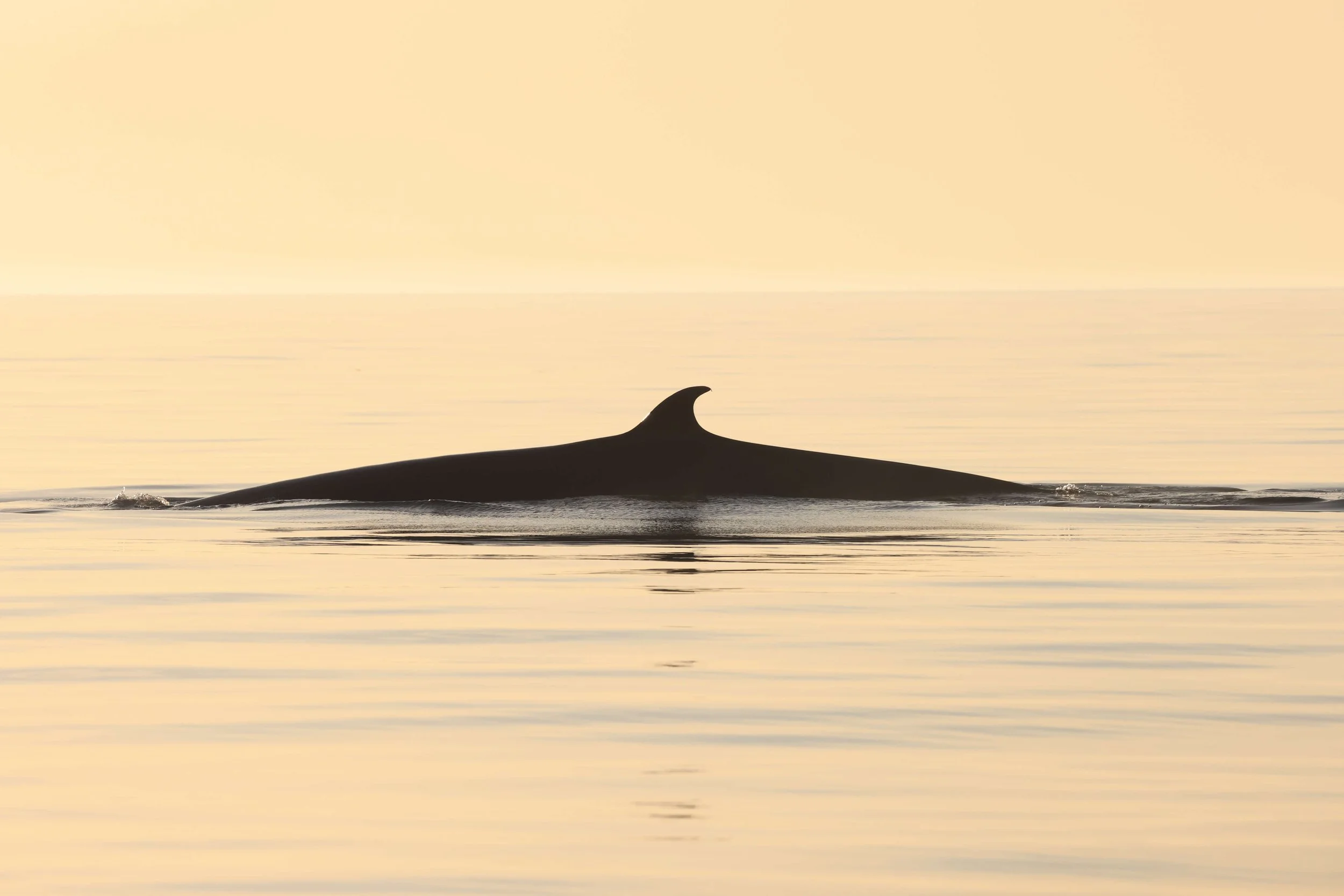
The large summer aggregations of Bryde’s whales (Balaenoptera edeni) that we have been observing inside Loreto Bay National Park are now beginning to disperse. In 2026, our encounters extended from late May through mid-September, following a remarkable summer of whale activity inside the park. Last season, in 2025, we continued encountering Bryde’s whales until late October, highlighting how their presence in Loreto can extend well beyond the traditional summer months.
But when one whale season begins to fade, another is already taking shape.
The ocean around Loreto is constantly changing, and so are the species that depend on it.
A remarkable Summer whale season in Loreto
During the last three summers, we have been fortunate to observe something incredible in the waters of Loreto Bay National Park: groups of Bryde’s whales gathering in productive feeding areas.
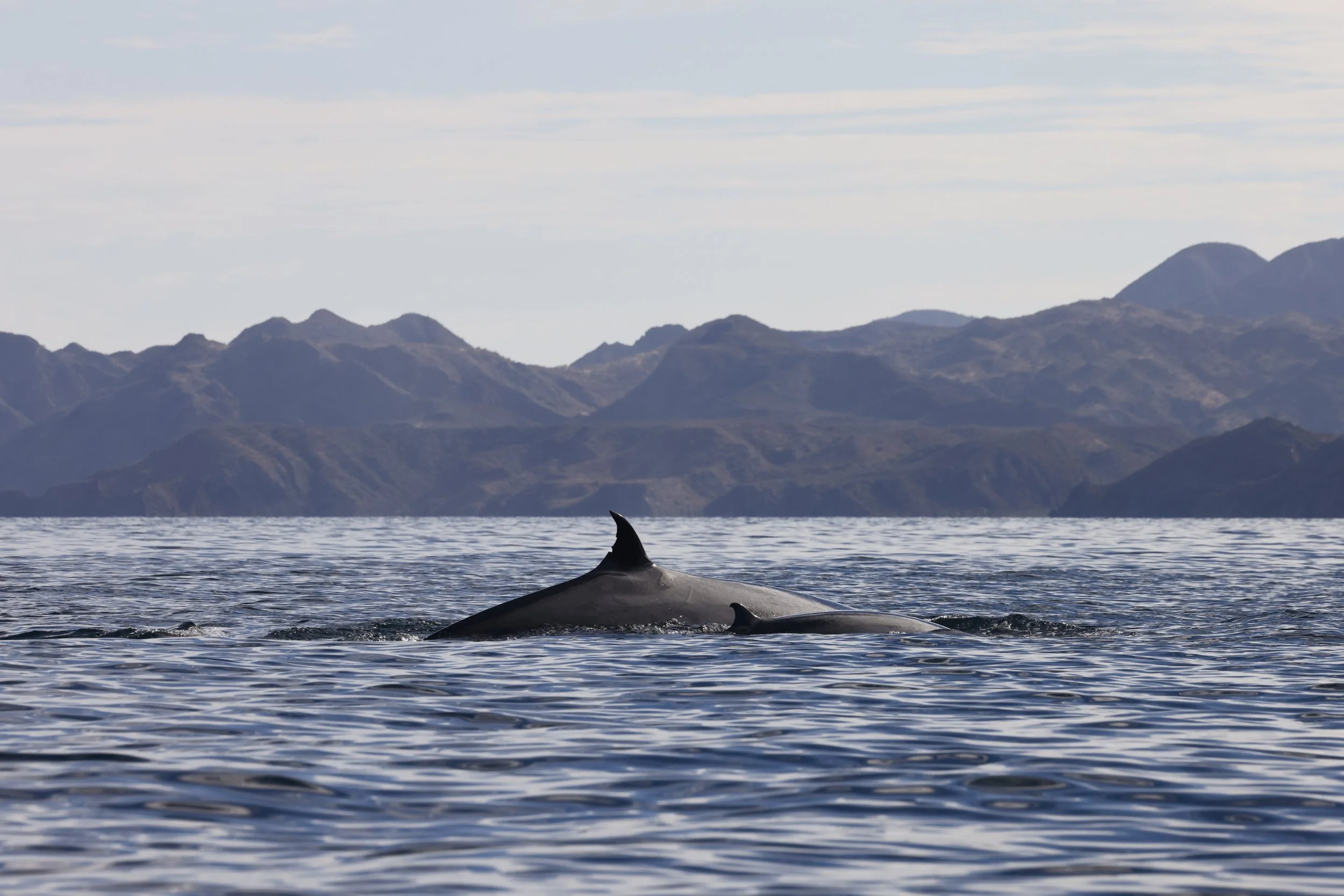
Most groups we encountered consisted of approximately 7–8 individuals, although on some occasions we observed larger aggregations of 11 and, at times, up to 16 whales, some of them with calves.
This is particularly fascinating because Bryde’s whales are generally described as solitary or occurring in pairs, although larger groups can form where food becomes concentrated.
During the last two summer seasons, we observed mothers and calves feeding and traveling together, giving us the opportunity to document not only the presence of the species but also their behavior and social associations.
The whales were not alone.
Around some of these feeding events, we observed thresher sharks, including individuals breaching near the surface, as well as large groups of silky sharks in the same areas.
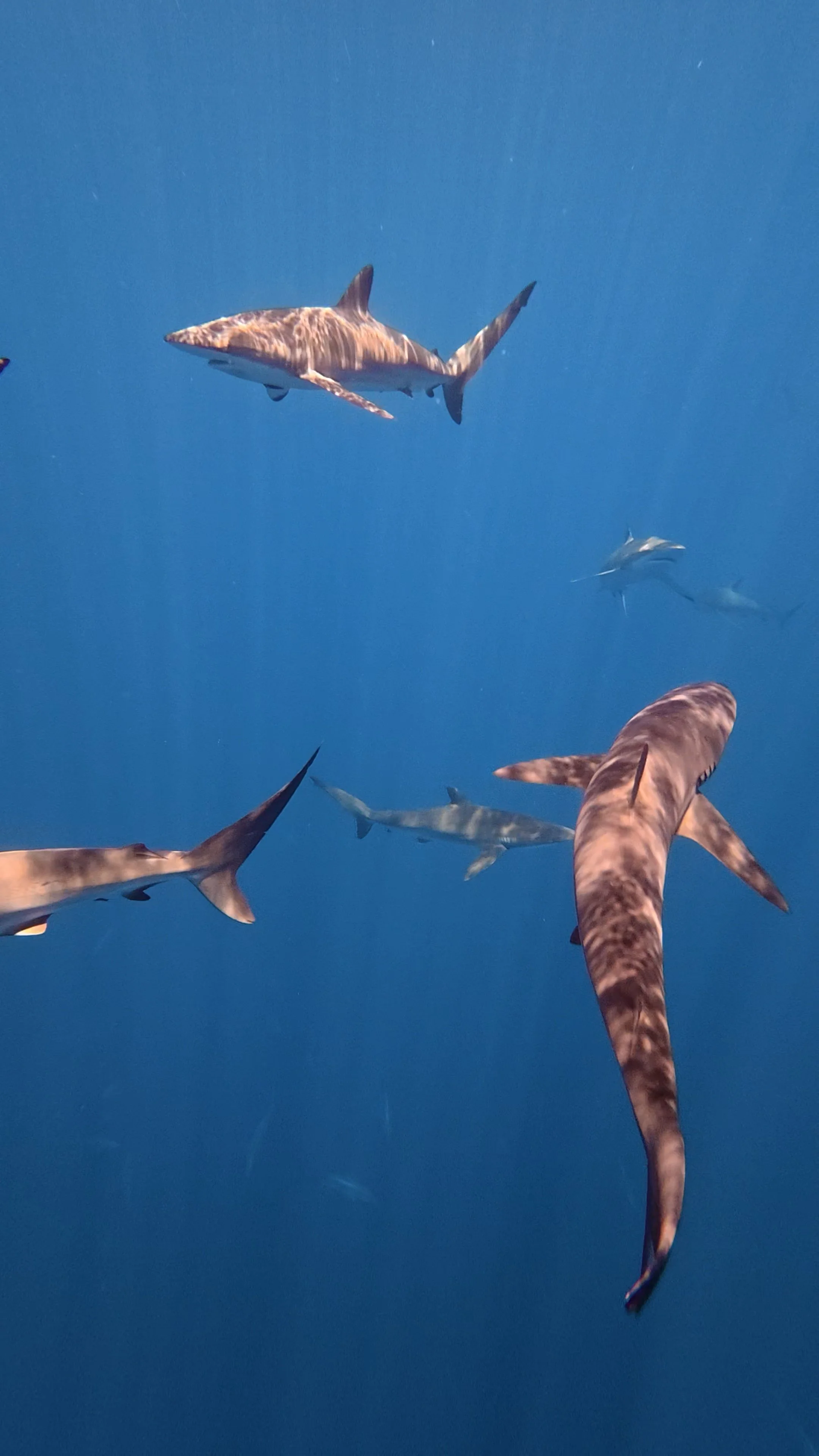
These encounters remind us that a productive ocean is rarely about a single species. When prey becomes concentrated, an entire community can gather around the same ecological opportunity.
What we were witnessing was not simply a gathering of whales.
It was a glimpse into a functioning marine ecosystem.
Following the Food, not a calendar
One of the most interesting things about Bryde’s whales is that their movements do not necessarily follow the predictable seasonal migrations we associate with species such as gray whales, humpack whales or blue whales.
Bryde’s whales are closely associated with productive waters and feed primarily on schooling fish such as sardines, anchovies, mackerels and herrings, as well as smaller crustaceans.
In the Gulf of California, research has documented relationships between Bryde’s whale occurrence and the distribution of their prey, particularly Pacific sardines. Changes in oceanographic conditions can move these prey resources, and the whales can consequently change where they feed.
This helps explain why we should not think of the ocean as having completely fixed wildlife seasons.
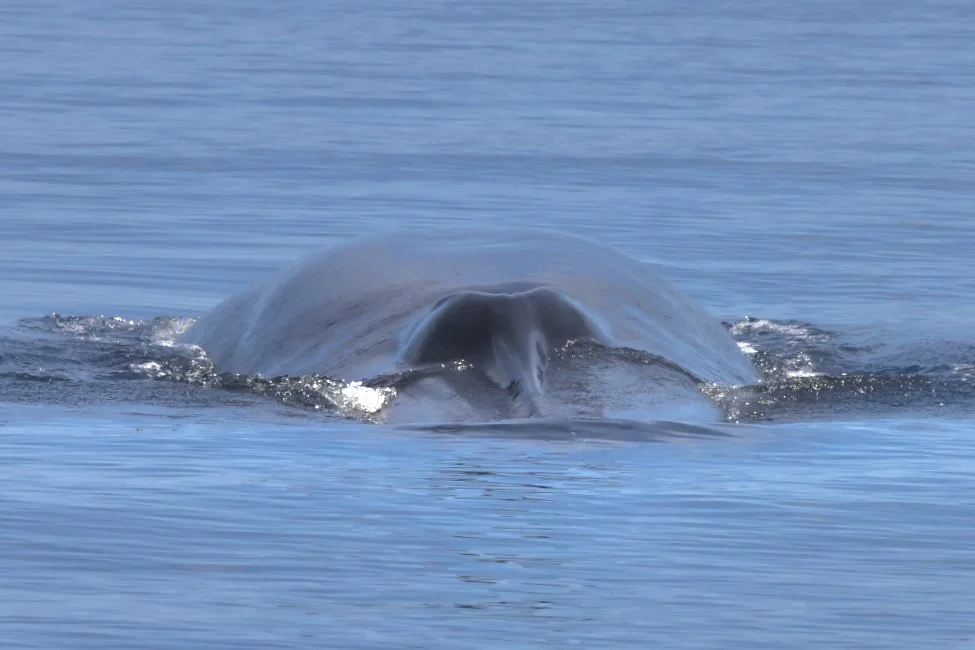
The prey moves. The productivity moves. The whales move with it.
Ocean productivity is influenced by currents, temperature, upwelling, mixing, nutrient availability and climate variability. In the Gulf of California, these processes create a constantly changing mosaic of productive habitats.
So when Bryde’s whales leave a particular area, it does not necessarily mean that their season has simply “ended.” They may be following the next productive patch of ocean.
That is one of the questions we hope to understand better through continued observation.
What Happens When Summer Ends?
As autumn develops, Loreto's marine community begins to change.
We enter a period when Pacific sardines can become an increasingly important seasonal prey source in the region, potentially attracting other large predators into the area.
We can expect opportunities to encounter fin whales, as well as continued encounters with pilot whales, sperm whales, and other odontocete species, particularly during years of high productivity and abundant Humboldt squid.
Fin whales are particularly interesting in this context. Research has identified the Loreto–La Paz corridor as an important area of seasonal use, with whale movements associated with patches of sufficiently abundant prey.
And there may still be Bryde’s whales.
We simply do not know whether some individuals will remain in the Loreto region, move farther south, move north, or disperse into other feeding areas.
That uncertainty is not a weakness.
It is a scientific question.
Before winter arrives, we are looking forward to what we hope will be another beautiful and productive autumn inside Loreto Bay National Parka season when sardines and other prey may support a changing community of predators.
The marine year in Loreto does not simply end when the Bryde’s whales disperse.
It transforms.
Why are we photographing whales?
At Baja Adventures, our wildlife expeditions are increasingly becoming opportunities for citizen science and long-term observation.
We are developing a photographic identification record of the whales we encounter.
Individual whales can sometimes be recognized through natural markings, scars, pigmentation patterns and characteristics of their dorsal fins. Photo-identification has already been used successfully in research on Bryde’s whales in the Gulf of California to investigate movements and whether individuals are encountered in different parts of the Gulf.
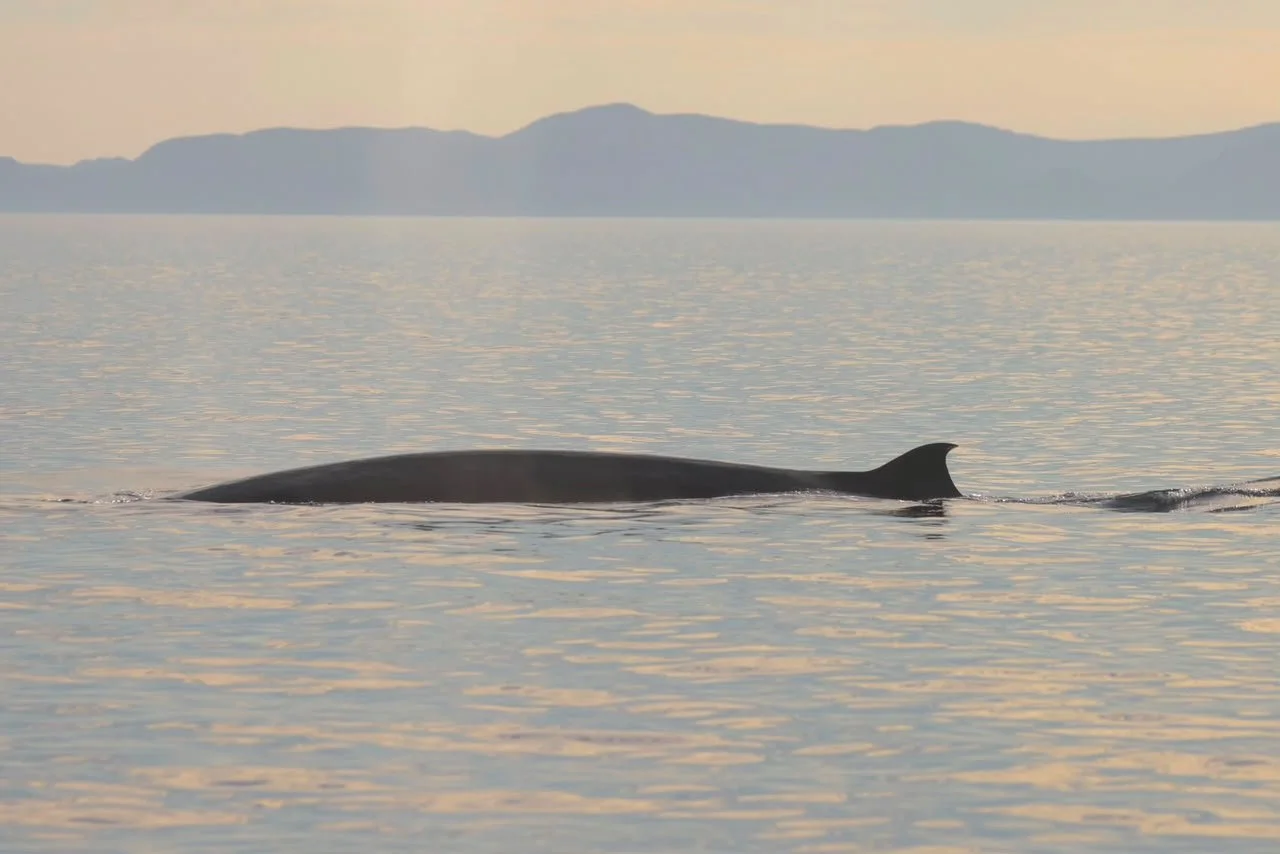
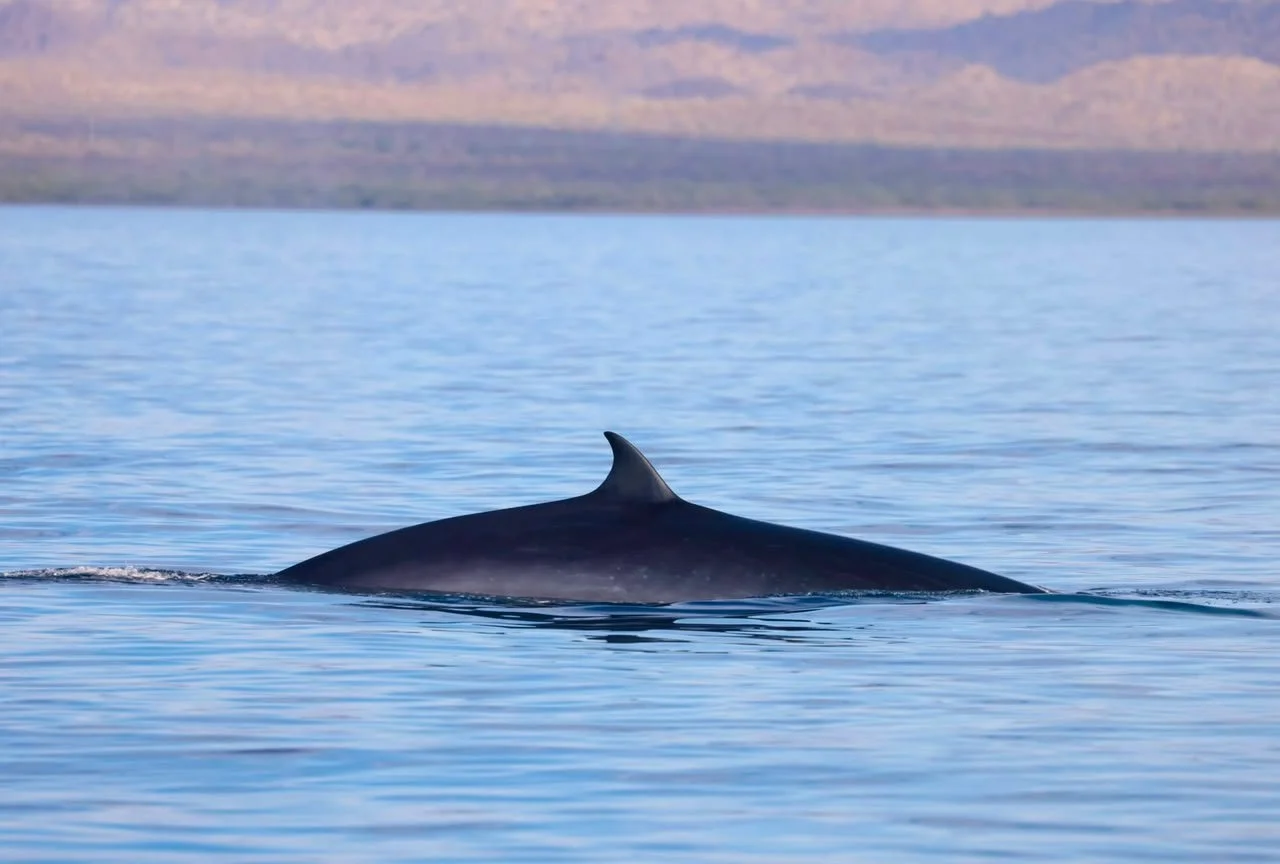
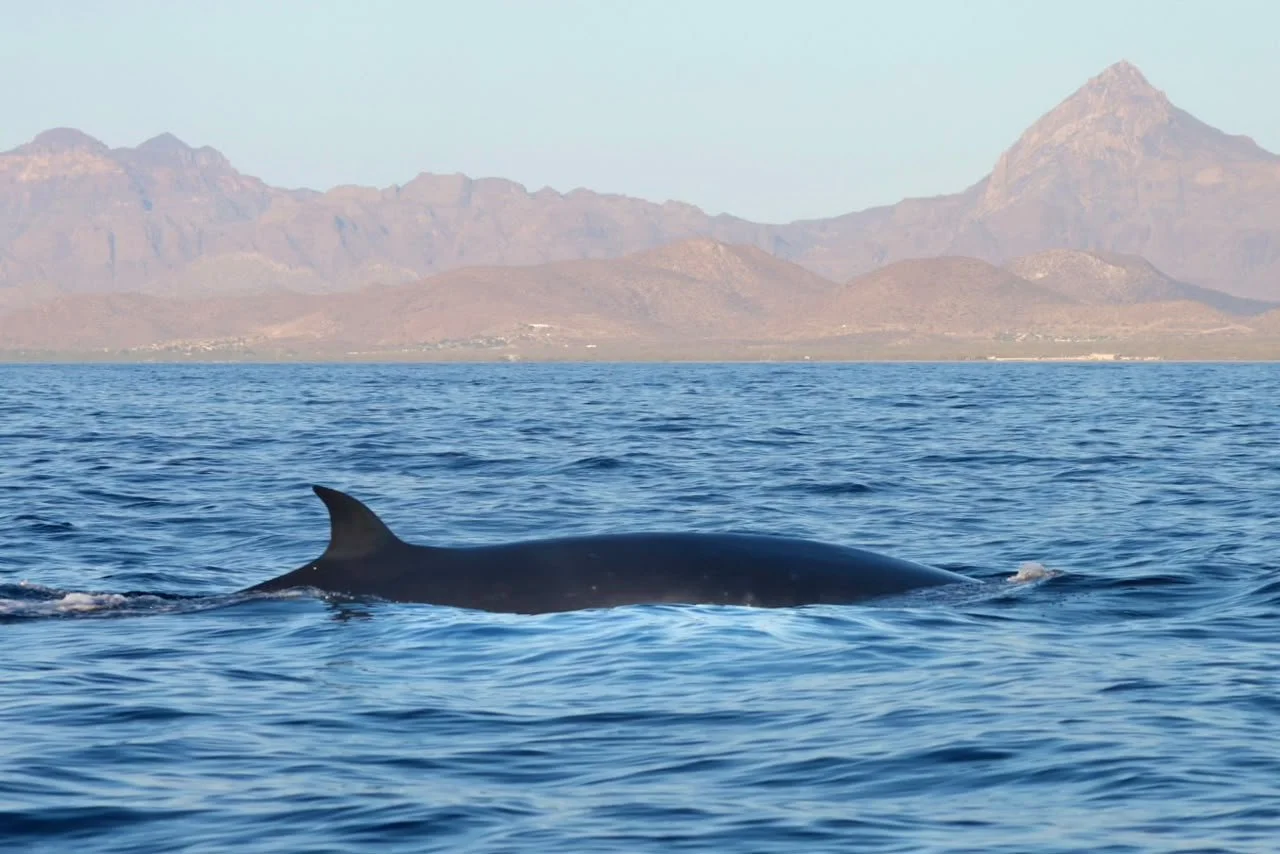
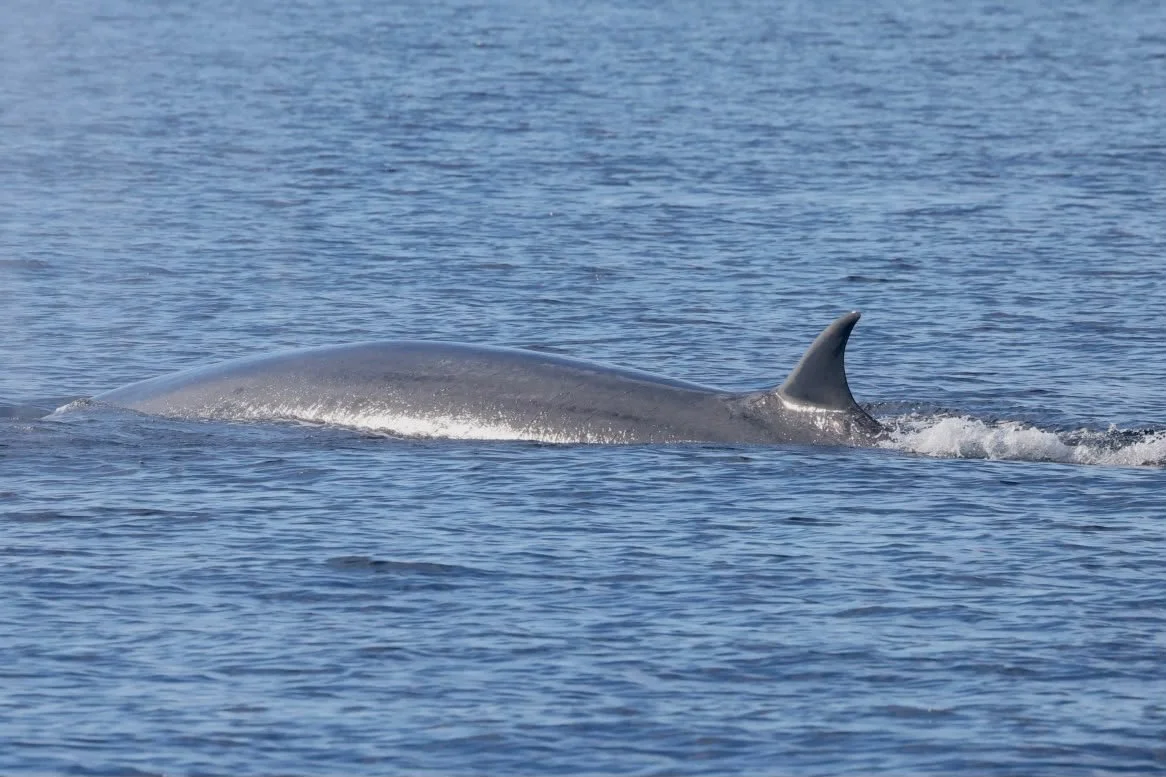
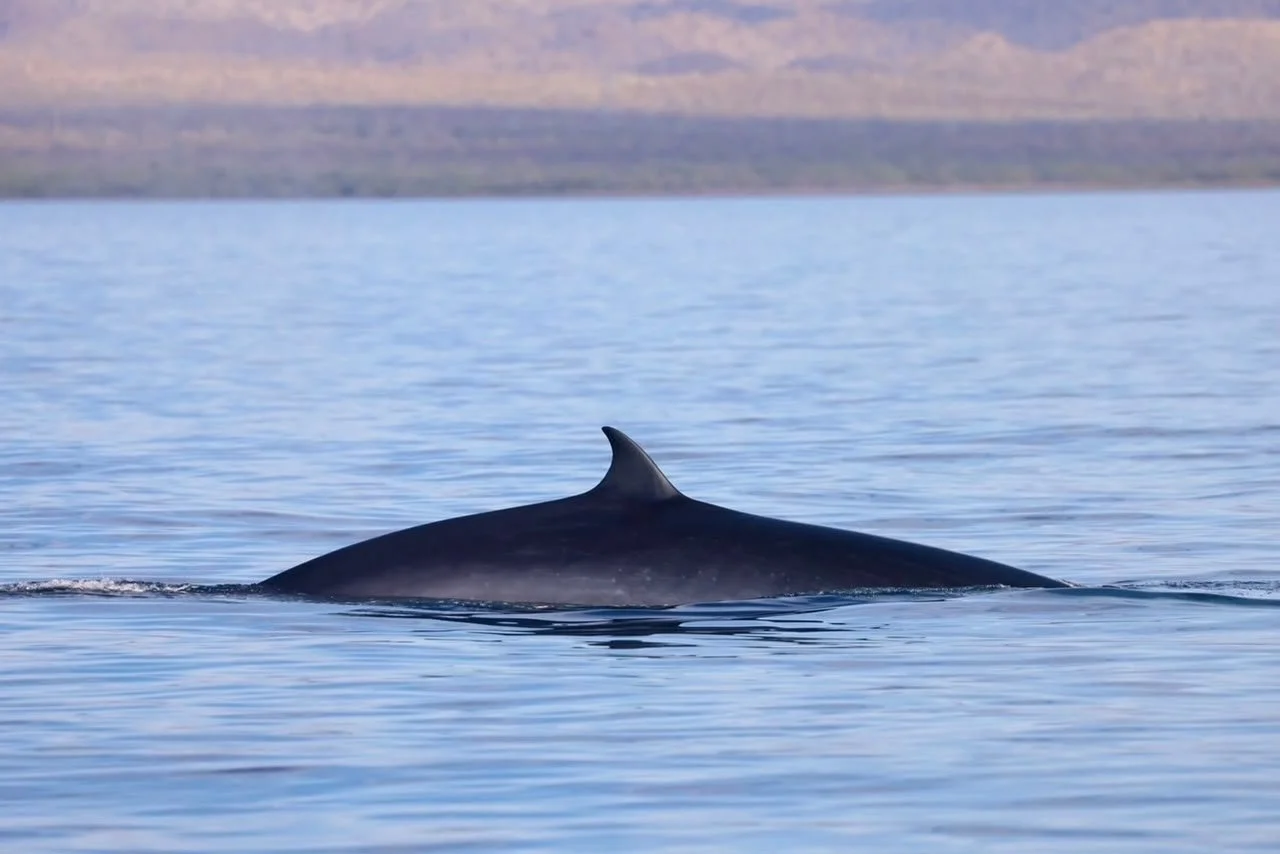
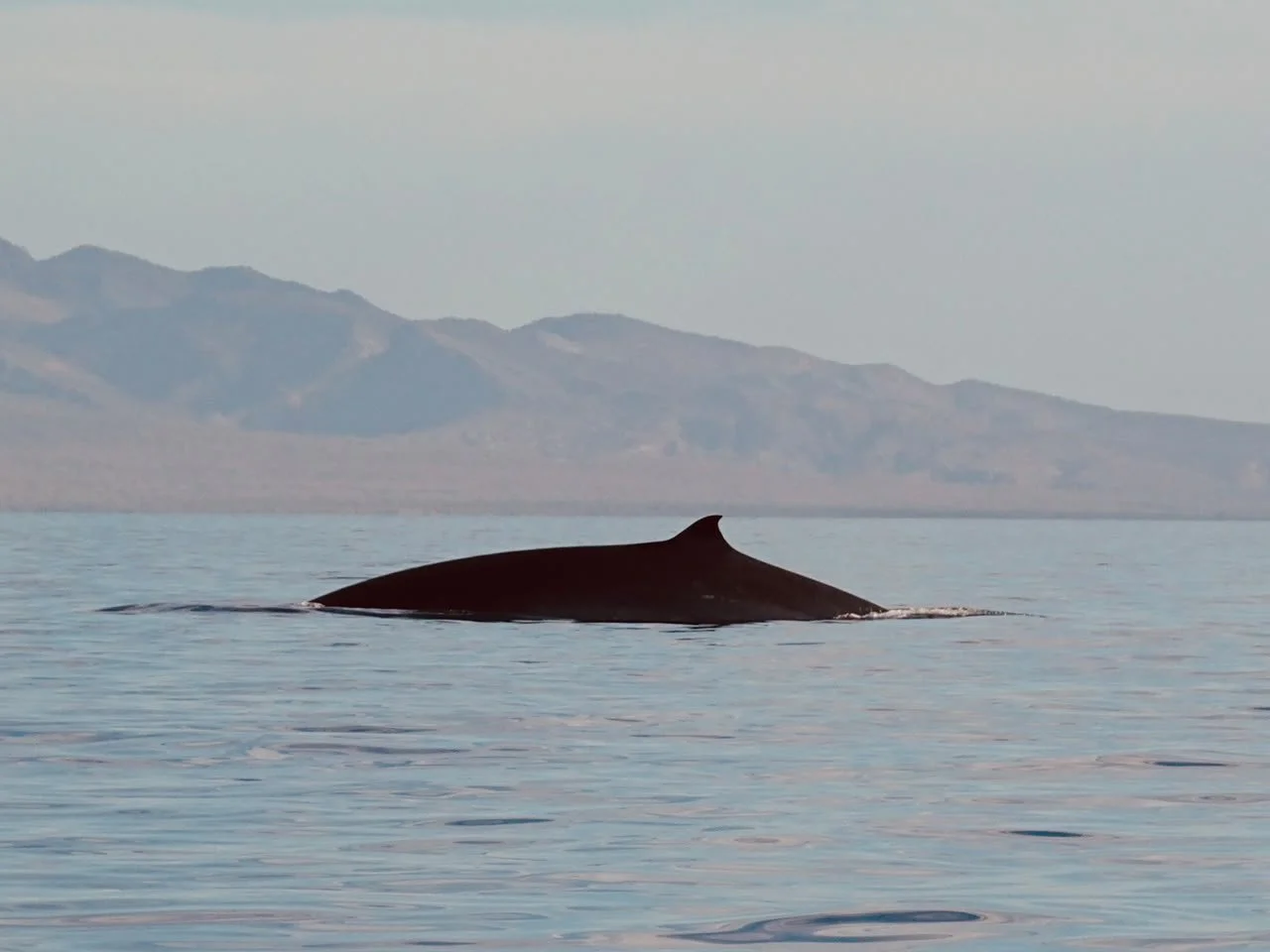
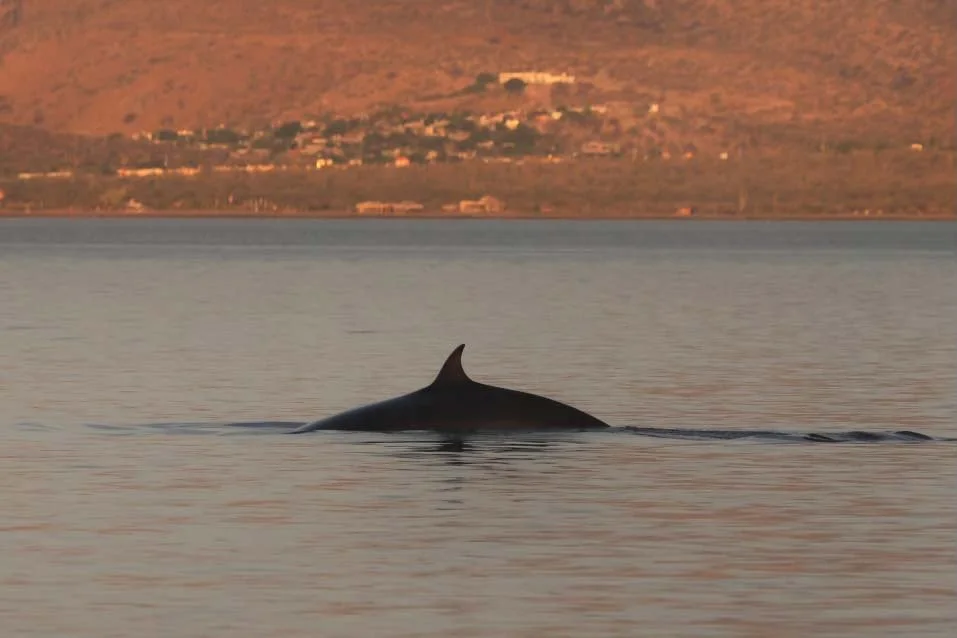
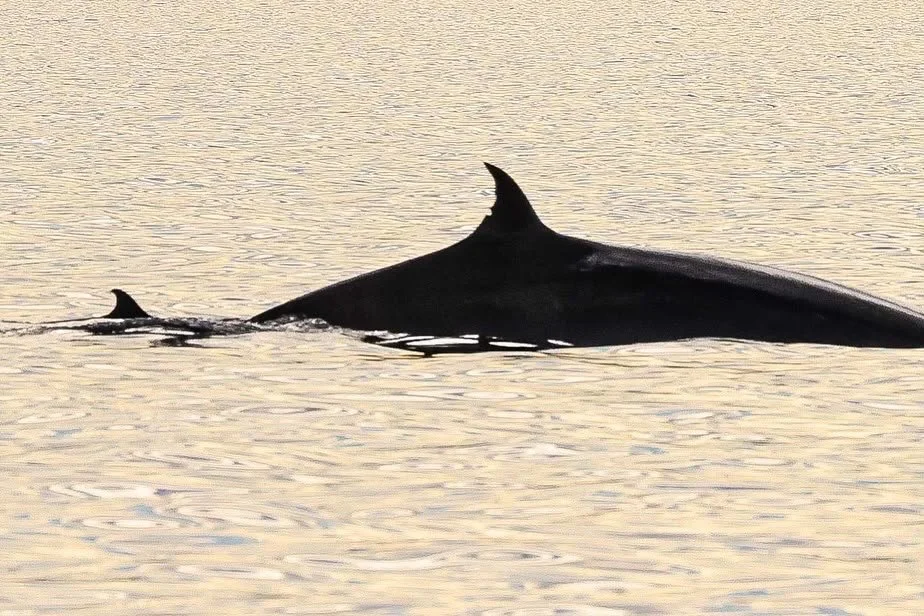
Our objective is simple:
Can we recognize the same whales when they return?
Over time, we hope to explore questions such as:
Do the same individuals return to Loreto?
Do particular females return with calves?
Are some individuals consistently associated with the same feeding areas?
Do groups form repeatedly?
How does their distribution change between years?
Is their presence related to sardine abundance or other prey?
What happens during different oceanographic conditions?
These are questions that cannot be answered with a single season.
They require years of consistent observation.
A photograph from one expedition may seem like a small piece of information. But hundreds of photographs collected consistently over many seasons can become something much more valuable: a record of how individual animals and an ecosystem change through time.
And this is where participants like you become part of the story.
Every expedition gives us another opportunity to collect photographs, record locations, document behavior, and contribute observations to our ongoing cetacean distribution analysis. The more expeditions we can conduct and the more consistently we can document what we encounter, the more complete our understanding of Loreto's whales becomes.
Your participation helps make that continued effort possible.
You are not simply joining us to look for whales or other species. You are helping us keep looking, keep documenting, and keep learning about the cetaceans and species that use Loreto's waters throughout the year.
Over time, these individual observations can help reveal patterns that would otherwise be almost impossible to see, and contribute to a better understanding of how whales use Loreto Bay National Park and the wider Gulf of California.
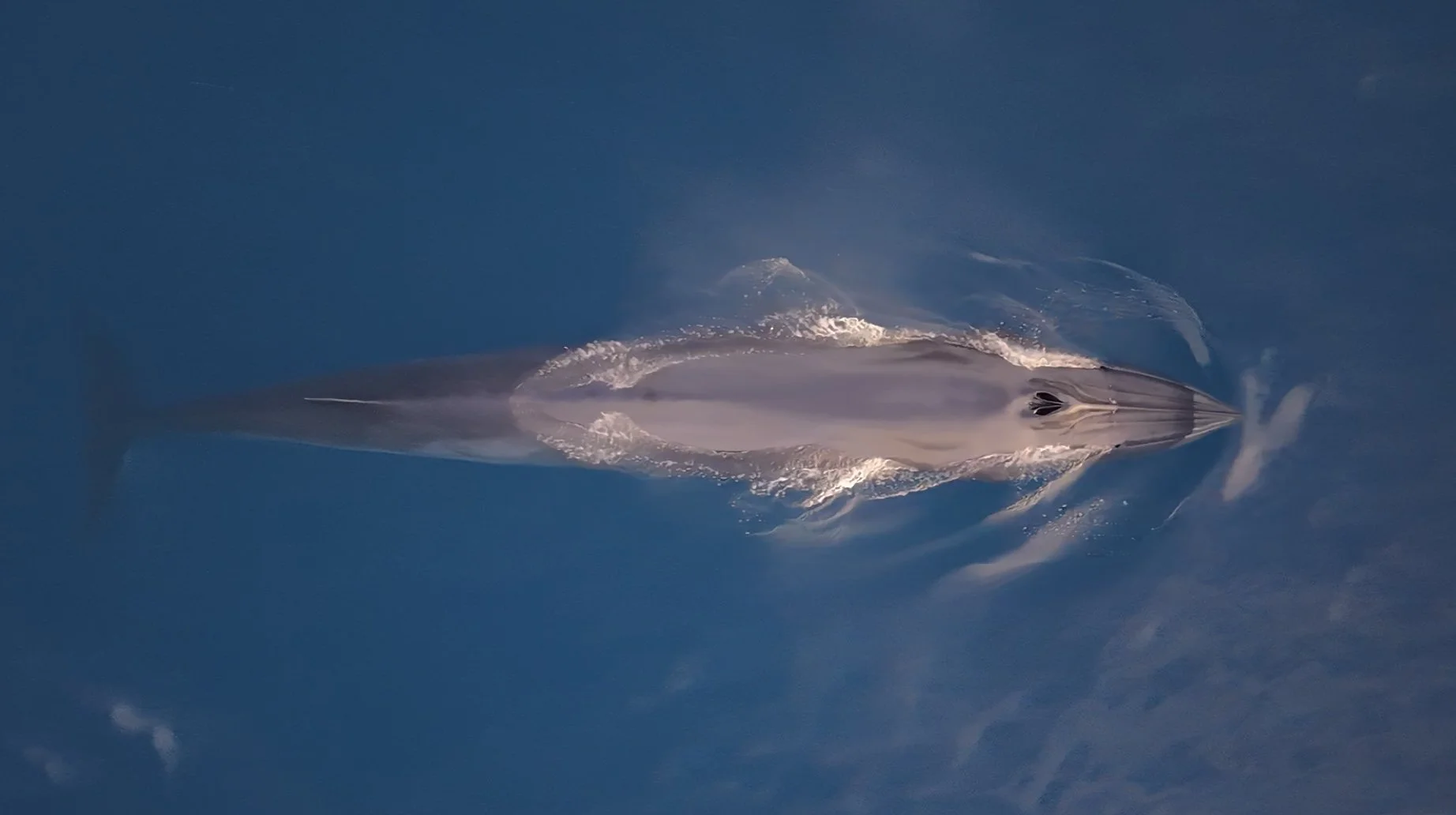
Bryde’s whales are not an easy species to study.
They can travel through enormous areas of ocean, their distribution can change with prey availability, and their behavior is strongly connected to conditions that can change from one year to another.
They also spend much of their time below or near the surface and can disappear from an area as quickly as they arrived.
That means a place can appear to have no Bryde’s whales simply because the whales are not there at that moment.
Long-term datasets are therefore essential.
A single sighting tells us that a whale was there.
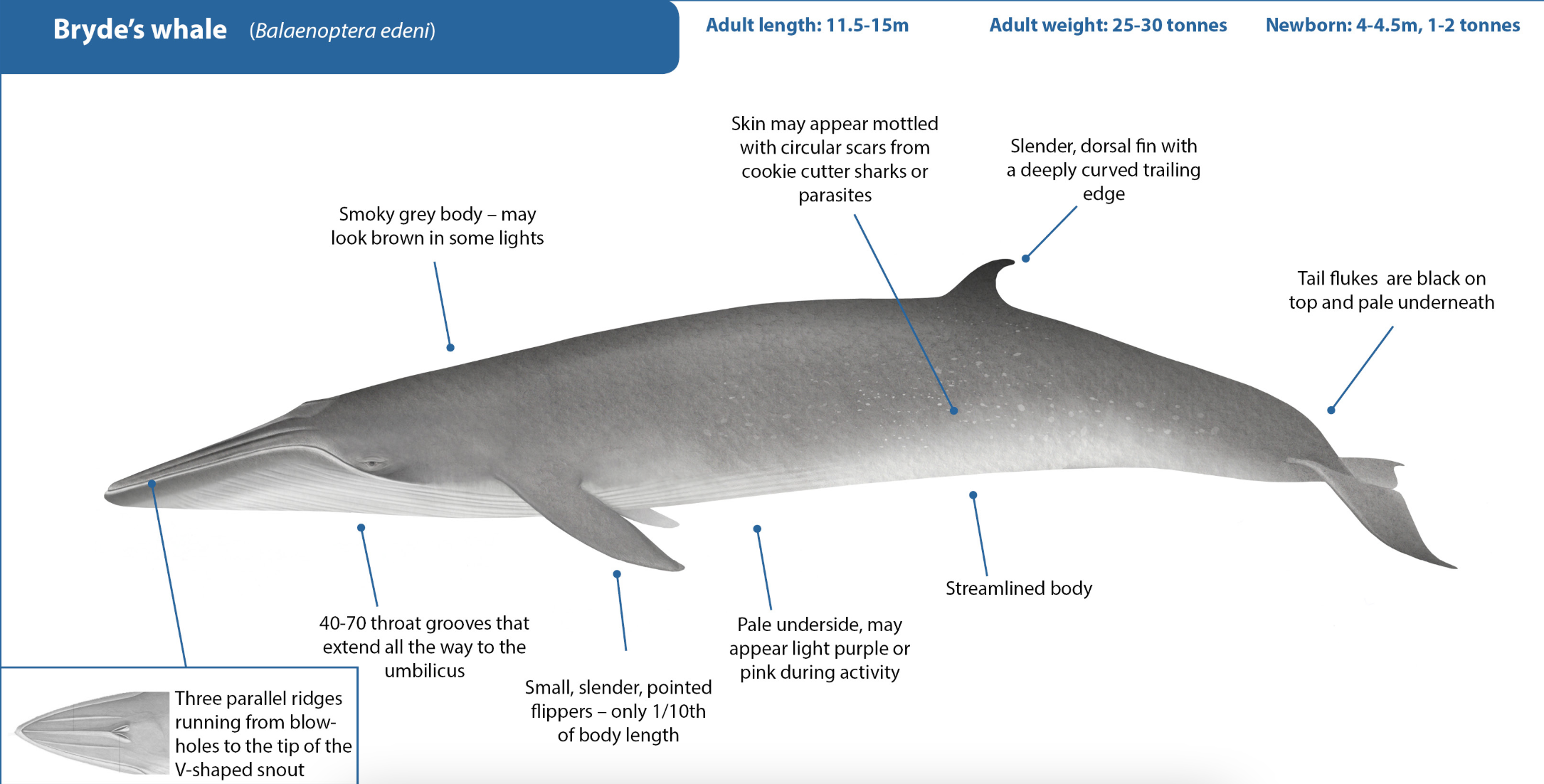
Repeated observations begin to tell us why.
Understanding these movements is especially important in a protected marine area such as Loreto Bay National Park, where wildlife distribution can change considerably with oceanographic conditions and prey availability.
The more we understand how animals use the park, the better we can understand the habitats and conditions that support them.
Why local research matters
Loreto is already recognized as an extraordinary marine environment.
Bahía de Loreto National Park is home to an exceptional diversity of marine mammals, including blue whales, fin whales, humpback whales, sperm whales, orca, pilot whales, Bryde’s whales and several species of dolphins.
The Gulf of California is one of the world's most biologically important marine regions, supporting an extraordinary diversity of species and habitats.
The park is not simply beautiful.
It is ecologically important.
That means understanding how its wildlife actually uses the area matters.
Knowing where whales occur, when they occur there, what they are feeding on and how their distribution changes can contribute to a better understanding of important habitats and support informed conservation and management.
For a place as dynamic as the Gulf of California, conservation cannot be based only on what we already know.
It has to be supported by continued observation.
Whales Are More Than Animals We Come to See
A whale is extraordinary to observe.
But a whale is much more than a spectacular animal appearing at the surface.
Large whales are part of the functioning of marine ecosystems. Through feeding, movement, excretion and eventually decomposition, whales participate in the movement and cycling of nutrients through the ocean.
Research on the “whale pump” has demonstrated how marine mammals can recycle nutrients such as nitrogen into surface waters, potentially stimulating primary productivity and supporting marine food webs.
In this sense, whales can be viewed not only as wildlife but as important components of ecological processes.
They can also provide valuable information about the health and changing conditions of marine ecosystems.
Protecting whales is therefore not only about protecting something beautiful.
It is also about protecting the ecological relationships that connect predators, prey, nutrients and habitats.
Healthy whale populations are part of healthy oceans.
And healthy oceans provide resilience for countless other species—including the coastal communities whose lives and livelihoods are connected to them.
Keeping Loreto Wild
Loreto's marine environment is extraordinary precisely because it remains a place where natural processes can still be experienced at a remarkable scale.
For decades, the region has also seen periods of irregular cruise-ship presence and proposals involving greater maritime development.
In April 2026, a federal decree opened the possibility of establishing Loreto as a deep-sea and coastal shipping port. That decree was subsequently abrogated, and Mexican authorities stated in July 2026 that cruise-ship arrivals had been denied from 2026 through 2030.
For us, the broader conversation is about understanding the ecological character of the place and considering how different forms of development interact with it.
The Gulf of California is internationally recognized for its extraordinary biological importance, while Loreto Bay National Park is a protected area and part of the Gulf of California UNESCO World Heritage Site.
These are waters where whales live, feed, reproduce and pass through year after year.
They are waters where resident and migratory cetaceans share the same ecosystem.
Blue whales can arrive during winter. Bryde’s whales can gather during productive periods of spring and summer. Autumn can bring changing concentrations of sardines and other prey, with opportunities for fin whales, pilot whales, sperm whales and other species. Humpback whales can also form part of the winter marine community.
The remarkable thing is not simply that these animals are here.
It is that they are connected to the same living ocean.
Loreto, Stay Wild is our way of expressing that connection: a belief that experiencing a place should also deepen our understanding of it.
From Tourism to Understanding
We believe regenerative tourism can go beyond simply minimizing our footprint.
It can contribute something back.
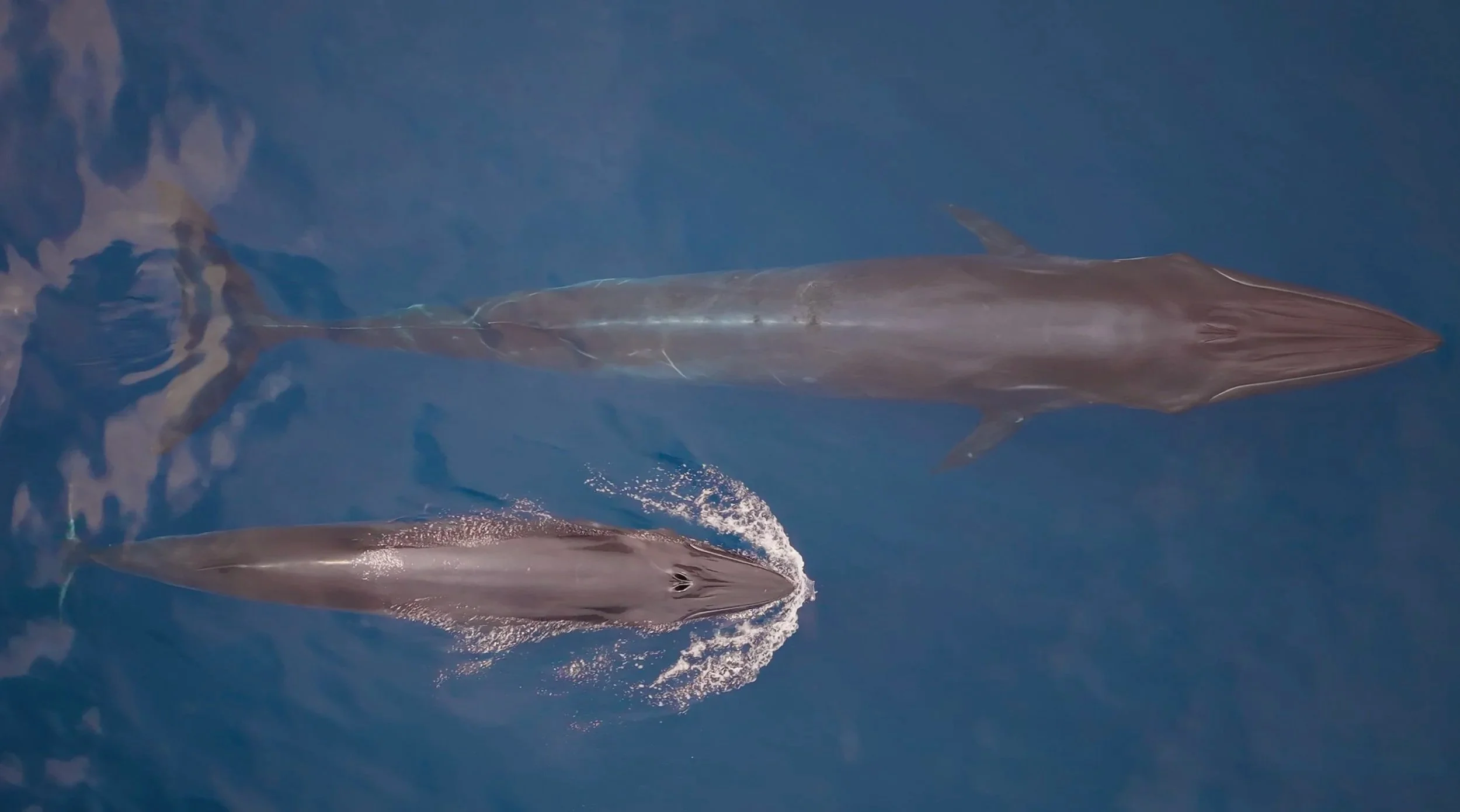
During our expeditions, guests can become participants in the process of understanding this ecosystem.
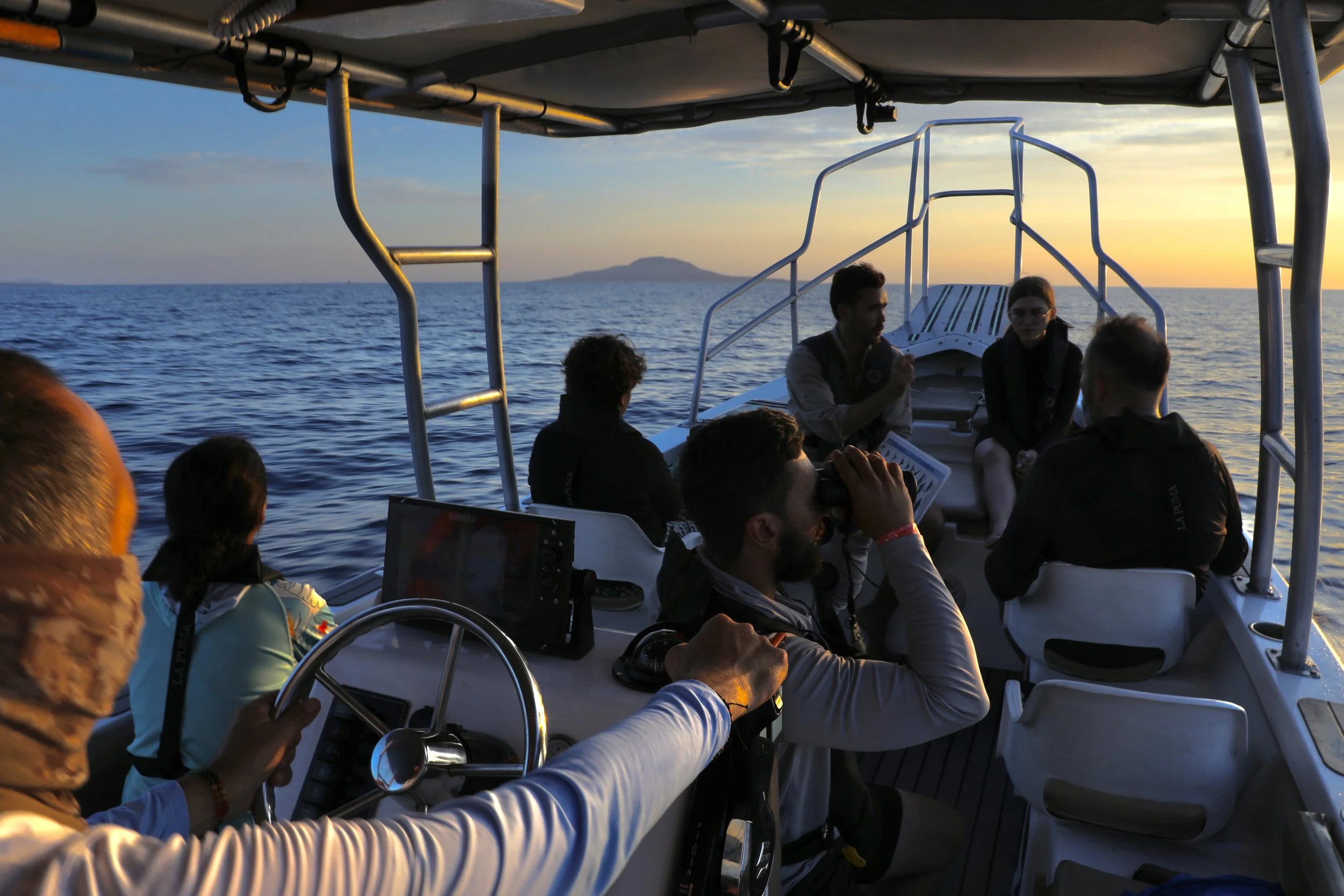
Through cetacean distribution monitoring, photographic identification, observations and citizen science, time spent on the water can become information that contributes to a longer-term picture of Loreto's marine life.
We are not a research institution, and our observations do not replace dedicated scientific surveys.
But responsible expedition operators can help create a bridge between science, conservation and the people who come to experience these places.
Every photograph, location, observation and behavioral record can become another piece of a much larger puzzle.
And when those observations are repeated year after year, patterns begin to emerge.
That is where the real value lies.
A Living Ocean in the Gulf of California
The Gulf of California has often been called the “Aquarium of the World.”
That name is deserved not simply because of what we can see, but because of the extraordinary ecological processes happening beneath the surface.
Oceanographic conditions, productivity, prey movements, predators, migratory species and resident wildlife are constantly interacting.
The Gulf is alive.
And because it is alive, it is constantly changing.
That is why we need to keep learning.
We need long-term monitoring.
We need responsible navigation.
We need protected areas that remain ecologically functional.
We need tourism that contributes to understanding rather than simply extracting an experience.
And we need decisions about large-scale maritime projects to be informed by the ecological reality of the places they enter.
The future of Loreto is not only about what happens on land.
It is also about what happens beneath the surface.
Looking Ahead: Blue Whales, Humpbacks and Another Winter
As we close another remarkable summer of wildlife encounters in Loreto, we are already looking forward to the next chapter.
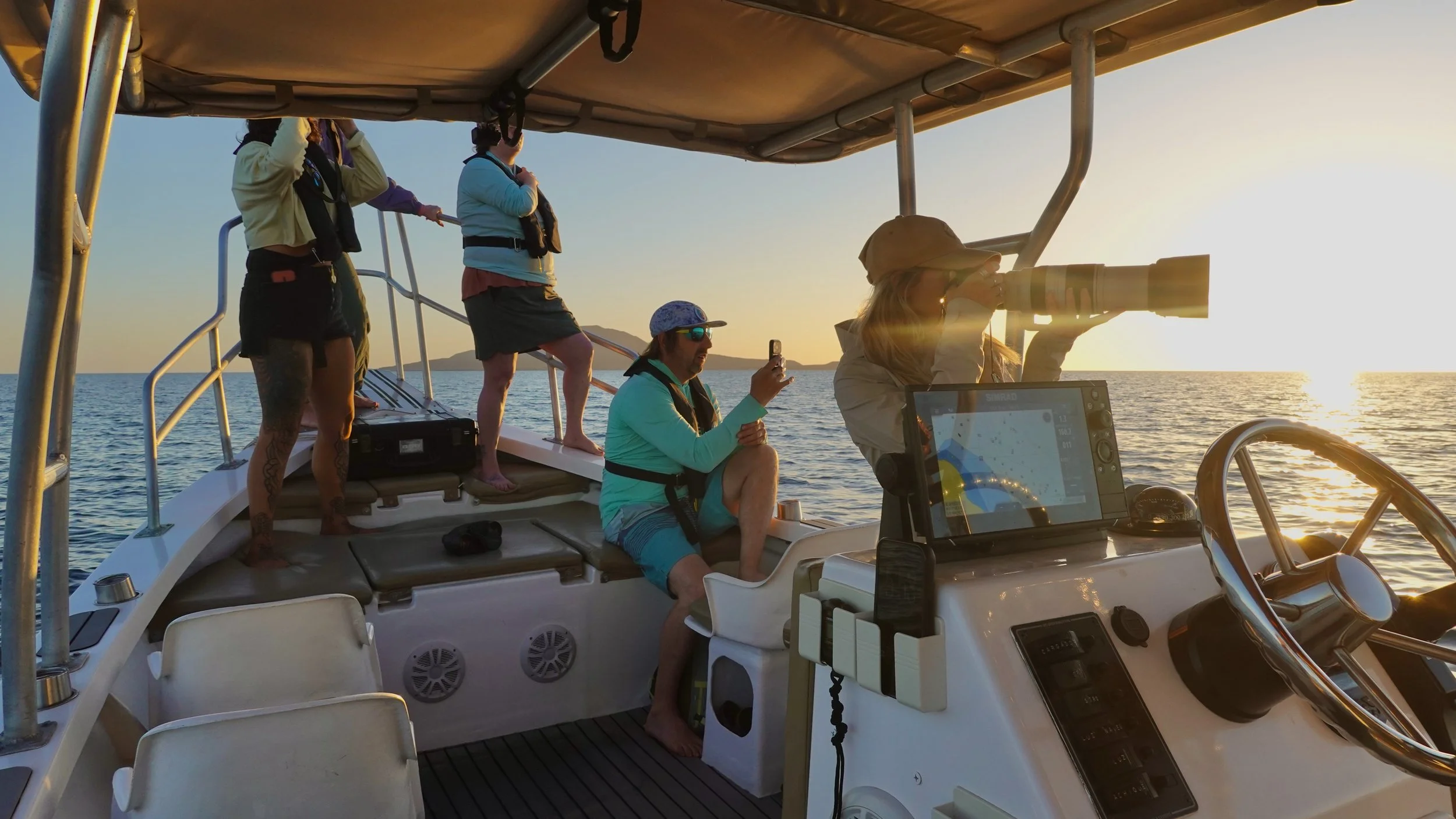
Before winter arrives, we hope to experience a beautiful autumn inside Loreto Bay National Park, with sardines and other prey supporting a thriving marine community and bringing new species and interactions into the park.
Then, as winter approaches, we look forward to one of the most extraordinary chapters of the annual cycle.
From January through mid-March 2027, we expect the return of blue whales to the waters of Loreto Bay National Park, where these extraordinary animals come to feed on rich concentrations of krill.

We also look forward to the possibility of encountering humpback whales during the winter season, adding another chapter to Loreto's remarkable diversity of cetacean life.
From Bryde’s whales in the warmer months, through the productive autumn transition, and into the winter arrival of blue whales and humpbacks, Loreto's waters continue to tell a story of movement, productivity and connection.
At Baja Adventures, this is why we keep going back to the ocean.
Every expedition gives us another opportunity to observe, photograph, learn and contribute to a better understanding of this ecosystem.
We don't have all the answers.
That's why we keep going.
Where will the Bryde’s whales be next summer?
Will the same mothers return with their calves?
How will sardine abundance influence autumn wildlife?
Which species will thrive when productivity is high?
How will changing ocean conditions shape the year ahead?
We will keep looking.
Because places like Loreto are worth understanding.
They are worth studying.
They are worth experiencing responsibly.
And they are worth keeping wild.
Join us on an expedition, experience the Gulf of California responsibly, and become part of a growing effort to understand this extraordinary marine ecosystem.
Because the more we understand a place, the better chance we have of protecting it.
LORETO, STAY WILD