
Five Species of Mobula Rays Found in Loreto
Every spring and summer, the waters surrounding Loreto, Baja California Sur, become one of the world's most remarkable seasonal aggregation sites for mobulid rays.
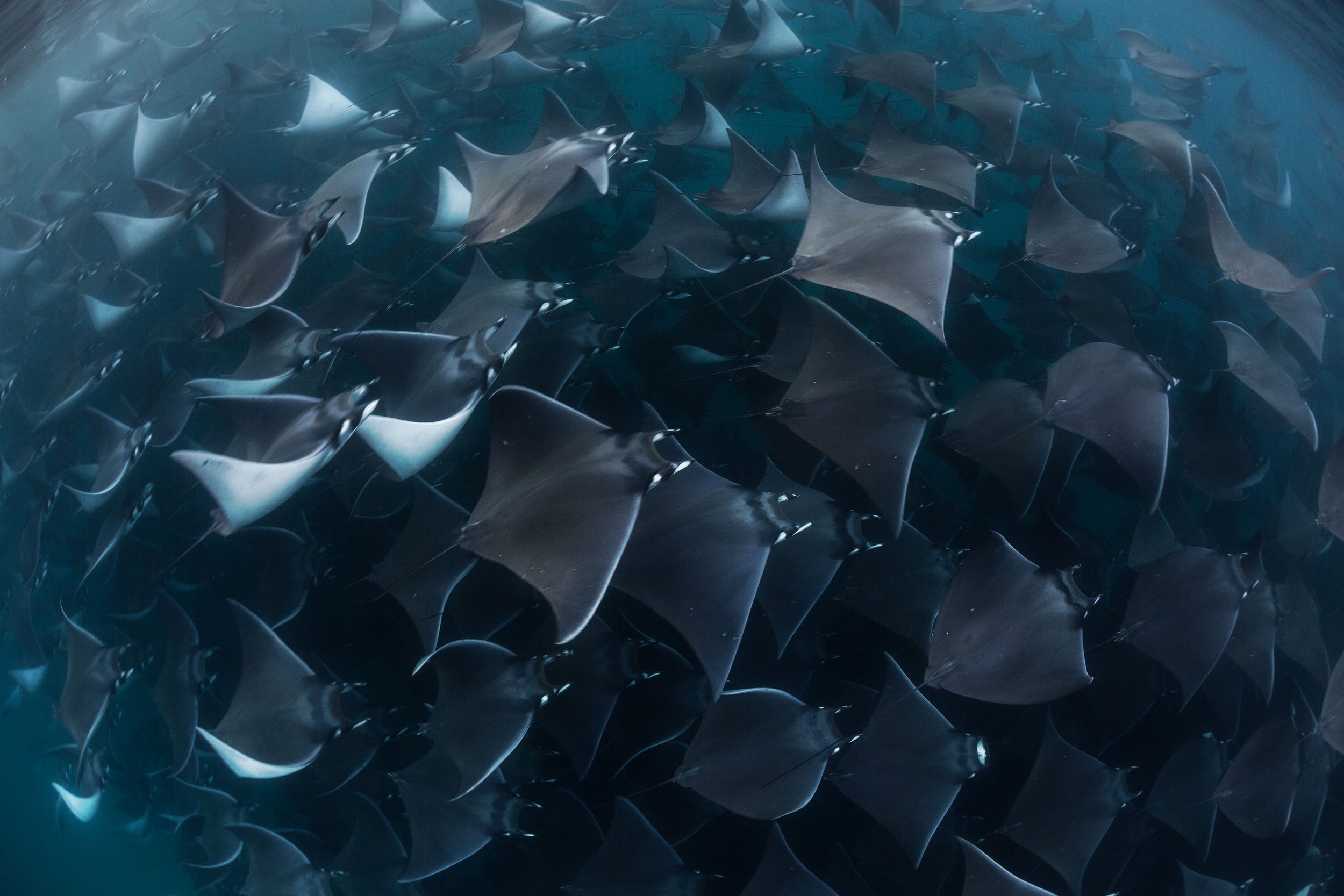
Mobula Munkiana photographed by the Nakawe Project Team.
Driven by seasonal upwellings, nutrient-rich waters with high chlorophyll concentrations fuel exceptional biological productivity, supporting dense blooms of plankton and schools of small pelagic fish. These conditions attract thousands of mobula rays, creating breathtaking aggregations that can extend for kilometers and produce the spectacular synchronized leaps that have made Loreto famous around the world.
While many visitors come hoping to witness the iconic jumping mobulas, fewer realize that five different species of mobulid rays use Loreto's waters during different parts of the season. Rather than residing here year-round, each species arrives according to its own seasonal ecology. Some gather primarily to feed on abundant prey, others form reproductive aggregations, and many use Loreto as an important stop within their broader migratory movements throughout the Gulf of California and the eastern Pacific.
The 2026 season has officially begun, and the first Giant Oceanic Mantas (Mobula birostris) have already arrived, marking the beginning of another extraordinary season. Over the coming months, the diversity and abundance of mobulas will continue to increase, offering a rare opportunity to observe one of the planet's most impressive natural marine gatherings in a single ecosystem.
Giant Oceanic Manta (Mobula birostris)
The Giant Oceanic Manta, the largest ray on the planet, can reach an incredible 7 meters (23 feet) from wingtip to wingtip. In Loreto, they are most commonly encountered from July through October, feeding in nutrient-rich waters with high chlorophyll concentrations, a sign of elevated primary productivity that supports abundant plankton. Watching one of these gentle giants glide effortlessly beneath the surface is an experience few people ever forget.
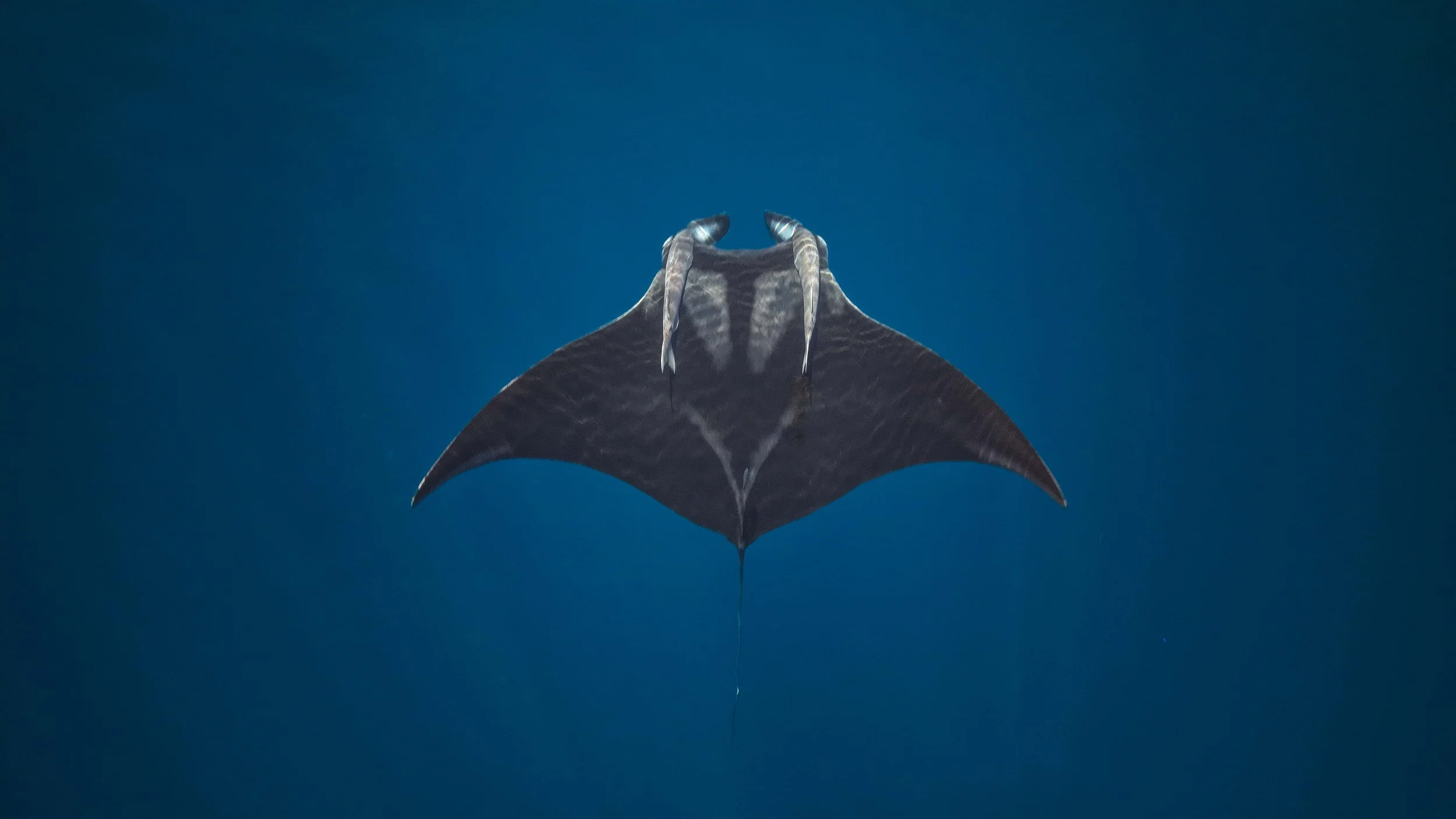
Mobula birostris photographed by the Baja Adventures Team, June 2026 in Loreto Bay National Park.
Munk's Devil Ray (Mobula munkiana)
From May through July, Mobula munkiana begin aggregating in the waters of Loreto, forming the enormous schools that have made the region famous worldwide. This small but incredibly agile species can gather in the hundreds, or even thousands, of individuals, creating one of the most spectacular wildlife events in the Gulf of California. They are also well known for their frequent acrobatic leaps, launching themselves several feet into the air in displays that continue to fascinate both scientists and visitors alike.

Mobula munkiana photographed by the Baja Adventures Team, July 2025 in Loreto Bay National Park.
Bentfin Devil Ray (Mobula thurstoni)
Recognizable by its distinctive bent pectoral fins, the Bentfin Devil Ray frequently shares feeding areas with Munk's devil rays. In Loreto, this species is most commonly observed during April, May, and June, when it joins seasonal feeding aggregations. Although slightly larger than Munk's devil ray, it displays the same graceful swimming behavior and contributes to the remarkable diversity of Loreto's spring and early summer marine life.
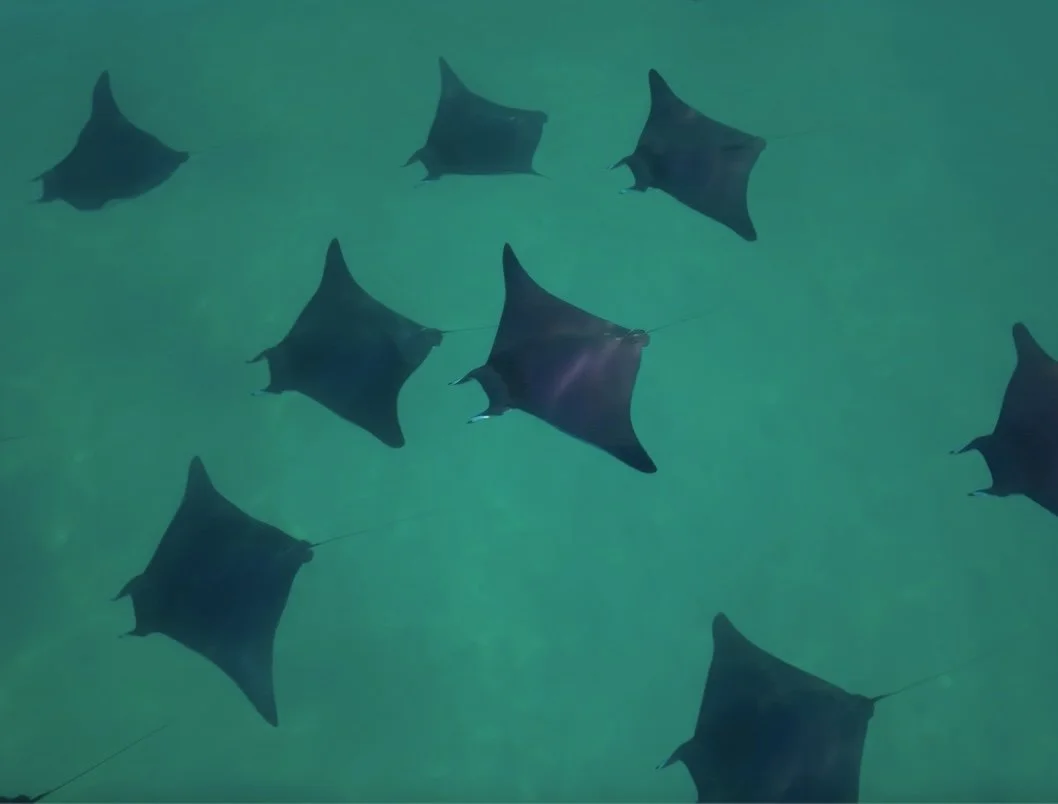
Mobula Thurstioni photographed by the Baja Adventures Team, May 2026 in Loreto Bay National Park.
Sicklefin Devil Ray (Mobula tarapacana)
Perhaps the most remarkable traveler of the family, the Sicklefin Devil Ray has been recorded diving deeper than 1,500 meters (nearly 5,000 feet) before returning to the surface. These extraordinary dives are believed to help them forage in the deep ocean while still feeding in productive surface waters. In Loreto, this species is most commonly encountered during the late summer months of July, August, and September, often in offshore areas where thresher sharks and Bryde's whales are actively feeding,
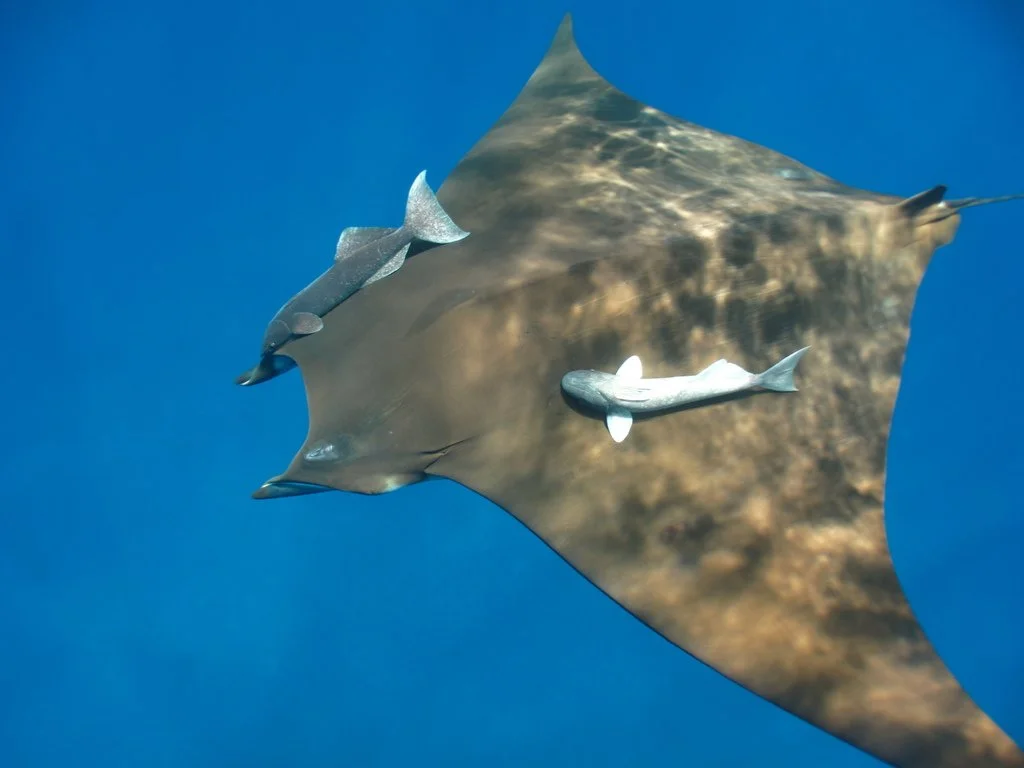
Mobula Taparacana - Rafael de la Parra - iNaturalist
Spinetail Devil Ray (Mobula mobular)
Once thought to exist only in the Mediterranean Sea, recent genetic research confirmed that the eastern Pacific population also belongs to Mobula mobular. In Loreto, solitary individuals are most commonly observed during the winter months, while reproductive groups and feeding aggregations become more frequent from April through July, taking advantage of the region's exceptional seasonal productivity. This species is another remarkable seasonal visitor that highlights the rich diversity of Loreto's marine ecosystem.
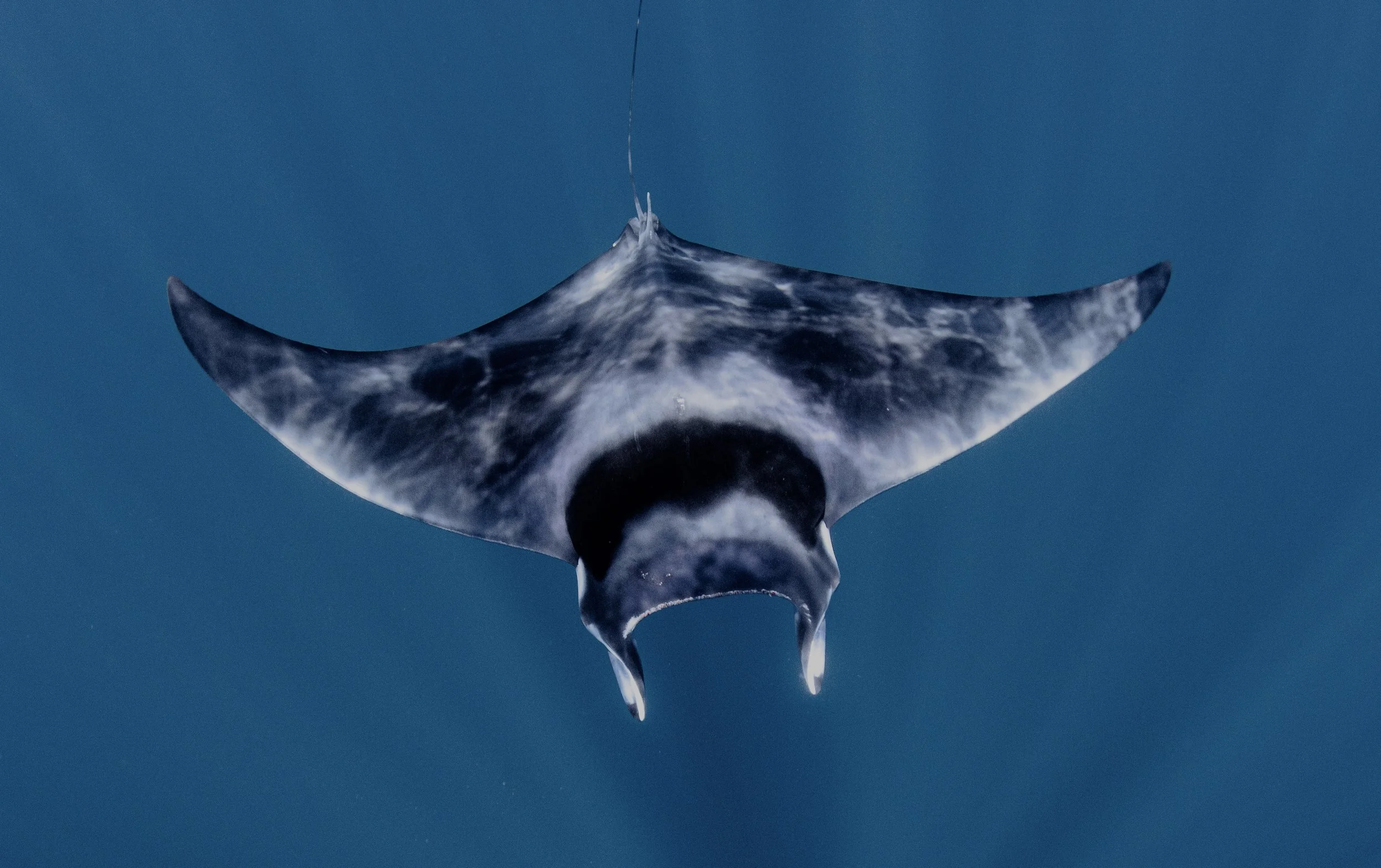
Mobula Mobular photographed by the Baja Adventures Team, May 2025 in Loreto Bay National Park.
Why Do Mobulas Come to Loreto?
The answer lies in one of nature's most productive ecosystems.
Each spring and summer, seasonal winds create upwelling, a natural oceanographic process that brings cold, nutrient-rich water from the deep sea to the surface. These nutrients fuel massive blooms of plankton, creating an abundant food source for filter-feeding animals.
Mobulas swim with their mouths open, filtering tiny zooplankton from the water using specialized gill plates. The incredible productivity of Loreto Bay National Park turns the area into a feeding ground.
The Gulf of California is often called "The World's Aquarium," and summer in Loreto is one of the best examples of why.
More Than a Feeding Ground
Scientists believe Loreto serves an even more important purpose than simply providing food.
Research has documented courtship behavior, mating trains, and reproductive activity among several mobula species in the southern Gulf of California. Nearby areas have also been identified as important nursery habitats where newborn Munk's devil rays begin their lives.
This means Loreto is not only a place where mobulas feed—it is also a place where future generations are created.
Protecting these waters helps protect the future of the species themselves.
Why Do Mobulas Jump?
It's one of the ocean's greatest mysteries.
Despite decades of research, scientists still cannot say with certainty why mobulas leap several meters into the air.
Several theories have been proposed:
Communication between individuals.
Courtship during the breeding season.
Removing parasites such as remoras.
Shaking off hitchhiking fish.
Social interactions within large schools.
The most likely answer is that jumping serves multiple purposes depending on the situation. Every leap reminds us that there is still so much to learn about these extraordinary animals.
When the Hunters Arrive
Despite their size and agility, mobula rays have one formidable natural predator: the orca (Orcinus orca). Several ecotypes and family pods occur throughout the Gulf of California year-round, moving across the region in response to seasonal prey availability. During the mobula aggregation season, some pods are known to target these rays, using their intelligence and coordinated hunting strategies to capture individuals. While we don't encounter orcas every day in Loreto, we do observe them throughout the season, and on occasion, we are fortunate enough to witness them actively hunting mobulas. These remarkable encounters highlight the ecological importance of Loreto's productive waters, where seasonal abundance supports an entire food web—from microscopic plankton to the ocean's apex predator.

Juvenile orca feeding on a Mobula mobular in Loreto, Baja California Sur, Mexico. Photographed by the Baja Adventures Team, September 2025.
Gentle giants that need our protection
Although thousands of mobulas gather in Loreto every summer, they are surprisingly vulnerable.
Unlike most fish, mobulas grow slowly, mature late, and females usually give birth to only one pup after a pregnancy lasting more than a year. Reproduction is slow, meaning populations recover very gradually from fishing pressure or accidental capture.
Several mobula species are currently classified as Endangered or Vulnerable, making healthy ecosystems like Loreto more important than ever.
Ethical wildlife tourism makes a difference
Every encounter with wildlife carries a responsibility.
Responsible wildlife tourism allows people to experience these incredible animals while ensuring they remain wild and undisturbed.
Best Practices for Watching and Swimming with Mobulas
Approach slowly and predictably. Reduce speed well before reaching a school and avoid sudden changes in direction or acceleration.
Never chase, herd, or separate a school. Allow the mobulas to continue their natural movements without pressure from the boat or swimmers.
Give them space. When snorkeling, stay at least 3 meters (10 feet) away whenever possible and let the animals decide whether to approach you.
Never swim in front of a moving ray or block its path. Approach only from the side and always leave the animals a clear escape route.
Enter the water quietly. Avoid jumping, splashing, shouting, or making sudden movements that may startle the animals.
Do not touch or attempt to ride a mobula. Their skin is covered by a protective mucus layer that helps defend them from disease and parasites. Touching can damage this natural barrier.
Stay calm and observe. Floating quietly often results in the closest and longest encounters, because curious mobulas may choose to approach on their own.
Keep group sizes small and follow your guide's instructions. Responsible operators manage the number of swimmers and boats to minimize stress on the animals.
Respect local regulations and protected areas. These rules exist to protect one of the world's most important seasonal aggregations of mobulid rays.
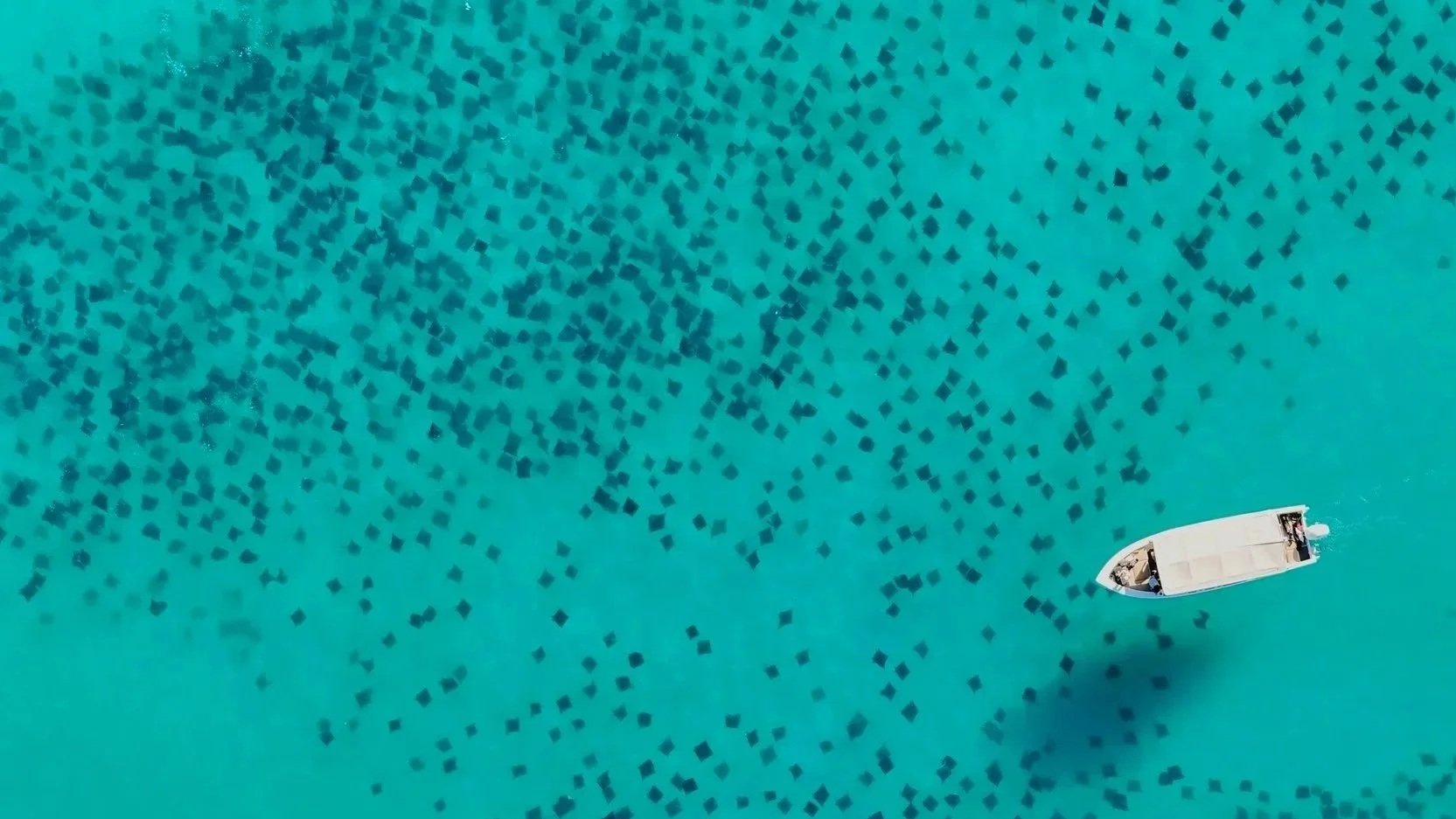
Baja Adventures boat La Puma surrounded by a school of Mobula munkiana, July 2025.
At Baja Adventures, these principles guide every expedition we operate. Our goal isn't simply to show you wildlife it's to ensure that the mobulas continue returning to Loreto year after year. We believe the best encounters happen when the animals remain completely wild, free to feed, travel, socialize, and behave naturally while we are privileged enough to witness it. At Baja Adventures, we believe that the most memorable wildlife encounters happen when nature is allowed to unfold on its own. Every expedition is designed to minimize our impact while maximizing education, appreciation, and conservation.
When tourism is conducted responsibly, it creates economic opportunities for local communities while providing powerful reasons to protect marine ecosystems for generations to come.
Join a marine expedition this Summer
The season has officially begun, and the Giant Oceanic Mantas have already arrived in Loreto.
Whether you're hoping to witness thousands of jumping Mobula munkiana, swim with a Giant Oceanic Manta, or simply experience one of the greatest marine wildlife spectacles on Earth, we'd love to welcome you aboard.
Baja Adventures operates expeditions throughout the entire summer season, offering experiences for every type of traveler.
Choose the option that best fits your adventure:
Shared (collective) expeditions — Perfect for solo travelers, couples, and small groups looking to share the experience with fellow ocean enthusiasts.
Private expeditions — A fully personalized adventure tailored to your interests, whether you're a wildlife photographer, family, researcher, or simply prefer the boat exclusively for your group.
Every expedition is led by experienced naturalist bilingual guides who are passionate about marine conservation and committed to ethical wildlife viewing.
Come discover why Loreto is one of the few places on Earth where five species of mobulid rays gather in the same ecosystem—and why protecting this incredible natural phenomenon is just as important as experiencing it.
Join us this summer and witness one of nature's greatest spectacles, responsibly.