The end of the Blue Whale season in Loreto
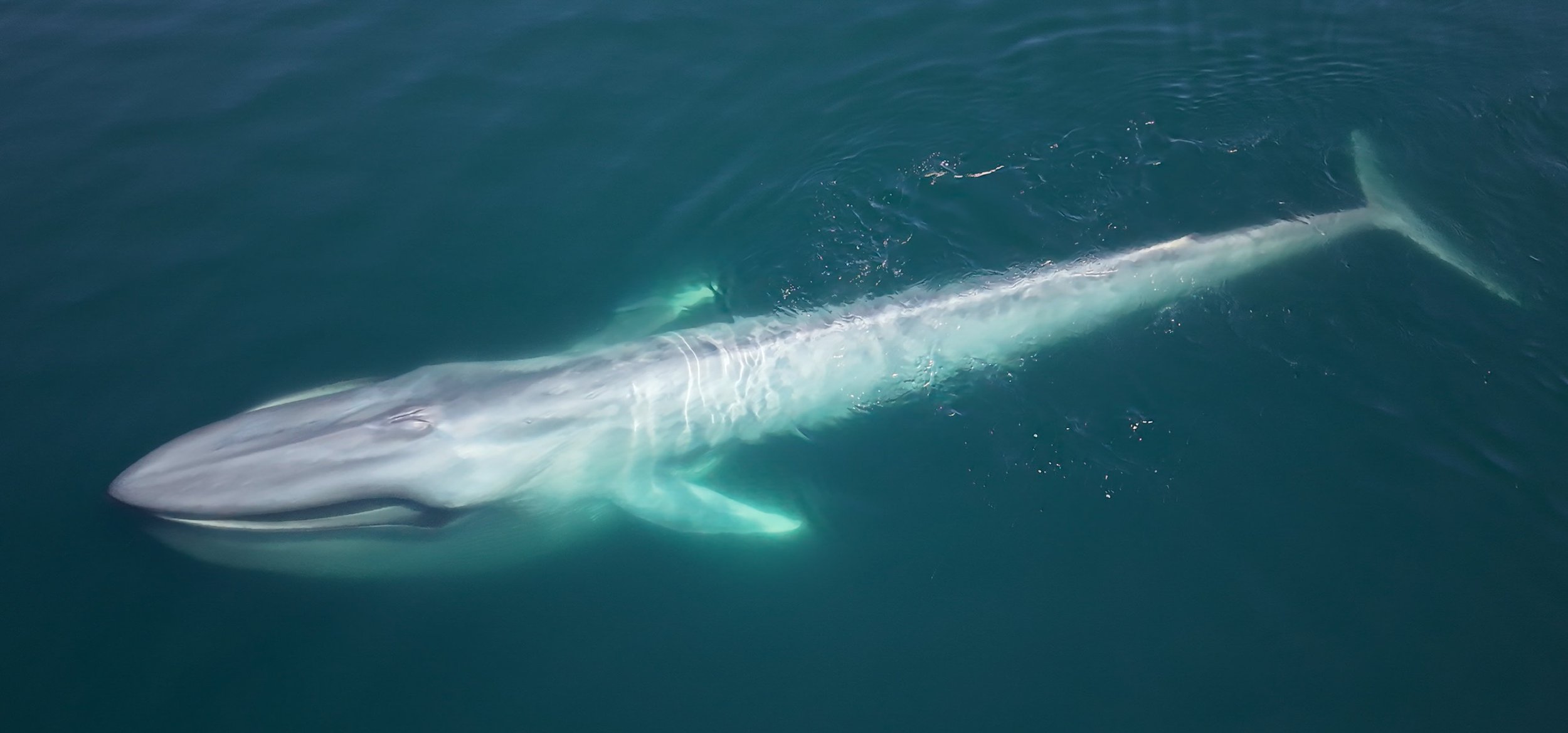
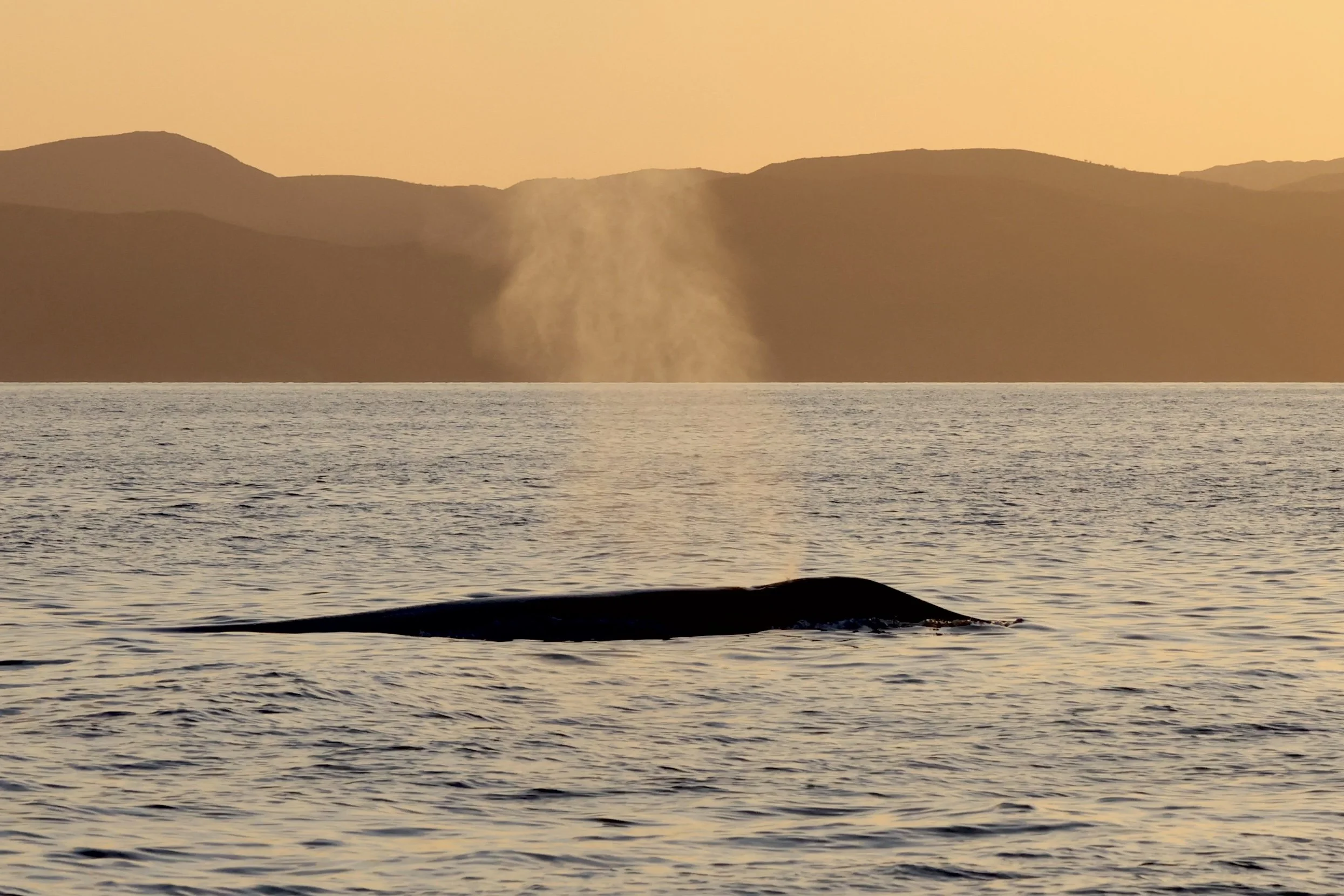
A blue whale cruising through the Gulf of California near Loreto photo by Leopoldo Sanmiguel.
Another blue whale season has come to an end in the waters of Loreto.
Months of early mornings, long days at sea, and countless hours scanning the horizon are now behind us. What remains are the encounters, the lessons, and the moments that stay with us long after returning to shore.
At Baja Adventures, this season was not only about sightings, it was about connection, responsibility, and giving back to the ecosystem that gives us everything.
This year, we completed 62 expeditions and had the privilege of sharing the ocean with 247 participants, accumulating around 530 hours in the waters of the park. Each expedition became part of our story, our learning process, and our ongoing effort to collect data on cetacean distribution to better protect this place.
First of all, we feel deeply grateful. It was a full and generous season. Loreto was incredibly productive, with high concentrations of krill. The whales returned, and we were able to share these moments with many of you. To those who couldn’t join us this year, we truly missed sharing this with you and hope to welcome you in the 2027 season to meet these incredible giants in their home.
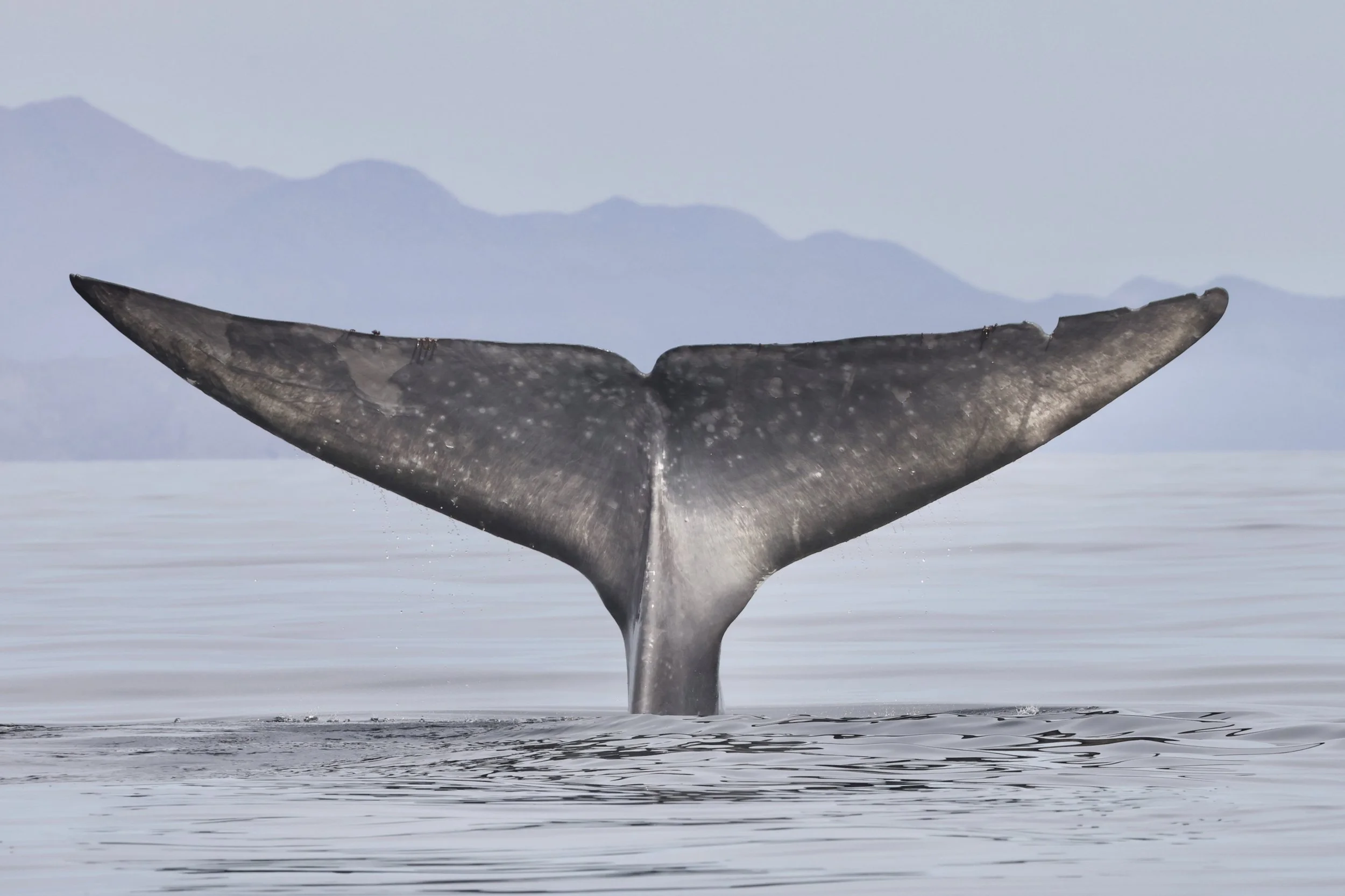
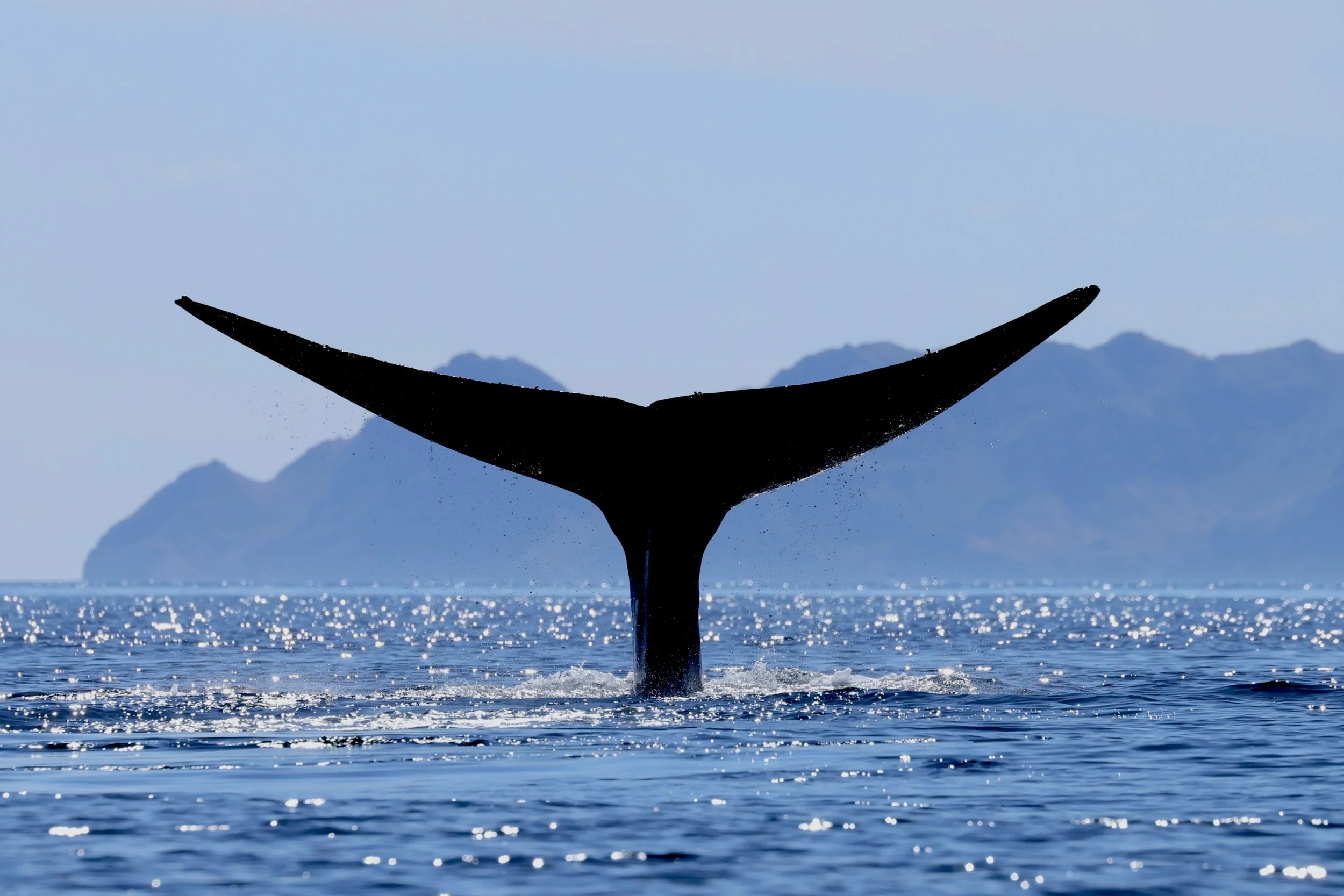
Blue whale fluke photographed by Regina Domingo in Loreto, February 2026.
Loreto remains one of the best places in the world to observe blue whales. Here, the deep waters of the Gulf of California rise close to shore, creating ideal conditions for krill blooms—the primary food source for blue whales. This unique proximity allows us to witness feeding behavior just a few miles from land, something truly rare on a global scale.
This region is not just a destination, it is a refuge.
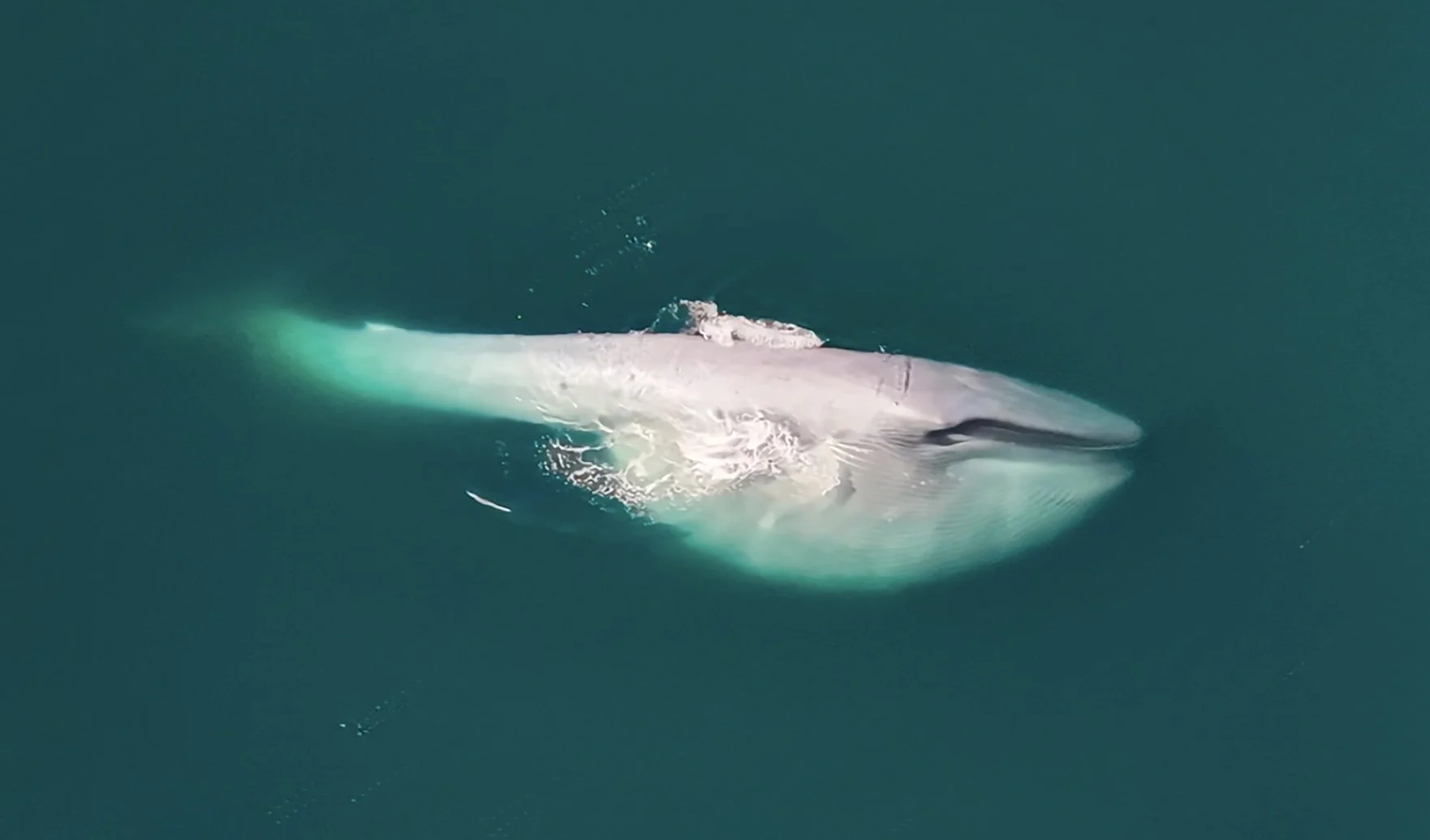
Blue whale feeding near Loreto photo by Baja Adventures.
A place where blue whales come to feed, recover, and continue a crucial part of their annual cycle. Because of this, the way we approach them matters deeply. Respecting distances, minimizing our impact through passive observation—such as turning off the engine during encounters—and operating under non-extractive permits with certified guides and captains is essential.
This season also marked a very special milestone for us.
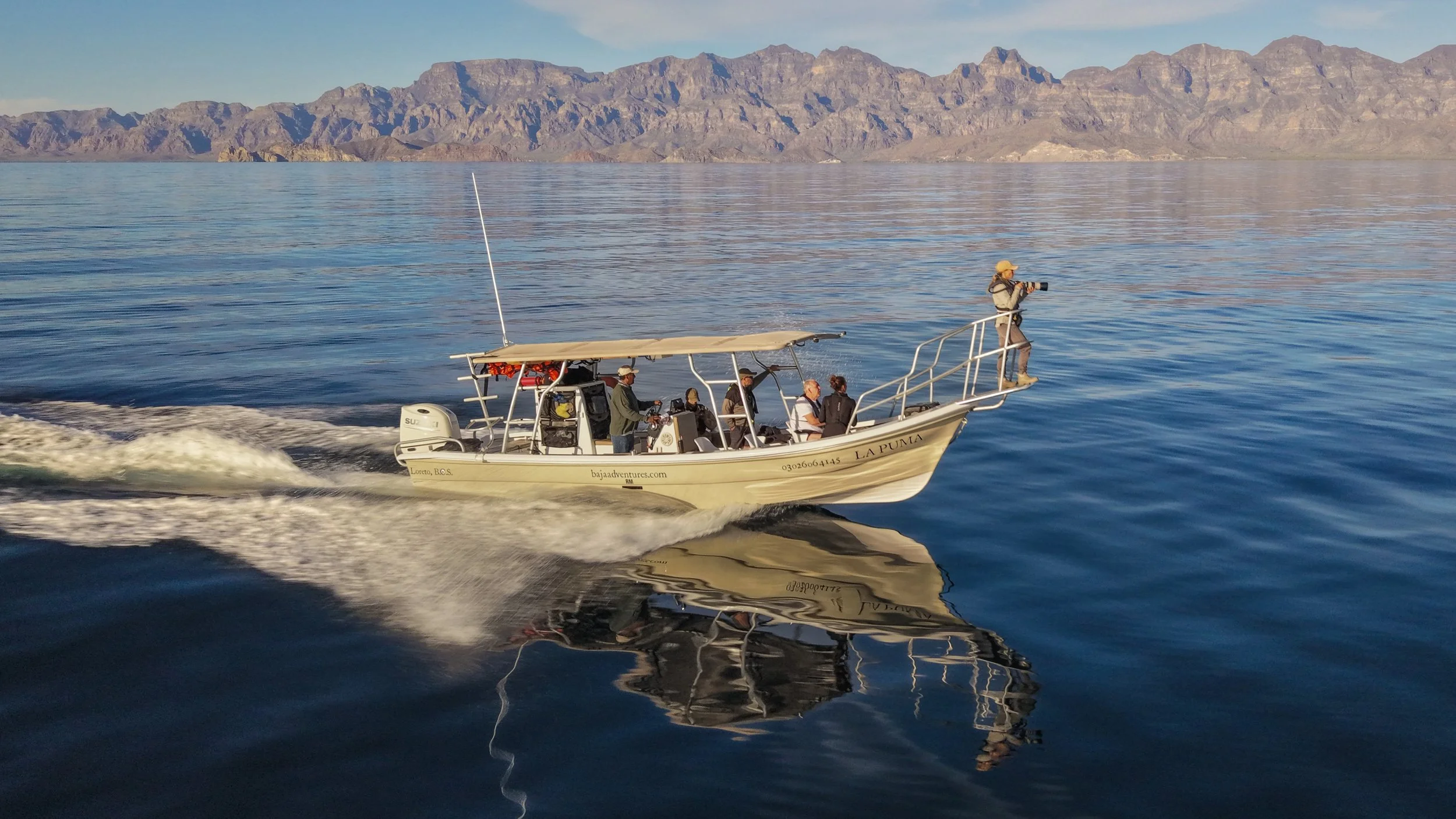
We inaugurated a new cetacean observation bow on La Puma.
A space designed not only to enhance the experience but to transform the way we connect with marine life. From there, many participants laughed, cried, held their breath, and experienced the ocean in a completely new way. A different perspective of the Bahía de Loreto National Park and the cetaceans that inhabit it.
But this bow is not only about experience.
It is also a platform for science.
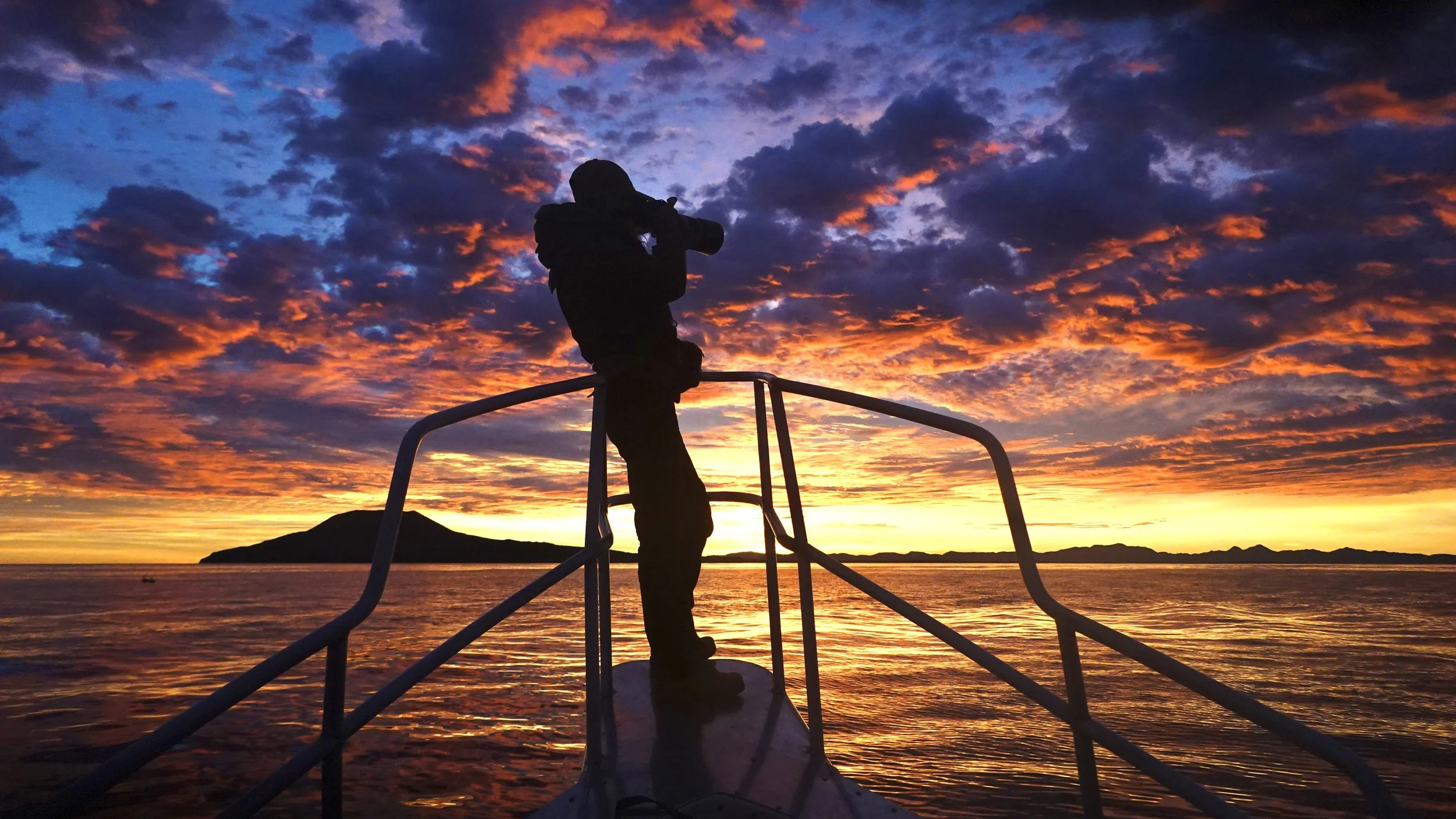
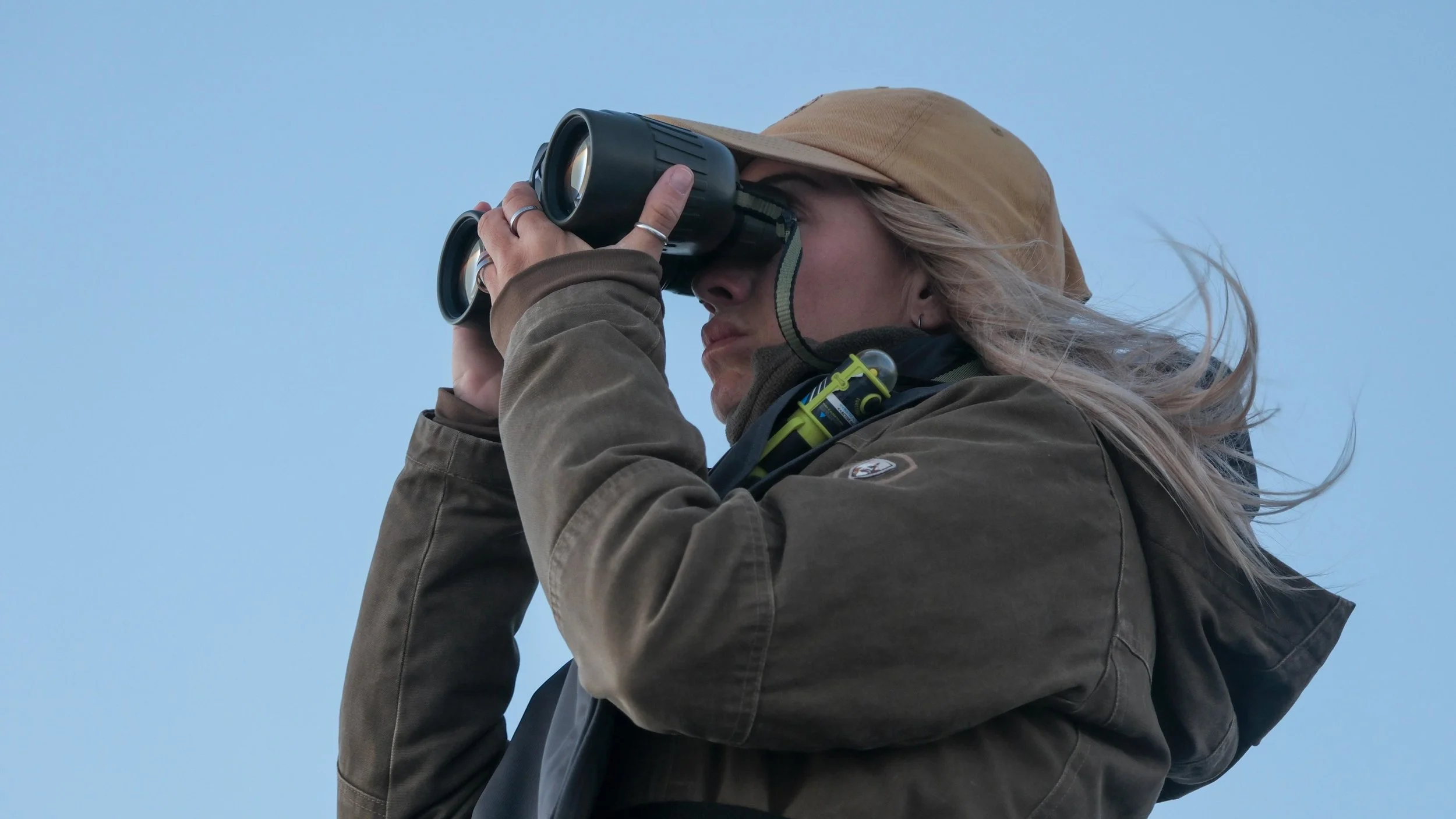
Regina Domingo, wildlife expedition guide, on the bow of La Puma at sunrise during a whale watching expedition, 2026 season
We use it to support research projects, improving observation quality, documenting behavior, and contributing valuable data. Because for us, this is not just tourism, it is about actively contributing to research, deepening our understanding of these species, and helping develop better conservation strategies and management plans, especially for species that still lack them.
This year, familiar blows appeared once again on the horizon.
Through photo identification and long-term monitoring, we recognized individuals returning to these waters, giants that travel entire ocean basins, yet find their way back to Loreto.
Monocular, a female over 30 years old, identifiable by a large mark on the right side of her fluke, likely caused by a cookiecutter shark.
Caballito de Mar, a male, son of a female we call Binocular, named for the two nearly symmetrical marks on her fluke, similar to Monocular but smaller.
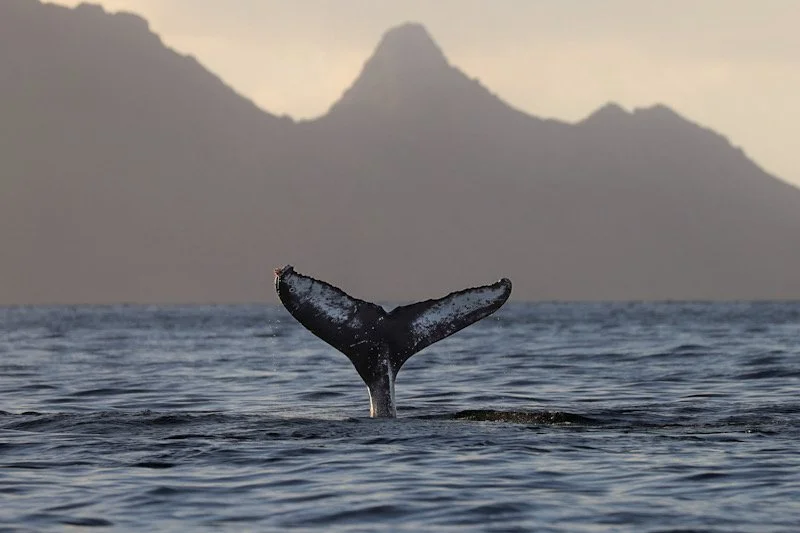
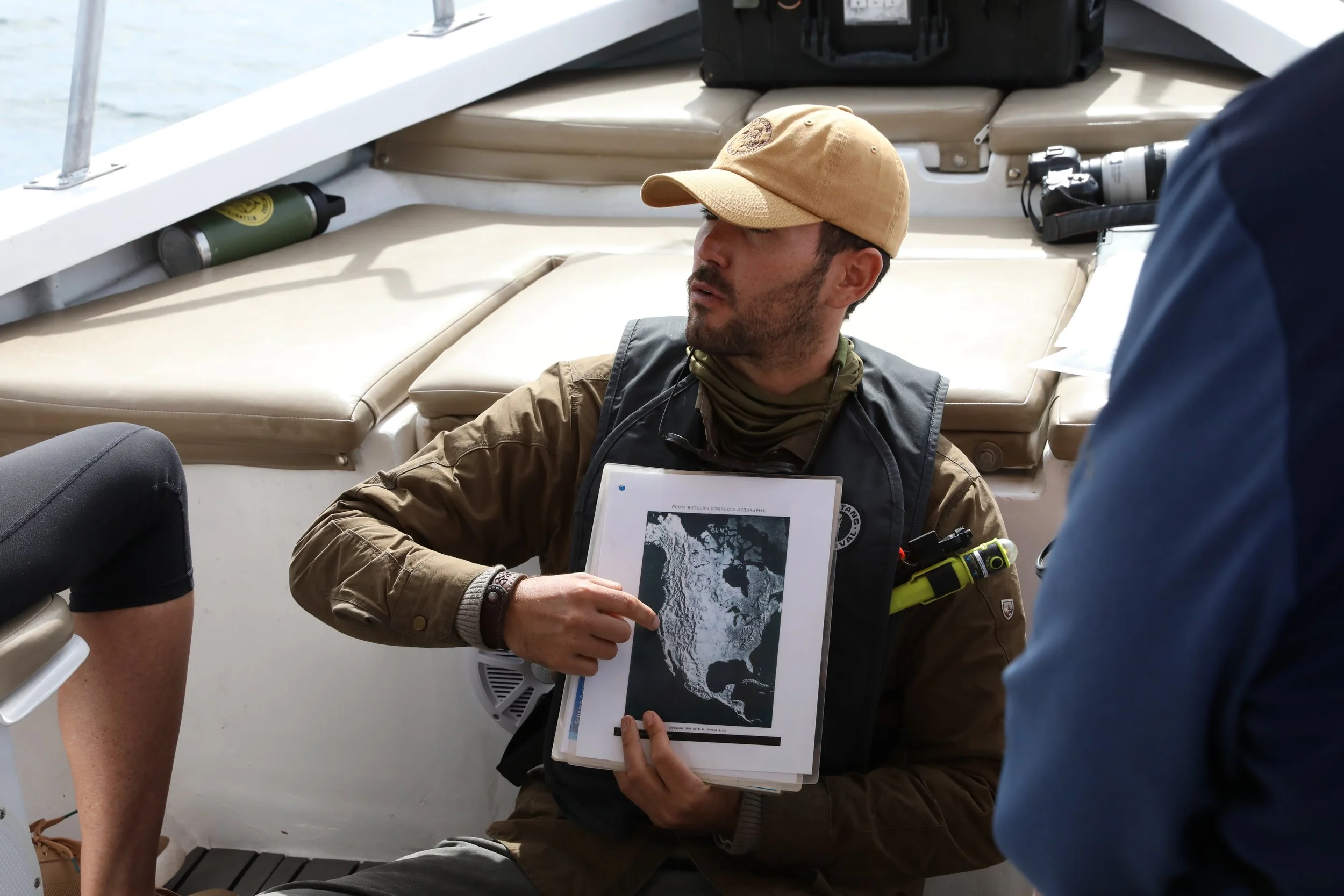
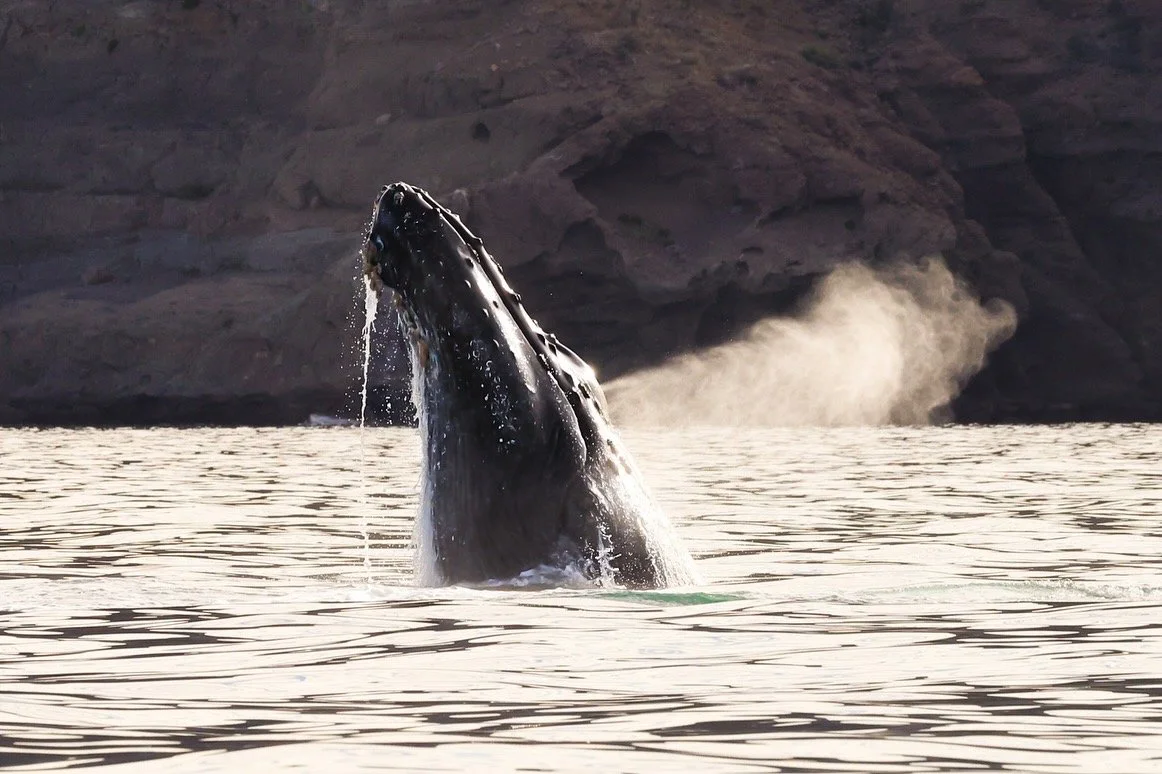
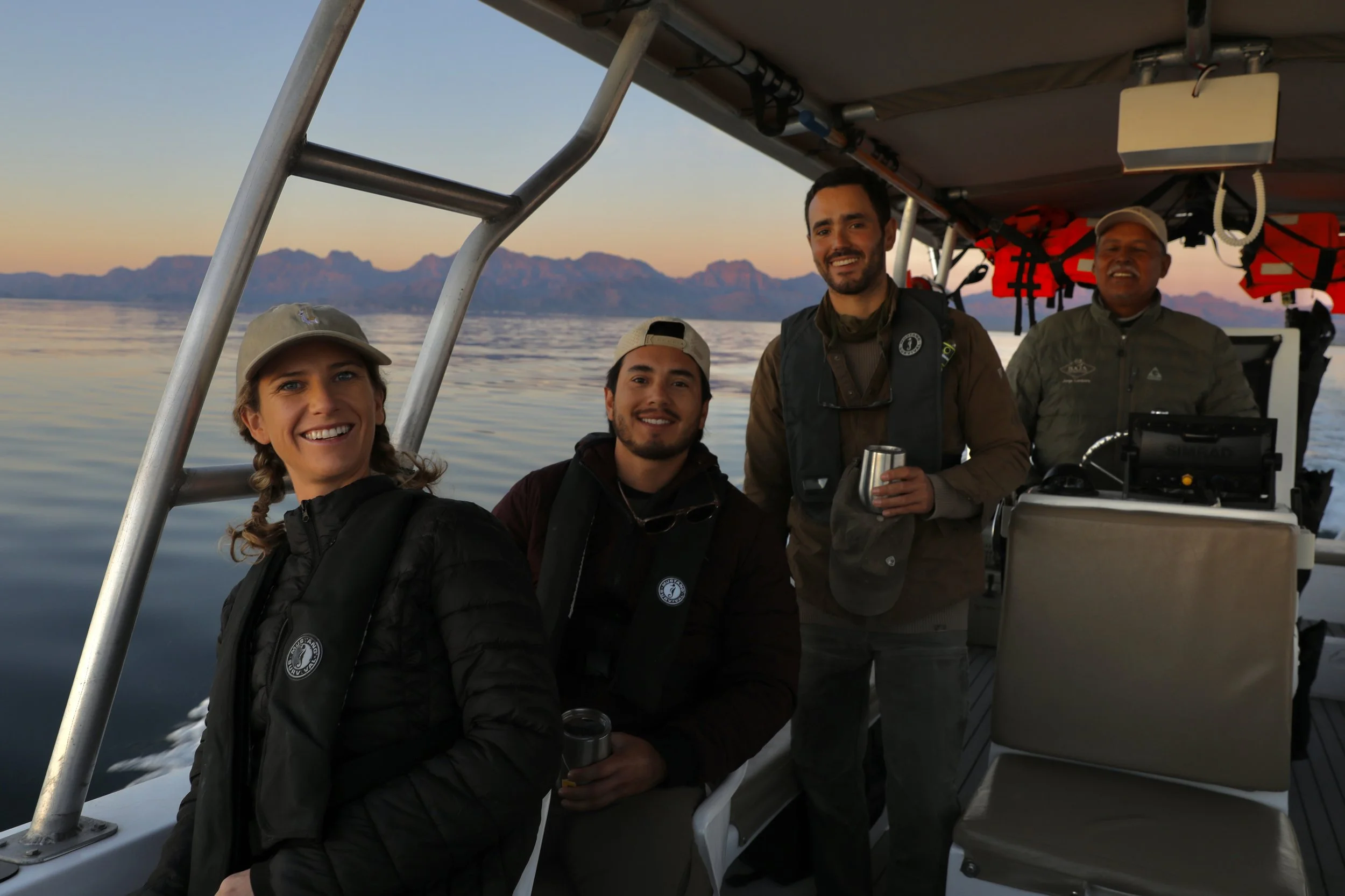
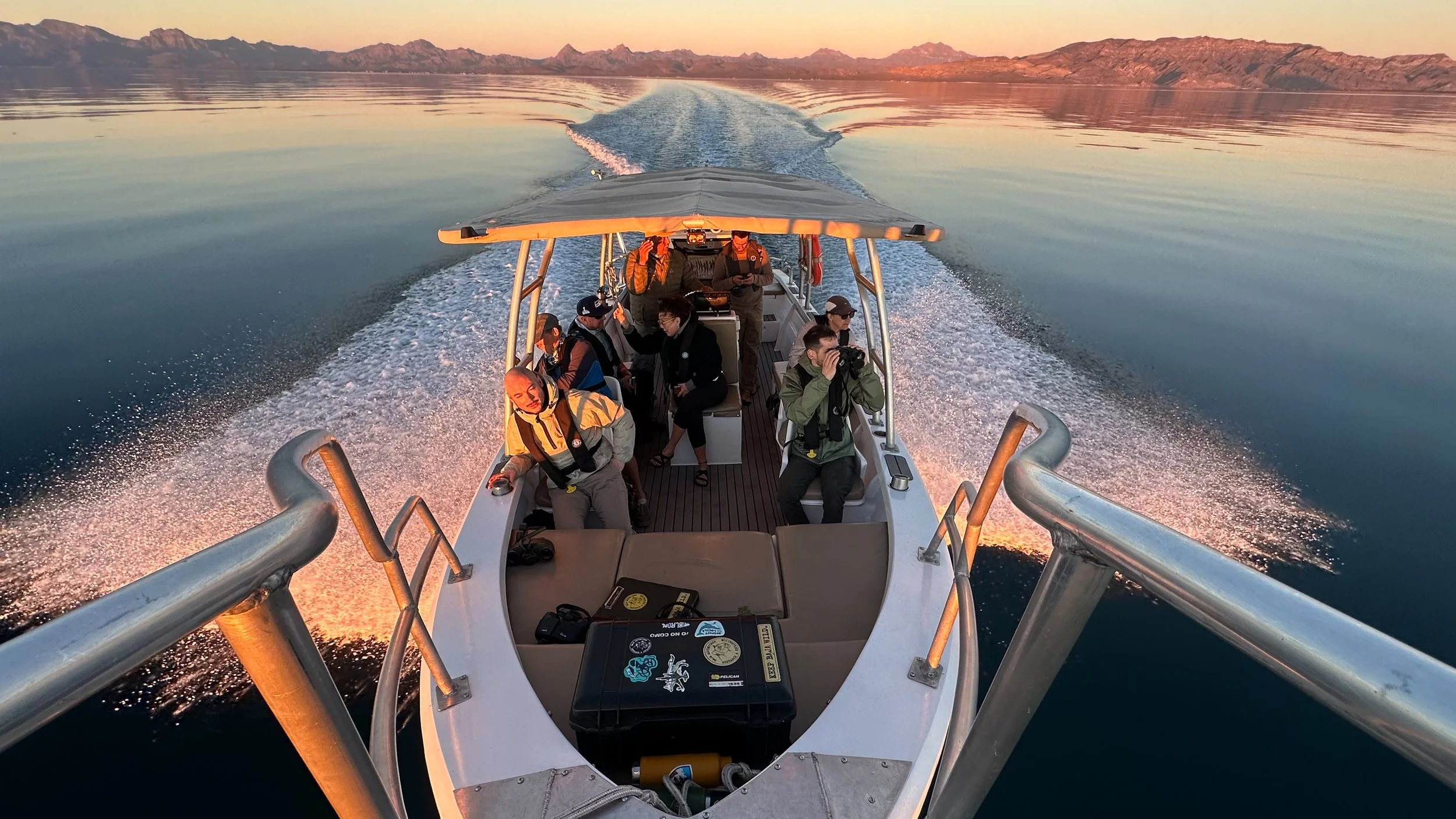
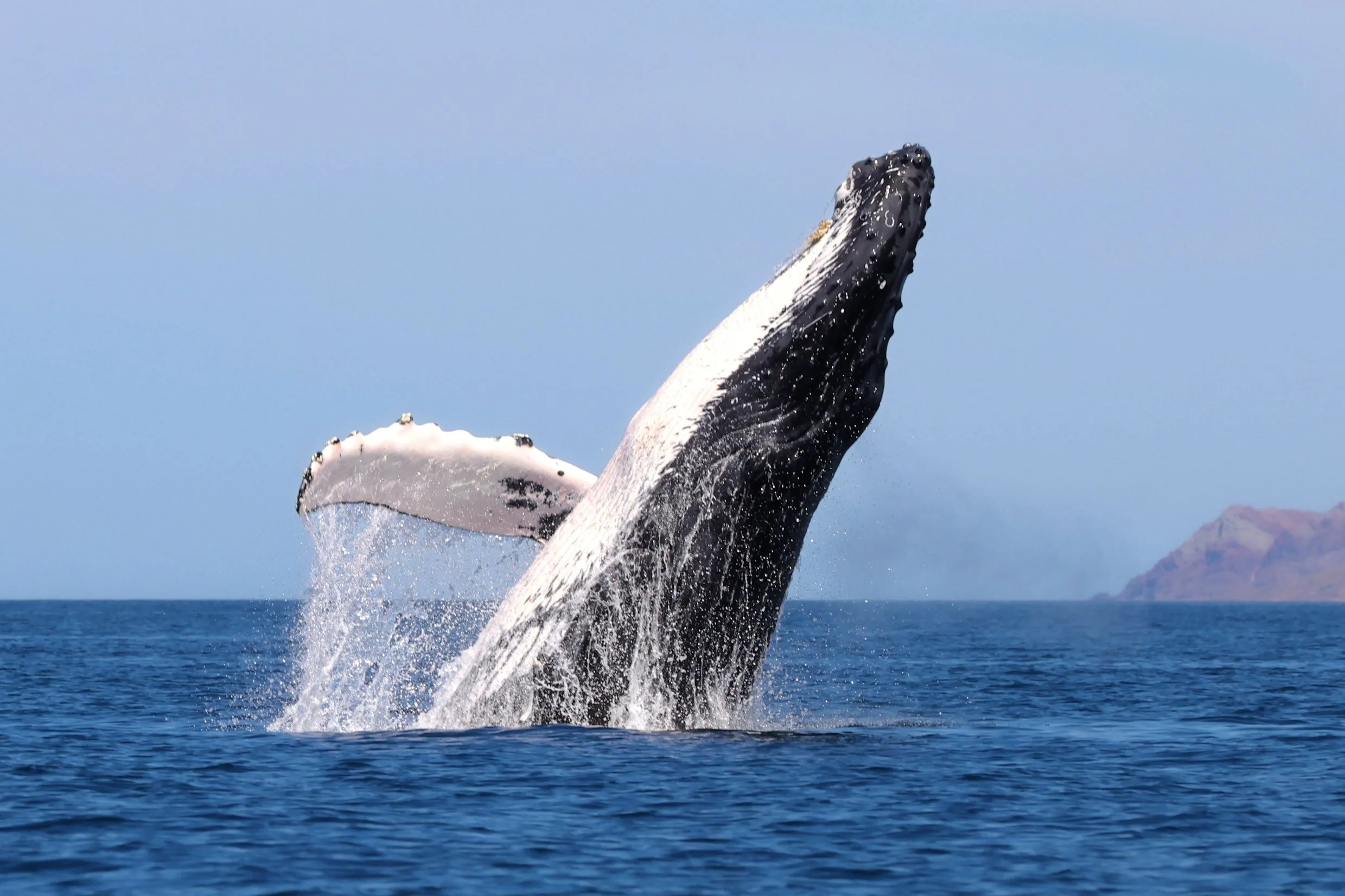
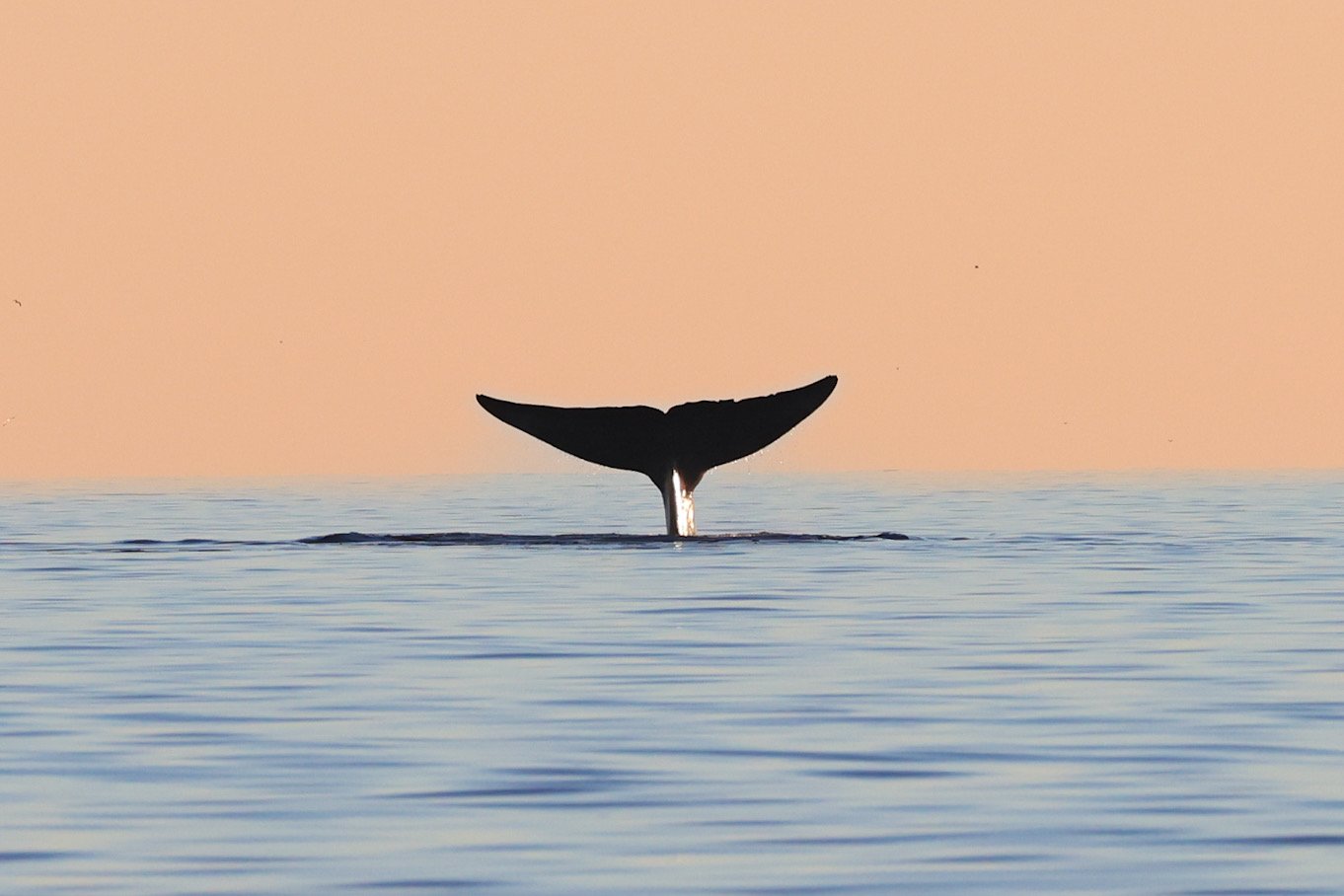
At the same time, this season also introduced us to new individuals—blue whales we had never documented before, reminding us how much there is still to learn.
Seeing a blue whale is always powerful. Recognizing one is something else entirely.
It reminds us that these are not just passing animals, but individuals with memory, history, and life stories that unfold across decades.
This season was especially rich.
Krill concentrations were high, and we witnessed multiple surface feeding events, particularly at sunrise. Moments where the largest animal on Earth feeds quietly beneath soft morning light.
We also observed something often overlooked, the presence of whale feces, which play a fundamental role in the ecosystem. These nutrients fertilize the ocean, recycling iron and nitrogen that sustain phytoplankton, the base of the marine food web and one of the planet’s most important sources of oxygen.
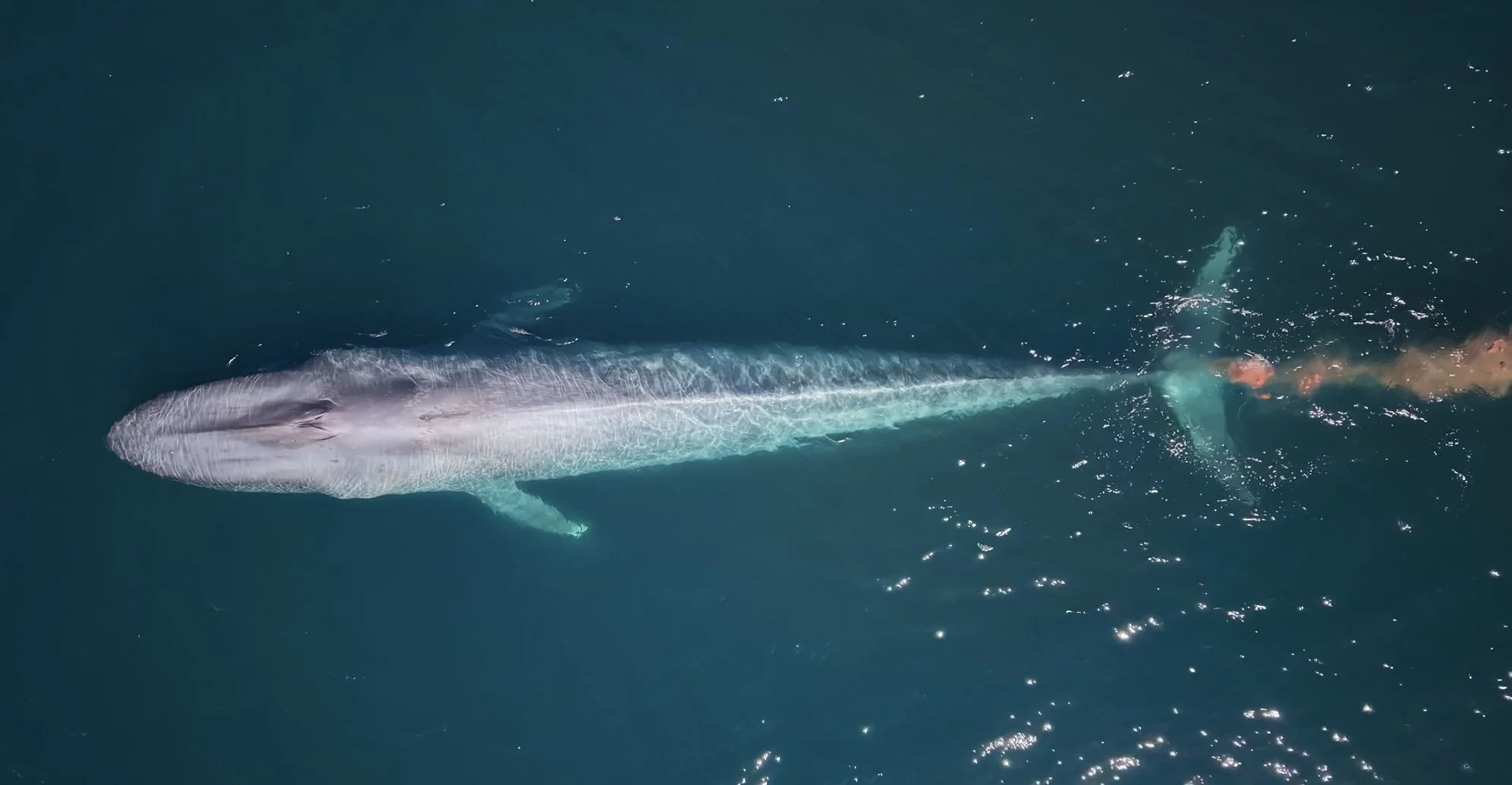
Blue whale defecation observed in Loreto by the Baja Adventures team
At the beginning of the season, we witnessed something remarkable.
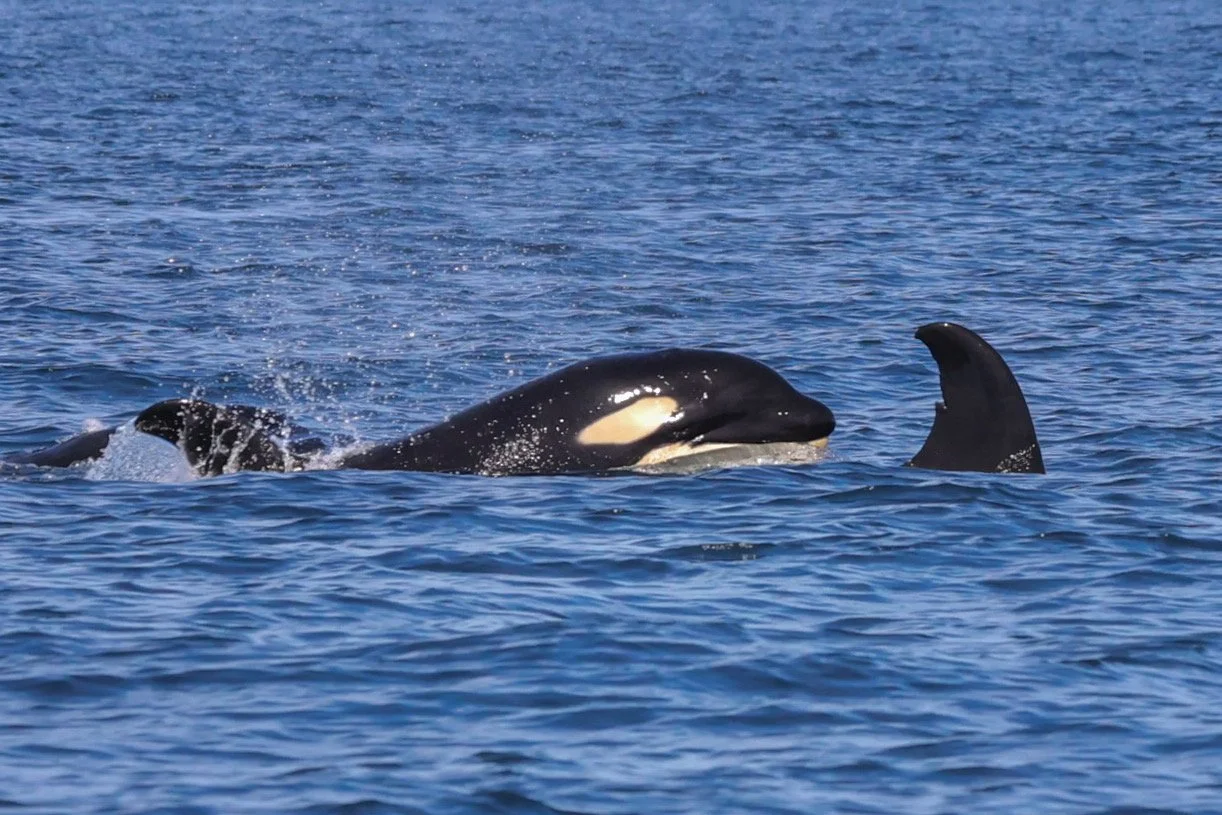
Blue whales traveling alongside bottlenose dolphins, while orcas were present in the area. Scientific evidence suggests that dolphins may detect orcas earlier than baleen whales, potentially acting as an early warning system. These interactions remind us how complex and interconnected these ecosystems truly are.
Throughout the season, we shared the ocean with blue whales, humpbacks, fin whales, minke whales, orcas, and dolphins. Some days were calm, others windy, and many unpredictable, reminders that nothing here is guaranteed.
There were long searches, moments of stillness, and deep silence… and then suddenly, the blow of a whale breaking through, making our hearts race. A sound we will deeply miss until January 2027.
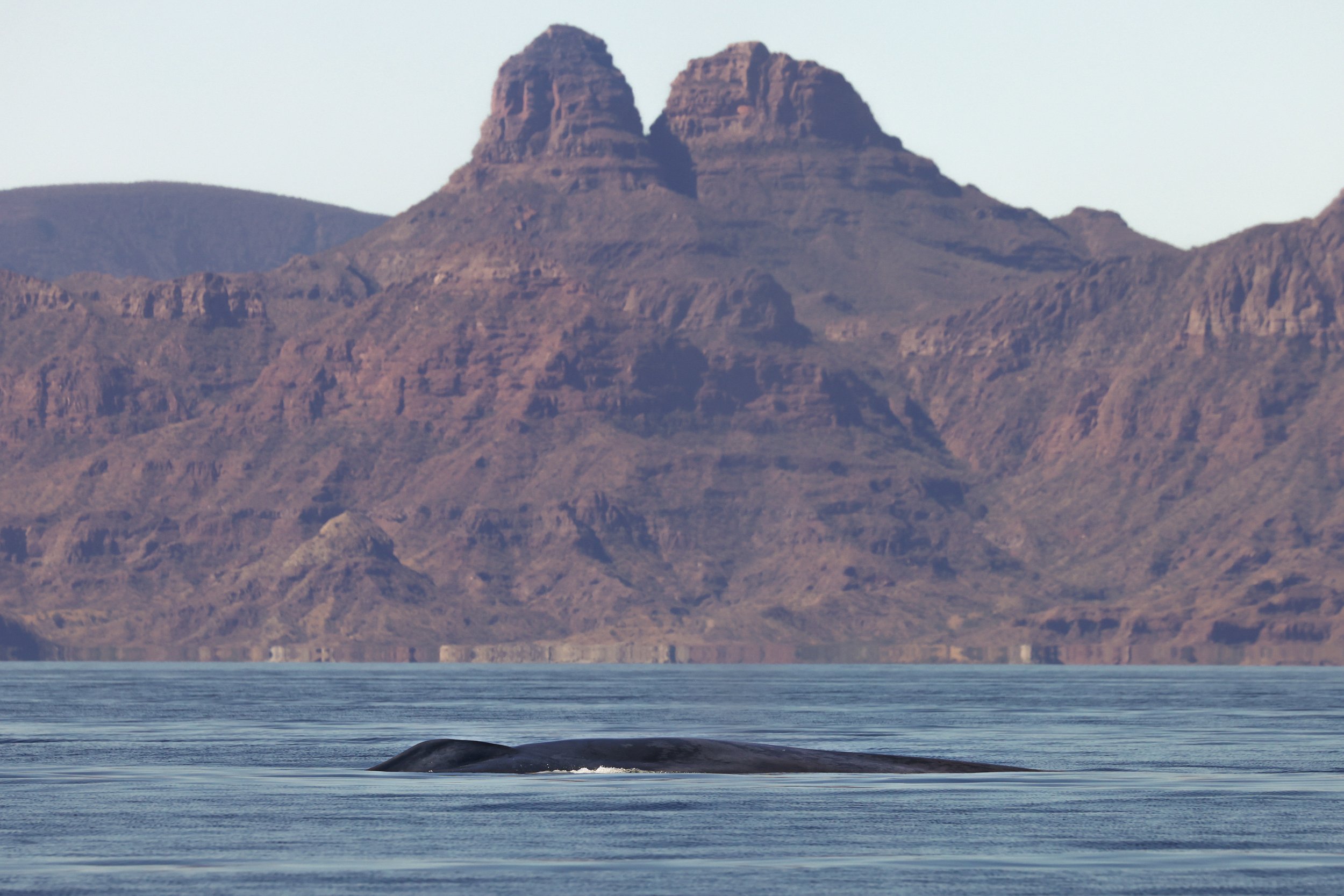
A blue whale cruising through the waters of Bahía de Loreto National Park, captured by Regina Domingo.
Each encounter felt special. Each one different. Each one meaningful.
And as the season came to an end, we closed it in the most beautiful way: with a juvenile blue whale, a quiet reminder of continuity, resilience, and the future of this species.
But what happens at sea does not end with the sighting.
Every expedition contributes to research—photo identification, behavioral observations, and long-term monitoring that help us better understand these species and the challenges they face.
This is regenerative tourism in action.
Where exploration also means conservation. Where every experience creates awareness and contributes to protecting what we love.
A season is also shaped by people.
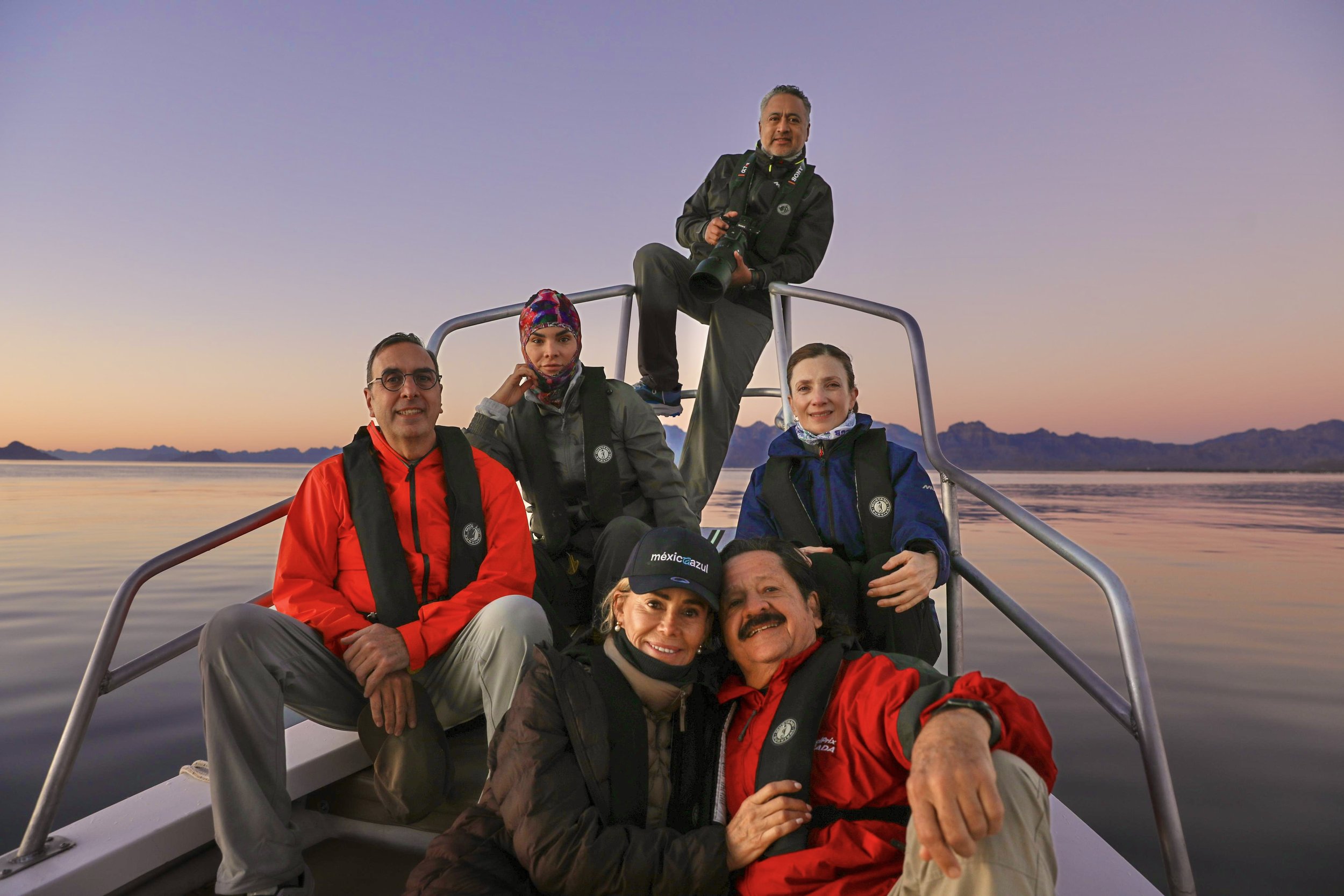
One of the group that joined us this season, brought by Guillermo Mendoza, on the bow of La Puma—an incredible team with truly special whale energy
And we want to deeply thank the entire team that makes every expedition possible: our captain, who always keep us safe at sea; our reservations and logistics team, who carefully manage every detail; our chefs and food providers, who support us from the first warm coffee at sunrise to the clean blankets on cold mornings; and our guides Regina and Leopoldo, incredibly skilled, passionate, and dedicated.
And of course, thank you to all participants, especially those who return year after year. You are what makes this more than a project. You make this a family. An adventurous family, a community we truly love.
We’re also incredibly grateful to our partners Vuarnet and KÜHL, who support us with gear that performs without compromise—from sunrise searches to long days exposed to the elements. And to Tersa, for the wheels that keep our vehicles moving and make every launch and recovery at the marina possible.
As the season comes to a close, one thing is clear:
These waters are not a stage they are a home.
Everything we do is guided by respect. We do not chase wildlife; we meet it on its own terms. Because protecting this place is not optional—it is part of being here.
The whales will continue their journey.
Some will return.
And when they do, we will be here—ready to learn, to observe, and to protect what makes this place so unique.
Because this is not just a season.
It is part of something much bigger.
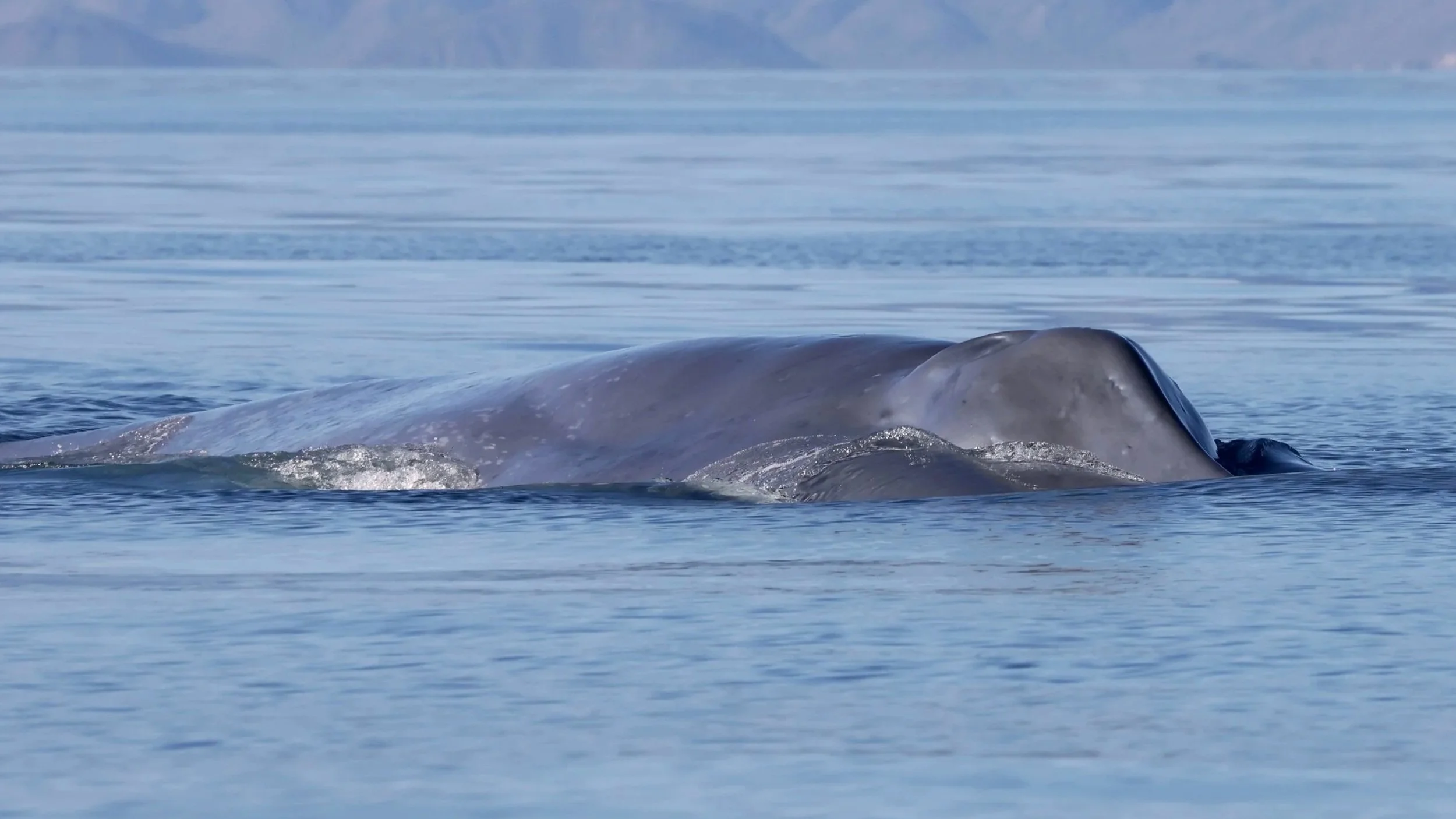
The largest blue whale we encountered this season, photographed by Regina Domingo, wildlife expedition guide at Baja Adventures.