
Best time to experience Loreto & the Sea of Cortez
Where desert meets the deep blue
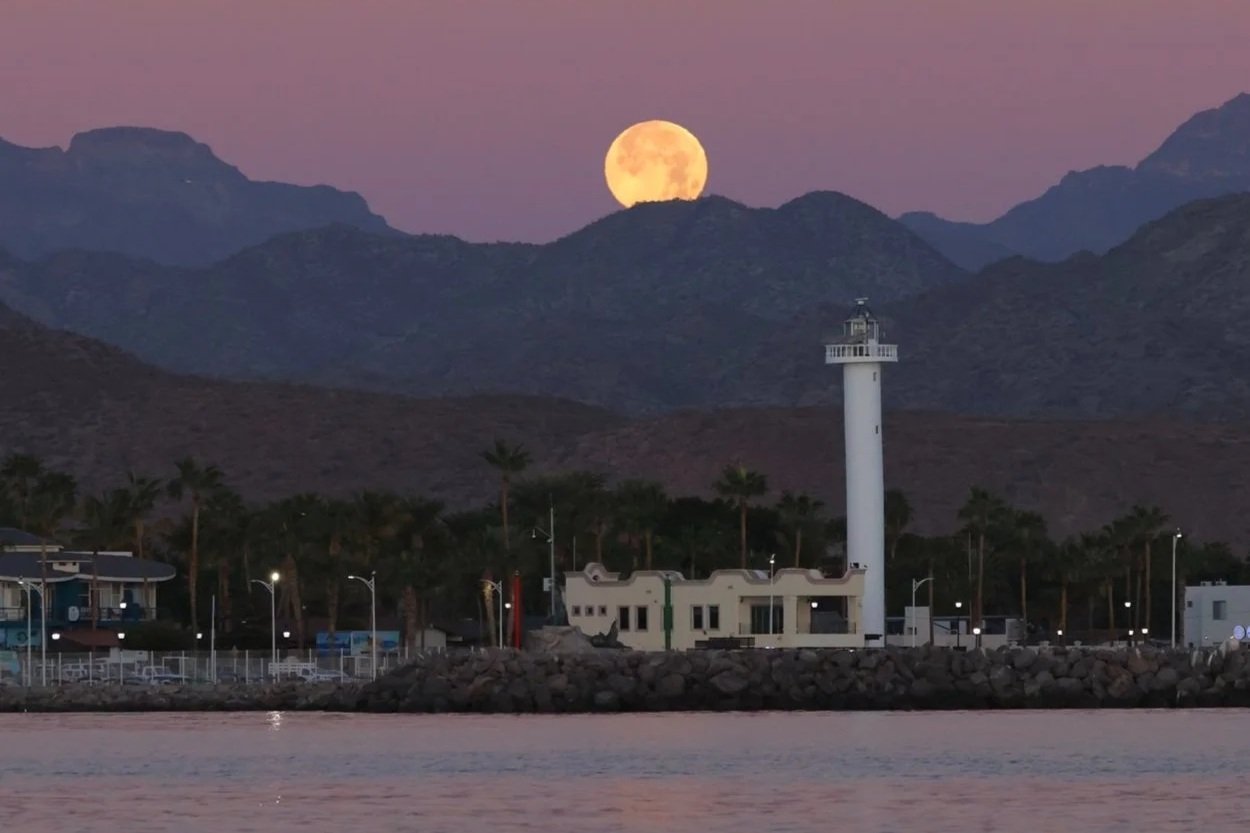
First light over Loreto, with the moon setting behind the Sierra de la Giganta—captured by our team during an early morning marine expedition.
Set between the rugged peaks of the Sierra de la Giganta and the rich waters of the Sea of Cortez, Loreto Bay National Marine Park is one of the most biodiverse marine ecosystems on the planet.
Often referred to as the “Aquarium of the World,” this UNESCO-protected region offers year-round wildlife encounters, with each season revealing a different dimension of Baja’s wild identity.
At Baja Adventures, we design expeditions around these natural rhythms—because in Loreto, timing shapes everything.
A Season-by-Season Guide to Loreto Bay National Marine Park
Winter (December – March): Giants of the Deep
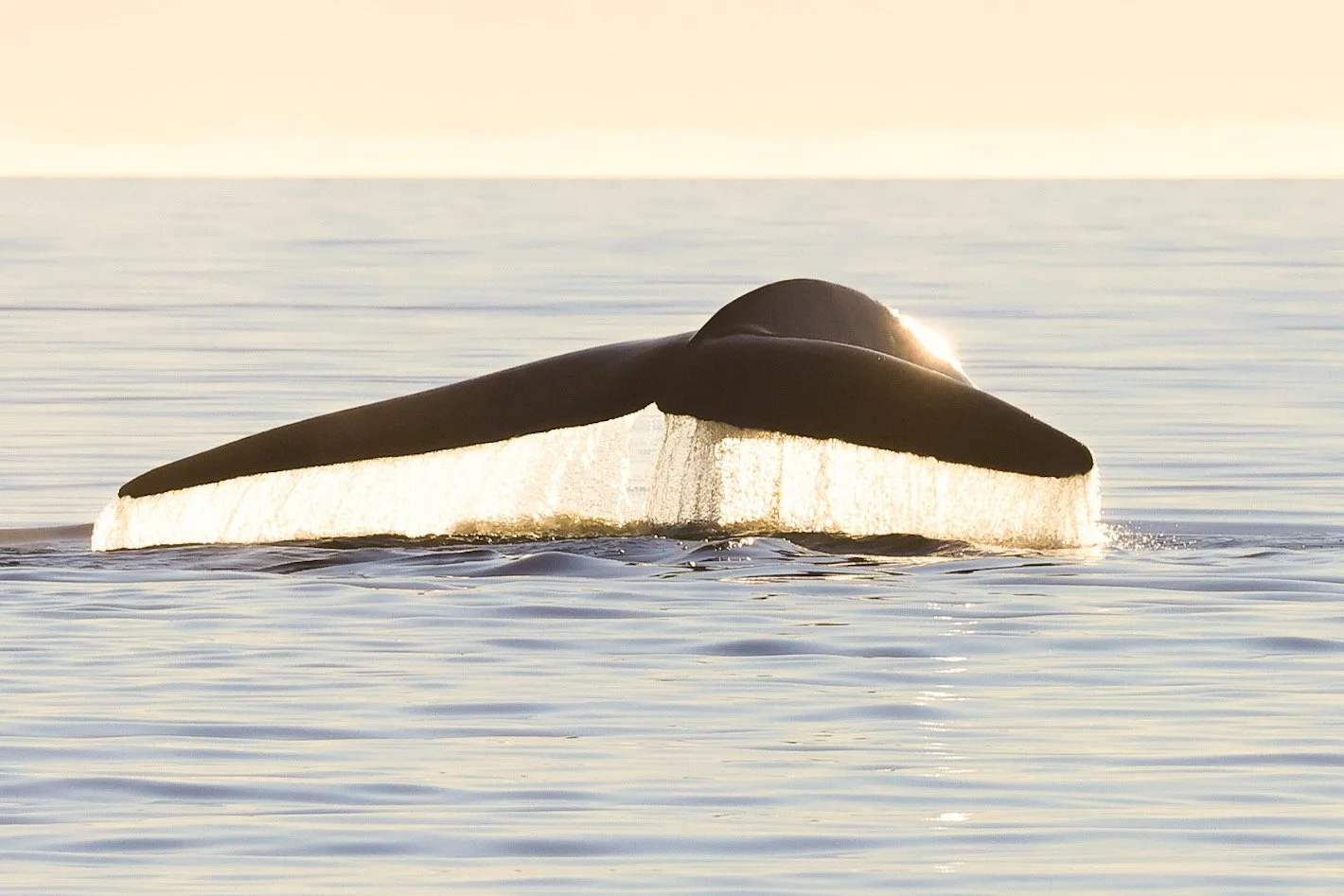
Blue whale fluke at sunrise in Loreto—captured during our whale watching expeditions by Regina Domingo.
Winter is Loreto at its most iconic.
From January through March, the Sea of Cortez becomes a sanctuary for migrating whales, including blue whales—the largest animals ever to exist.
Peak whale season: January to March
Best chance for blue whales: Late January through February and into early March
Species: Blue whales, humpback whales, fin whales, orcas, dolphins, and occasionally sperm whales
These nutrient-rich waters attract whales feeding on dense krill blooms and sardine bait balls driven by seasonal upwelling.
Expect calm seas, crisp air, and some of the most intimate whale-watching encounters anywhere in the world.
Check our whale expedition itineraries—the best way to ensure you encounter the full range of seasonal species.
Why it matters:
This is not just whale watching—it’s witnessing one of Earth’s great migrations in a setting that remains largely untouched.
Spring (April – June): Transition & Exploration
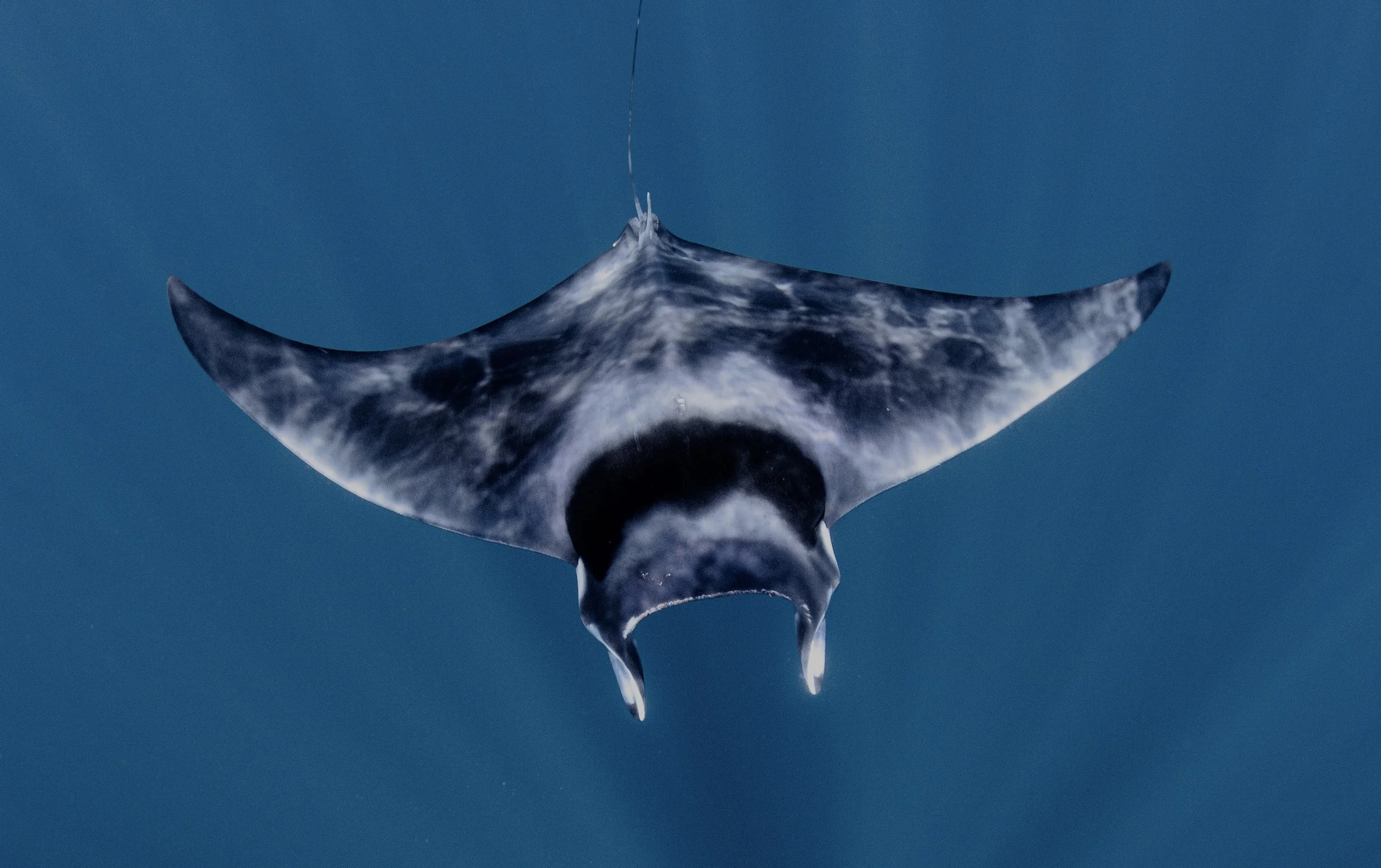
Mobula mobula underwater in Loreto—captured during a summer marine expedition by Regina Domingo.
As whales begin their journey toward northern latitudes, Loreto shifts into a season of balance and exploration.
Ideal for snorkeling, freediving, and island hopping
Increasing encounters with super pods of dolphins
Sightings of the last humpback whales, fin whales, and the first mobula ray aggregations
Presence of sea turtles (green, hawksbill, and olive ridley) and local sea lions
Mild temperatures perfect for combining ocean and Sierra adventures
Dolphins are present year-round, but spring often brings large, active pods and exceptional viewing conditions.
Why it matters:
This is when Loreto reveals its dual identity—ocean and mountains working as one connected ecosystem.
Summer (June – October): Warm Waters & Pelagic Life
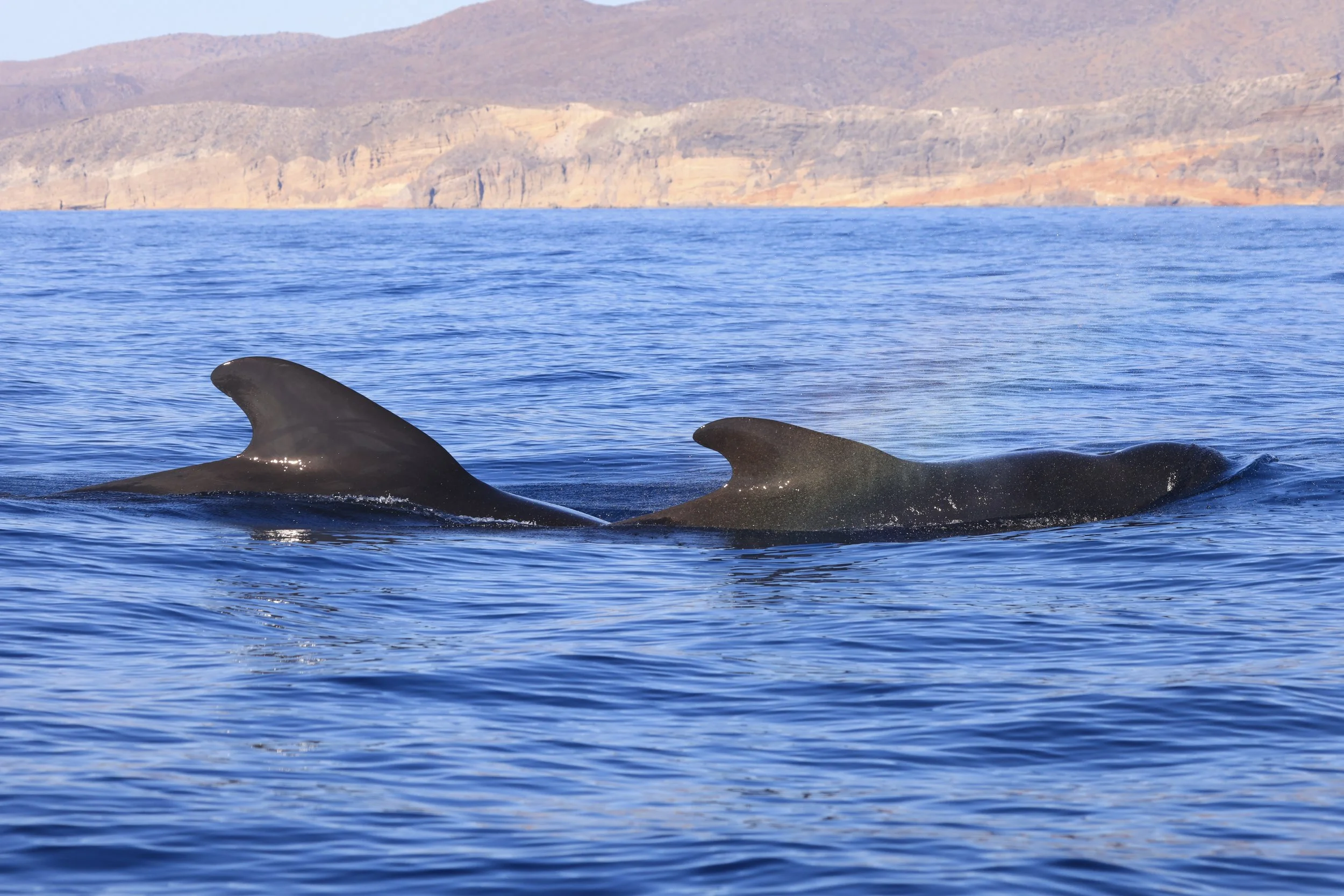
Pilot whales in Loreto Bay National Marine Park captured during a summer long-distance marine expedition with Baja Adventures.
Summer brings warm, glassy seas and a different cast of wildlife.
Mobula rays in large aggregations, often breaching
Seasonal presence of pilot whales, sperm whales, orca pods, and Bryde’s whales
Peak nesting season for sea turtles
Prime conditions for freediving and pelagic encounters

Mobula munkiana agreggation and our vessel “La Puma”in Loreto Bay National Marine Park, captured during a summer marine adventure with Baja Adventures.
This is the season for true ocean lovers—those drawn to vast blue water and exploratory, less predictable wildlife experiences.
Explore our extended marine adventures—designed for true ocean lovers—including our Loreto Islands itinerary, where we navigate and discover all five islands of the park.
Why it matters:
Fewer visitors, deeper exploration, and a raw, untamed version of the Sea of Cortez.
Fall (October & November): Calm Before the Giants Return
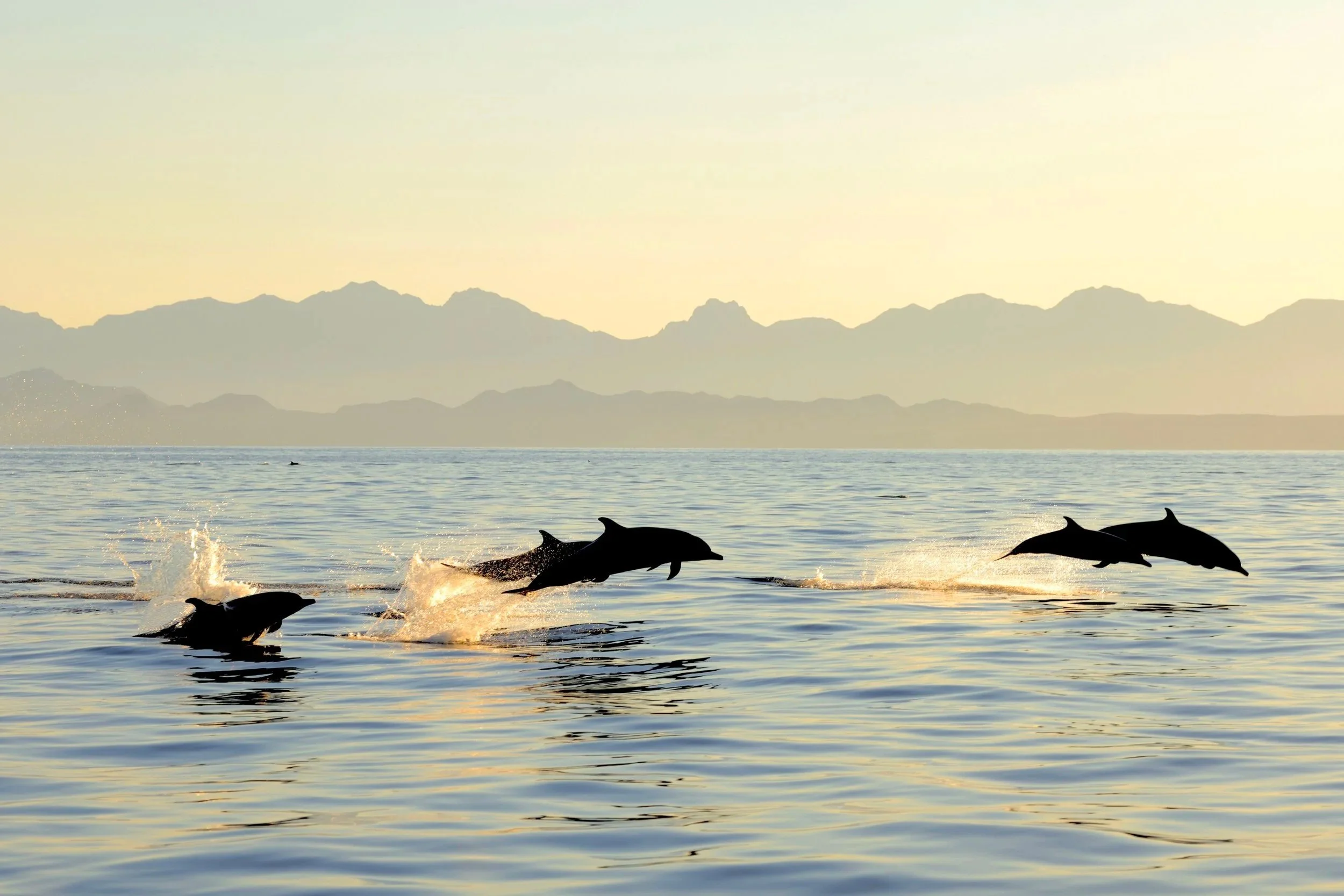
Dolphins breaching at sunset in Loreto, captured during a marine expedition with Baja Adventures.
Fall is one of Loreto’s best-kept secrets.
Exceptional water visibility
Calm seas and warm temperatures
Ideal for private expeditions and photography
Seasonal presence of spotted eagle rays, large pods of dolphins, occasional orcas, sea turtles, and returning sea lions
Wildlife begins transitioning toward winter patterns, setting the stage for the return of the giants.
It’s one of the best times to experience Loreto with space, silence, and clarity.
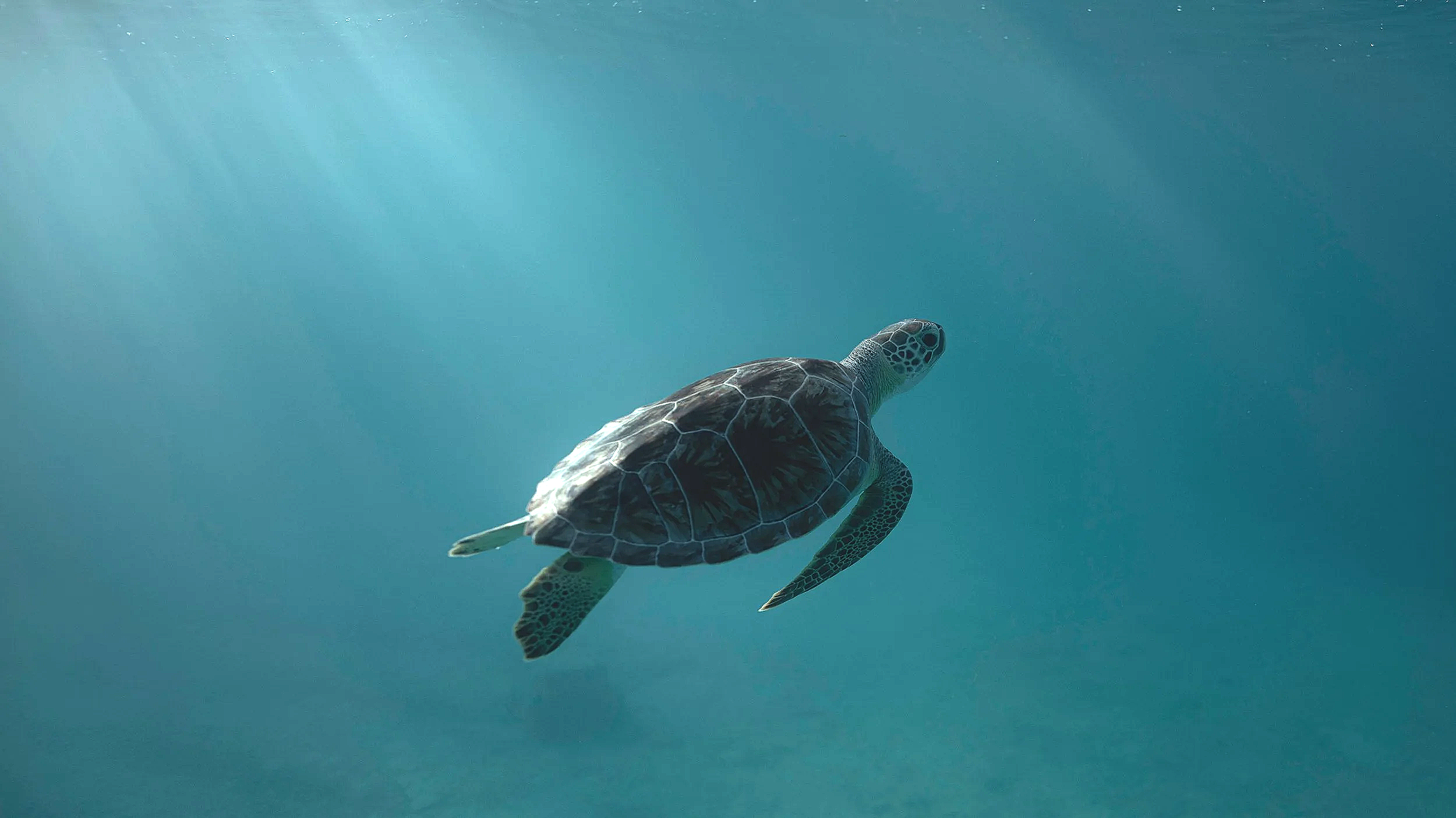
Green sea turtle underwater in Loreto captured by Regina Domingo.
So, When Is the Best Time to Visit Loreto?
The answer depends on what you’re looking for:
For whales & iconic wildlife: February–March
For balance (ocean + land): April–June
For warm water & pelagic exploration: July–October
For quiet luxury & fewer people: November and December
The Baja Adventures Perspective
At Baja Adventures, we don’t believe in one “best” time.
We believe in the right time—for the right experience.
Because Loreto is not a destination you simply visit.
It’s a living ecosystem you align with.
From the giants of winter to the pelagic rhythm of summer, every season offers a different way to connect—with nature, with adventure, and with something far bigger than yourself.
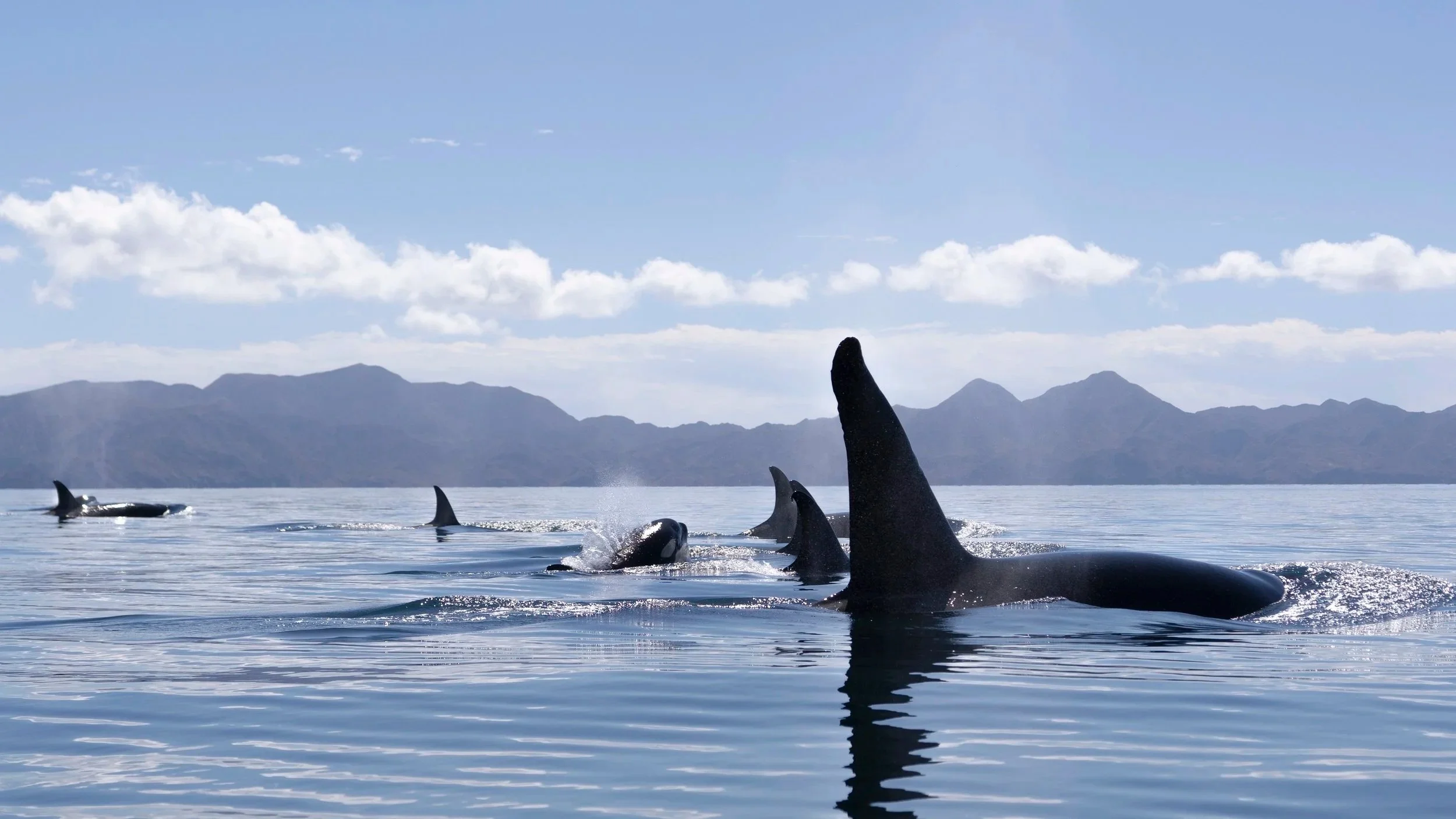
A family of orcas in Loreto Bay National Marine Park, captured during a Baja Adventures marine adventure by Leopoldo Sanmiguel Velazquez.
Plan Your Expedition
Connect with our team to design the perfect experience for you and your group—based on seasonality, wildlife activity, water visibility, climate, and the kind of adventure you want to live.
Because the best time to come to Loreto… is when it’s right for you.