

Moonrise over Loreto and the Sierra de la Giganta, where the desert mountains meet the Gulf of California photo by Regina Domingo
Loreto is unlike almost anywhere else in Baja California Sur.
To the east lies the Gulf of California and Loreto Bay National Park, an extraordinary marine ecosystem of islands, whales, dolphins, sea lions, rays, seabirds and seasonal wildlife. To the west rises the Sierra de la Giganta, where desert canyons, oases, historic ranches and missions reveal an entirely different side of Baja California.
We have spent years exploring these environments as naturalist guides, expedition leaders and conservation practitioners based in Loreto. Through Baja Adventures and Nakawe Project, our work combines wildlife observation, citizen science, conservation and regenerative tourism.
This guide brings together what we have learned in the field to help you decide what to do in Loreto, when to visit, what wildlife you may encounter and how to experience this remarkable destination responsibly.

Common dolphins photographed by our wildlife guide Regina Domingo during a marine expedition in Loreto.
1. Explore Loreto Bay National Park
One of the main reasons to visit Loreto is Loreto Bay National Park, a protected marine area in the Gulf of California encompassing the islands of Coronados, Carmen, Danzante, Montserrat and Santa Catalina, as well as the surrounding marine environment.
But don’t think of the park as one single attraction.
Each island is different. Volcanic landscapes, rocky reefs, sandy beaches, sea lion colonies, seabirds, channels and open pelagic waters create different habitats and different opportunities for exploration.
This means the “best island” can change depending on the day.
LOCAL EXPERT TIP: Don’t choose an island simply because it is the most famous. Weather, wind, currents, recent wildlife sightings and marine activity change constantly throughout Loreto Bay National Park. Talk with our expedition leaders about conditions and wildlife dynamics around the time of your visit. With years of experience exploring the park, they can recommend the islands, routes and type of adventure that may offer the most rewarding experience based on current conditions. Some of our most memorable days happen when nature leads us somewhere completely different from what we originally expected.
EXPLORE ALL MARINE ADVENTURES → here
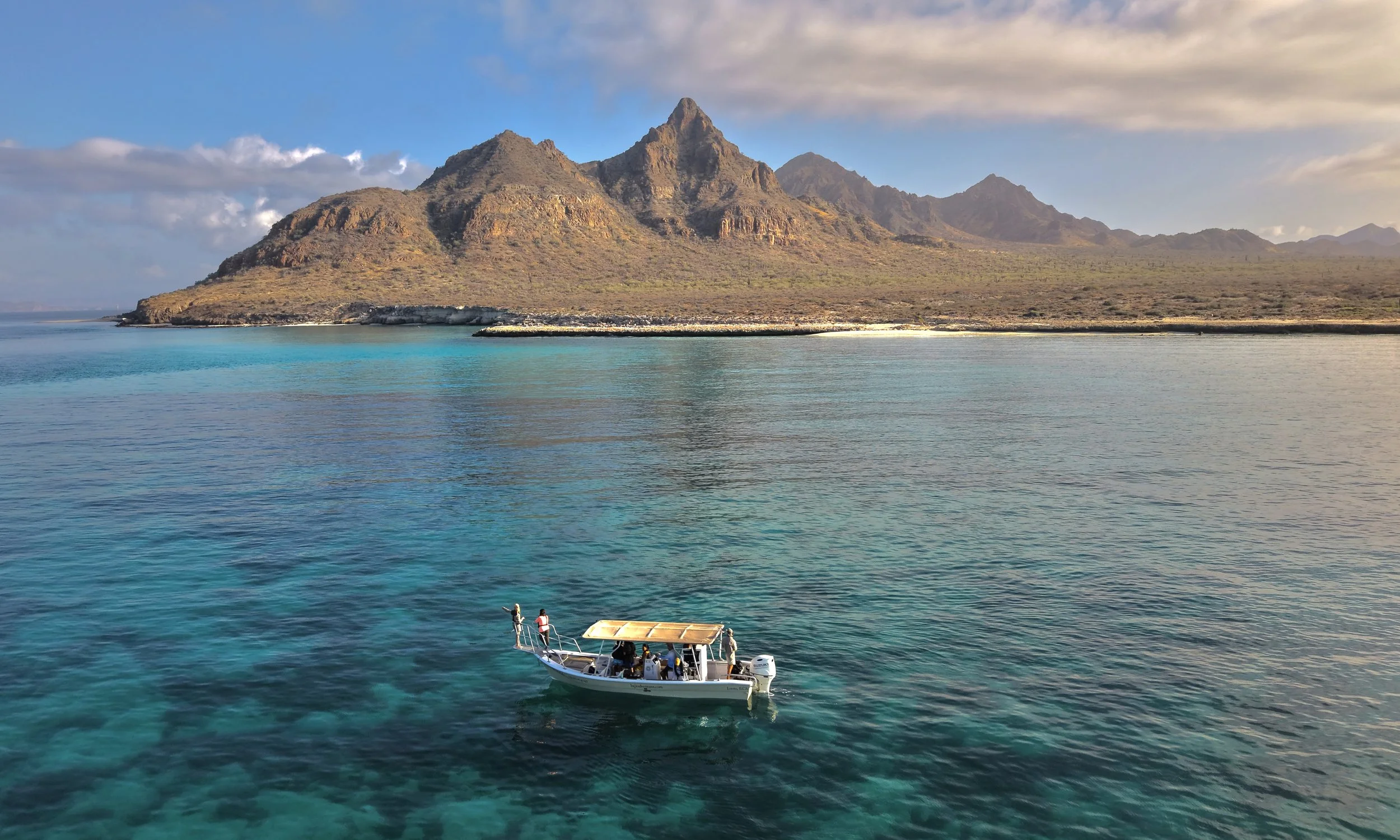
Exploring beyond the usual routes in Loreto Bay National Park, where five islands, open water and changing marine conditions make every expedition different
2. Visit Coronados Island
Coronados Island is one of the most accessible and visually striking islands near Loreto.
Its volcanic landscape rises dramatically above turquoise water, while beaches and rocky coastline provide opportunities for snorkeling, wildlife observation and photography.
The surrounding waters can be home to California sea lions, dolphins, seabirds, reef fish and other marine life.
For travelers with limited time, Coronados can be an excellent introduction to Loreto Bay National Park. But it is much more than a beautiful beach.
Understanding its volcanic origins, observing wildlife and exploring different habitats transforms a simple island visit into a much richer experience.
EXPLORE OUR CORONADOS ISLAND ADVENTURE → here
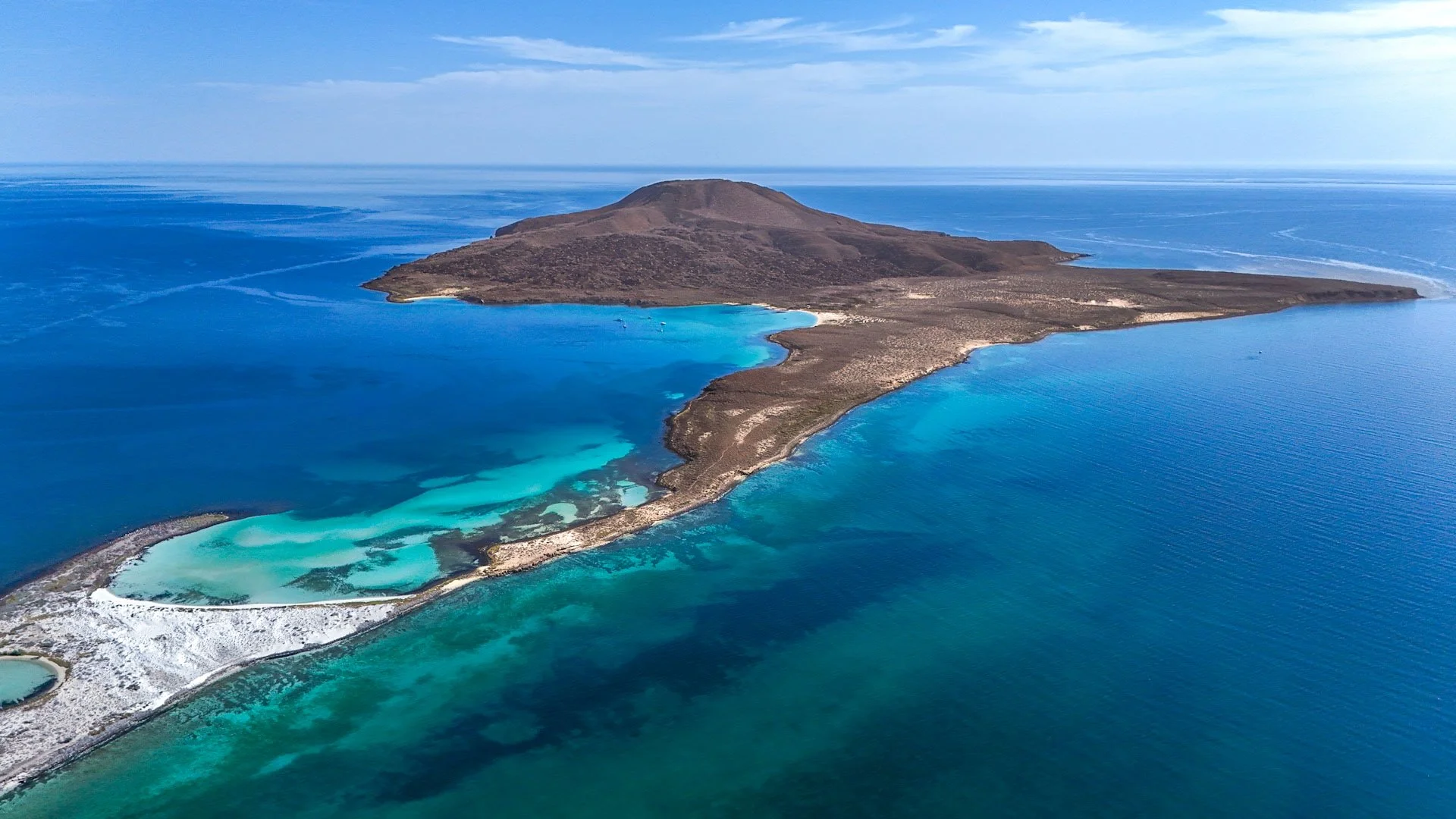
Coronados Island, one of the five islands of Loreto Bay National Park, combining volcanic landscapes, turquoise shallows, wildlife and snorkeling photo by Baja Advenures team
3. Go Whale Watching in Loreto
Loreto is an extraordinary place for whale watching because several cetacean species use the Gulf of California at different times of year.
The main whale-watching season in Loreto runs from January through April, particularly for blue whales. During the season we also encounter humpback whales, fin whales, dolphins and other cetaceans.
But whale watching should be more than approaching an animal and taking a photograph.
Understanding why a whale is present, what it may be doing, what it is feeding on and how its presence relates to the productivity of the Gulf of California makes the encounter much more meaningful.
Wildlife distribution changes from year to year, and no species can ever be guaranteed. That unpredictability is part of experiencing wild whales.
Learn more about whales and whale watching in Loreto:
Blue Whale Watching in Loreto — discover our one-day winter whale-watching adventure in Loreto Bay National Park.Whales of Loreto: Complete Guide — learn about the different whale species, seasonality and ecology of whales in the Gulf of California.
Explore Our Whale Adventures & Multi-Day Itineraries
From one-day whale-watching adventures to immersive 4- and 5-day whale itineraries, explore the different ways to experience whale season in Loreto with our naturalist guides, citizen science and small-group approach.
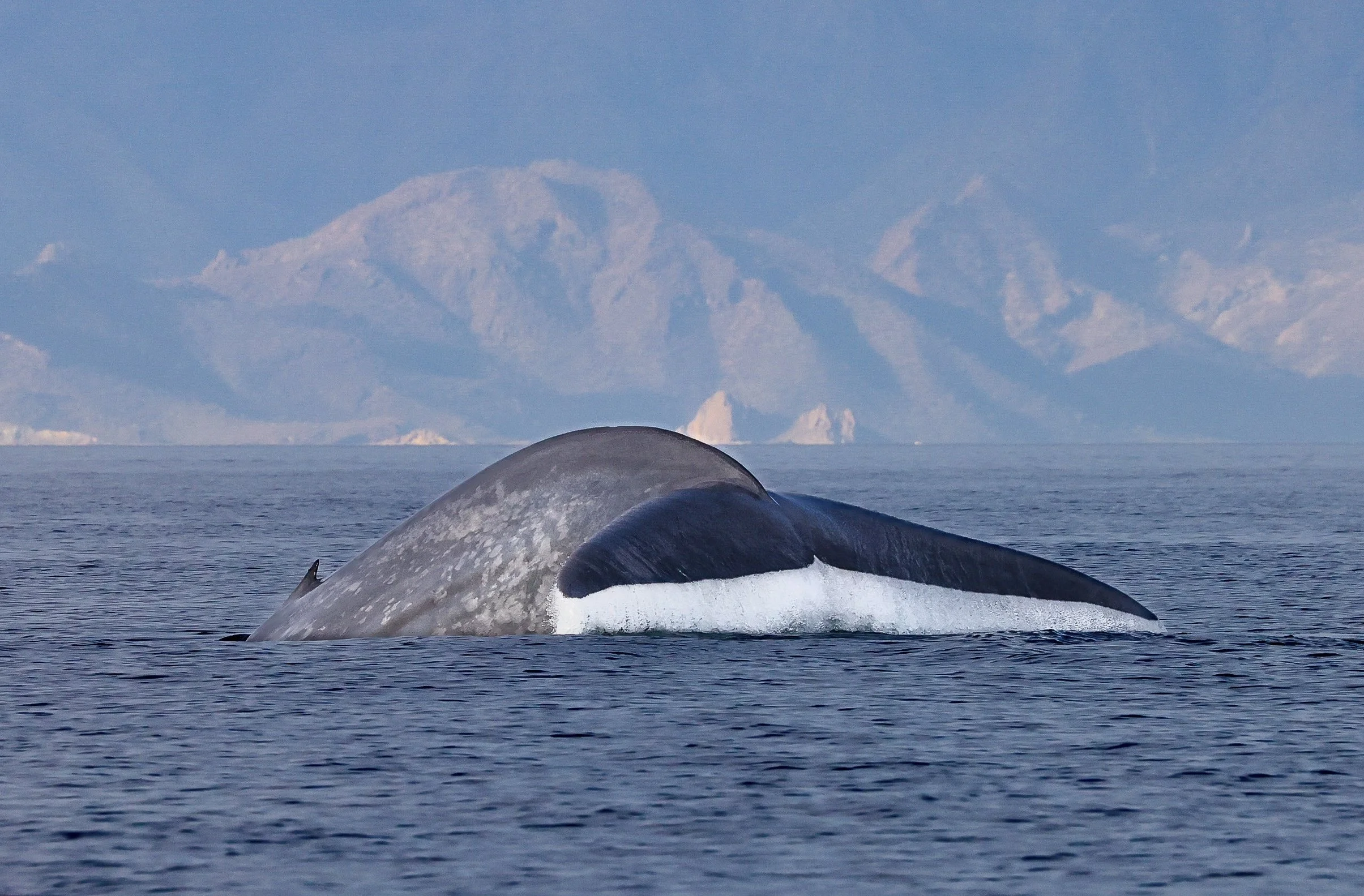
Blue whale photographed in Loreto Bay National Park by Baja Adventures expedition leader Regina Domingo during our winter whale season.
4. Snorkel Around the Islands
Some of Loreto Bay National Park’s biodiversity is visible only once you look beneath the surface.
Snorkeling around the islands can reveal rocky reefs, colorful fish and other marine life, while water temperature and visibility change throughout the seasons.
The warmer months are particularly attractive for travelers who want to combine island exploration, wildlife observation and snorkeling.
Where we snorkel depends on weather, currents, visibility and conditions on the day rather than following the same location every time.
Responsible snorkeling is equally important: avoid touching wildlife, standing on sensitive habitats or pursuing animals simply for photographs.
EXPLORE OUR SNORKEL ADVENTURE → here

A spotted eagle rays beneath the clear waters of Loreto Bay National Park, where snorkeling reveals an entirely different side of the marine ecosystem.
5. Discover Loreto’s Marine Wildlife Beyond Whales
Winter Whales (Blue, Humpbacks and Fin whales) may receive much of the attention, but they represent only part of Loreto’s marine biodiversity.
Dolphins
Common and bottlenose dolphins can be encountered throughout the year. Sometimes we find small groups; on other days, conditions can bring much larger aggregations.
Mobula Rays
During warmer periods (May to July), mobula rays may aggregate in the Gulf of California, creating one of the region’s most spectacular seasonal wildlife events.
Their presence can also become part of a much larger ecological story as predators respond to changing prey availability.
California Sea Lions
Loreto Bay National Park is also home to California sea lions, with two colonies within the park. These charismatic marine mammals can be encountered year-round, resting along rocky coastlines, swimming around the islands or interacting in the surrounding waters. Their colonies are an important part of the park’s marine ecosystem and another reminder that Loreto’s biodiversity extends far beyond whales.
Orcas
Orcas can occur throughout the Gulf of California, including the waters surrounding Loreto, but there is no predictable “orca season” here.
Through our own expedition observations and field data, we encounter different orca groups displaying remarkably different ecological strategies.
Some groups appear strongly associated with marine-mammal prey, others repeatedly target sharks and rays, while some appear considerably more opportunistic, taking advantage of different prey as conditions change.
This is one reason we can never predict exactly when we will see orcas in Loreto—and that is part of what makes these encounters so special. Different pods can appear at any time, on any day, while we are exploring Loreto Bay National Park.
Different orcas may be looking for different things. Prey moves, currents change, productivity shifts and seasonal wildlife comes and goes.
The predators move with this constantly changing food web.
We never guarantee orca encounters. When they happen, they are a privilege.
EXPLORE OUR MARINE ADVENTURE → here
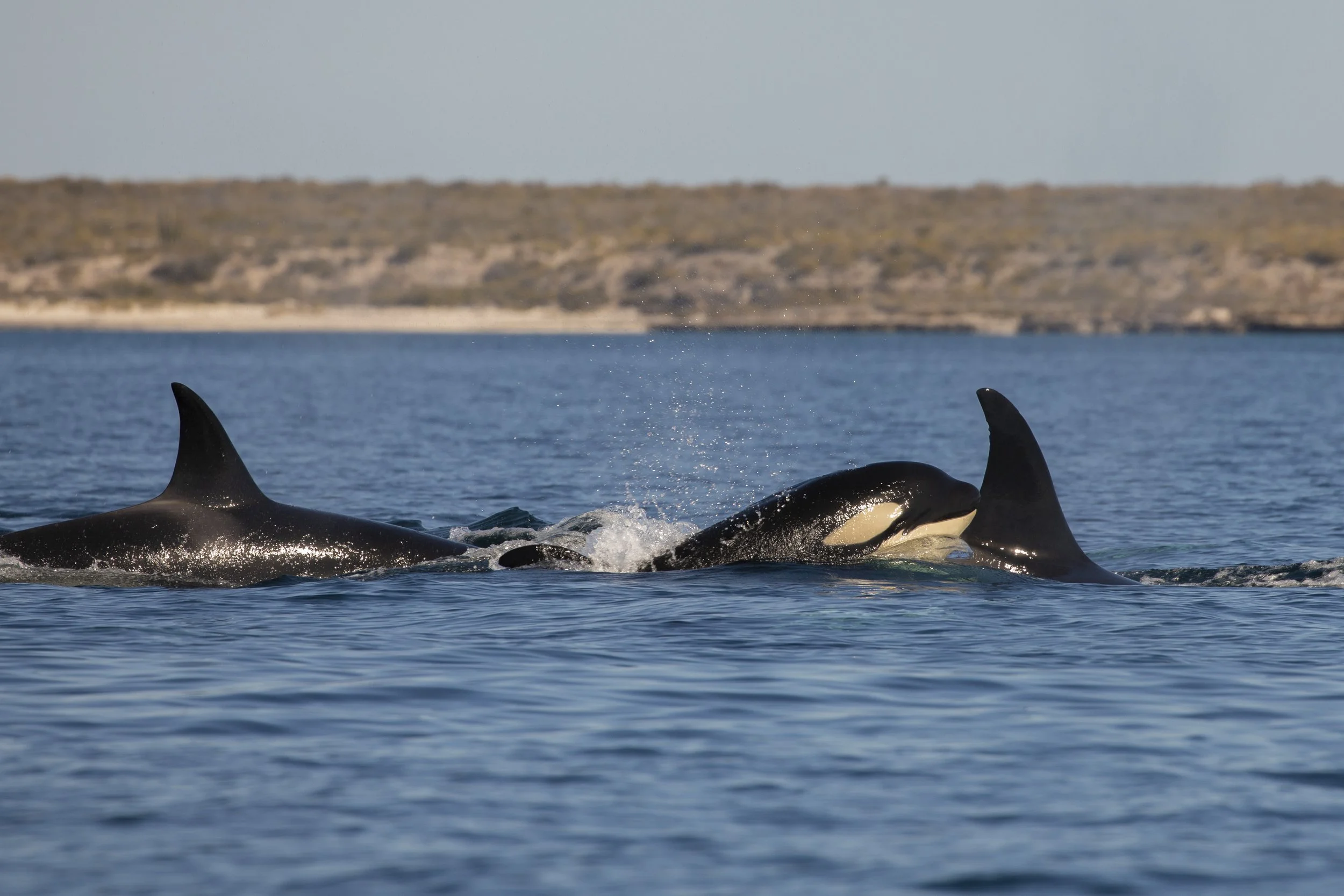
Orca mother and calf photographed near Carmen Island in Loreto Bay National Park by Baja Adventures expedition leader Regina Domingo.
6. Take a Long-Distance Marine Adventure in Loreto Bay National Park
The Gulf of California reveals a completely different side when conditions allow us to explore beyond the most commonly visited areas of Loreto Bay National Park.
Long-distance marine expeditions give us more time and range to explore different habitats, follow wildlife activity and respond to what is happening in the ecosystem that day.
Seabird activity, dolphins, mobula rays, prey concentrations and changing ocean conditions can all provide clues as we explore. During the warmer months, these expeditions may also offer opportunities to encounter species such as Bryde’s whales, pilot whales and sperm whales, along with other seasonal and pelagic wildlife.
These adventures are not designed around a checklist of guaranteed species. They are true exploration days, where the route can evolve according to conditions, wildlife activity and what nature reveals along the way.
For travelers passionate about wildlife, photography, marine ecology and natural history, a Long-Distance Marine Adventure can be one of the most immersive ways to experience Loreto Bay National Park and the Gulf of California.
EXPLORE OUR LONG DISTANCE MARINE ADVENTURE → here
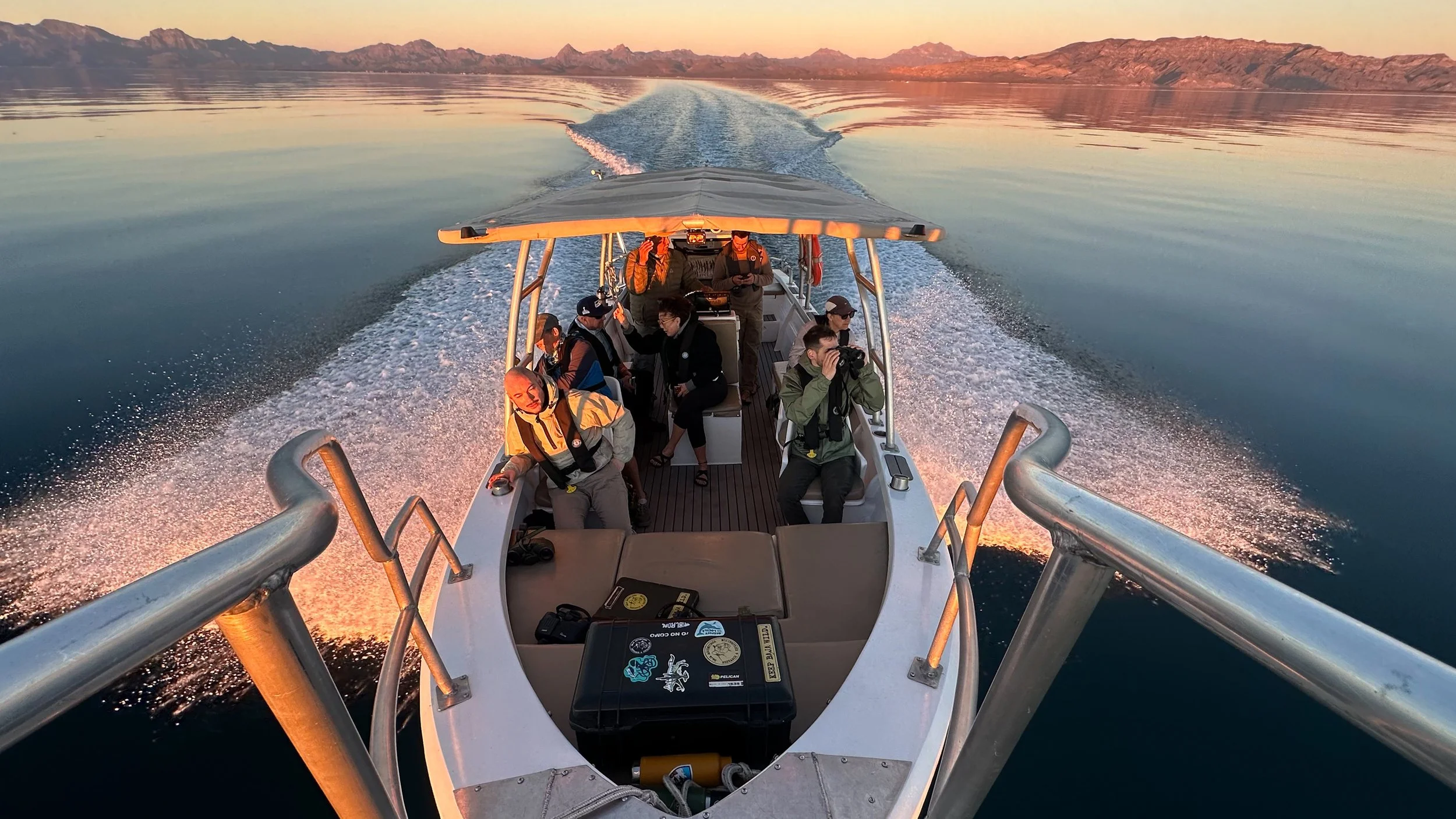
Exploration at first light aboard La Puma. Our long-distance marine adventures give us the time and range to follow wildlife activity and explore beyond the most commonly visited areas of Loreto Bay National Park.
7. Explore the Sierra de la Giganta
Turn west from the Gulf and Loreto changes completely.
The Sierra de la Giganta rises behind town, creating one of Baja California Sur’s most impressive desert mountain landscapes.
Canyons, oases, volcanic formations, ranches and historic routes reveal a landscape shaped by geology, water scarcity and generations of human adaptation.
Exploring the Sierra is one of the best things to do in Loreto precisely because it contrasts so dramatically with the marine park.
You can spend one day watching dolphins in the Gulf and the next walking through a desert canyon.
Canyons and Oases
Water determines life in the desert.
Dry rock walls can suddenly give way to palms, pools and vegetation where groundwater reaches the surface. These oases provide ecological refuges and have supported human communities for generations.
Ranching Culture
Mule and horseback adventures offer another way to experience remote areas of the Sierra while learning about the people who continue to live and work in these landscapes.
These experiences should not be about staging an artificial version of “old Baja.” They are an opportunity to understand and support the living cultural landscape of the Sierra de la Giganta.
EXPLORE OUR SIERRA ADVENTURES → here

Exploring the oases and canyons of the Sierra de la Giganta by mule, alongside the local ranching communities who know these landscapes across generations.
8. Visit San Javier Mission
The journey from Loreto into the mountains leads to Misión San Francisco Javier de Viggé-Biaundó, one of Baja California Sur’s most historically significant mission sites.
But San Javier is more interesting when understood as part of the surrounding landscape.
The road reveals geology, desert vegetation, ranches and oases that help explain why settlements developed where they did.
Instead of visiting only to photograph the mission, take time to understand the relationship between water, agriculture, history and life in the Sierra.
EXPLORE OUR SAN JAVIER AND SIERRA ADVENTURE → HERE
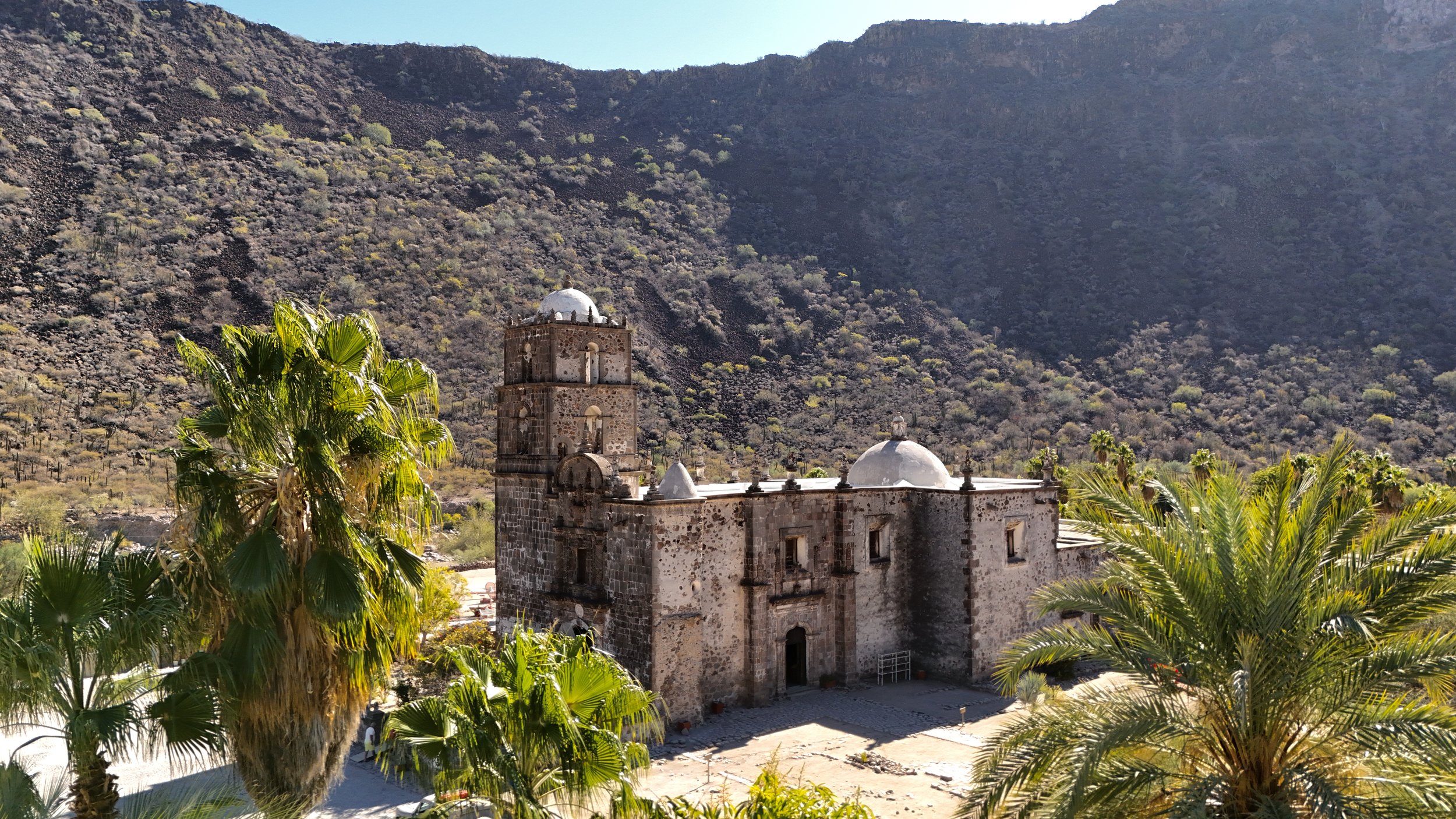
Misión San Francisco Javier de Viggé-Biaundó in the Sierra de la Giganta, where history, desert agriculture, oases and ranching culture remain deeply connected.
9. Walk Loreto’s Historic Center and Malecón
Not everything worth doing in Loreto requires an expedition.
Walk through the historic center, visit the mission and museum, explore the plaza, stop for coffee or ice cream and finish along the Malecón overlooking the Gulf of California.
Early morning and sunset are particularly beautiful.
Try local restaurants and regional seafood, explore small businesses and leave some unscheduled time simply to enjoy town.
Loreto is worth experiencing slowly.
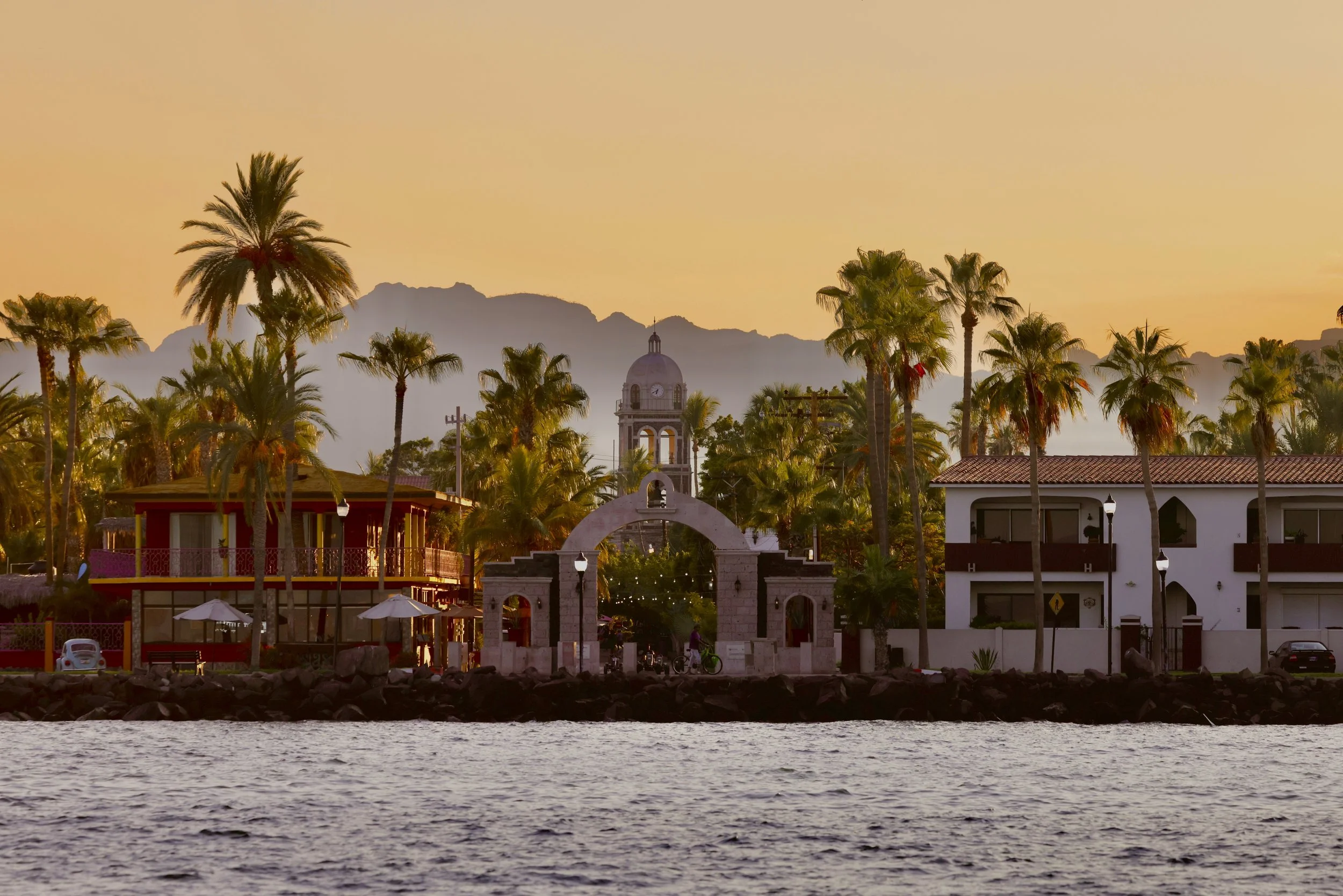
Loreto at sunset, between the Gulf of California and the Sierra de la Giganta. Leave time to walk the historic center, visit the mission and simply experience town at a slower pace, by Regina Domingo
When Is the Best Time to Visit Loreto?
There isn’t one universally best month.
The best time to visit Loreto depends on what you want to experience.
January–April: Winter Whale Season
This is the principal period for blue whale watching in Loreto, along with opportunities to encounter humpback whales, fin whales, dolphins and other cetaceans.
Cooler temperatures also make this an excellent time for exploring the Sierra de la Giganta.
Best for: whales, wildlife photography and combined marine-and-land adventures.
May–July: Spring and Early Summer Biodiversity
This is one of our favorite periods for travelers interested in the ecosystem as a whole.
Depending on conditions, warmer months can bring mobula rays, Bryde’s whales, pilot whales, sperm whales, dolphins, orcas and other pelagic wildlife.
Best for: biodiversity, snorkeling, photography and long-distance marine exploration.
August–September: Warm-Water Adventures
Summer brings warmer water and different conditions across the Gulf.
Snorkeling and marine exploration can be excellent, while Sierra activities need to be carefully planned around heat, often using early-morning or later-day conditions.
Best for: warm-water snorkeling and marine adventures.
October–December: Autumn Biodiversity
Autumn is an underrated period in Loreto.
Warm water, snorkeling, island exploration, dolphins, marine wildlife and Sierra adventures create an excellent transition before winter whale season.
Best for: travelers looking for marine and land biodiversity without focusing on one target species.
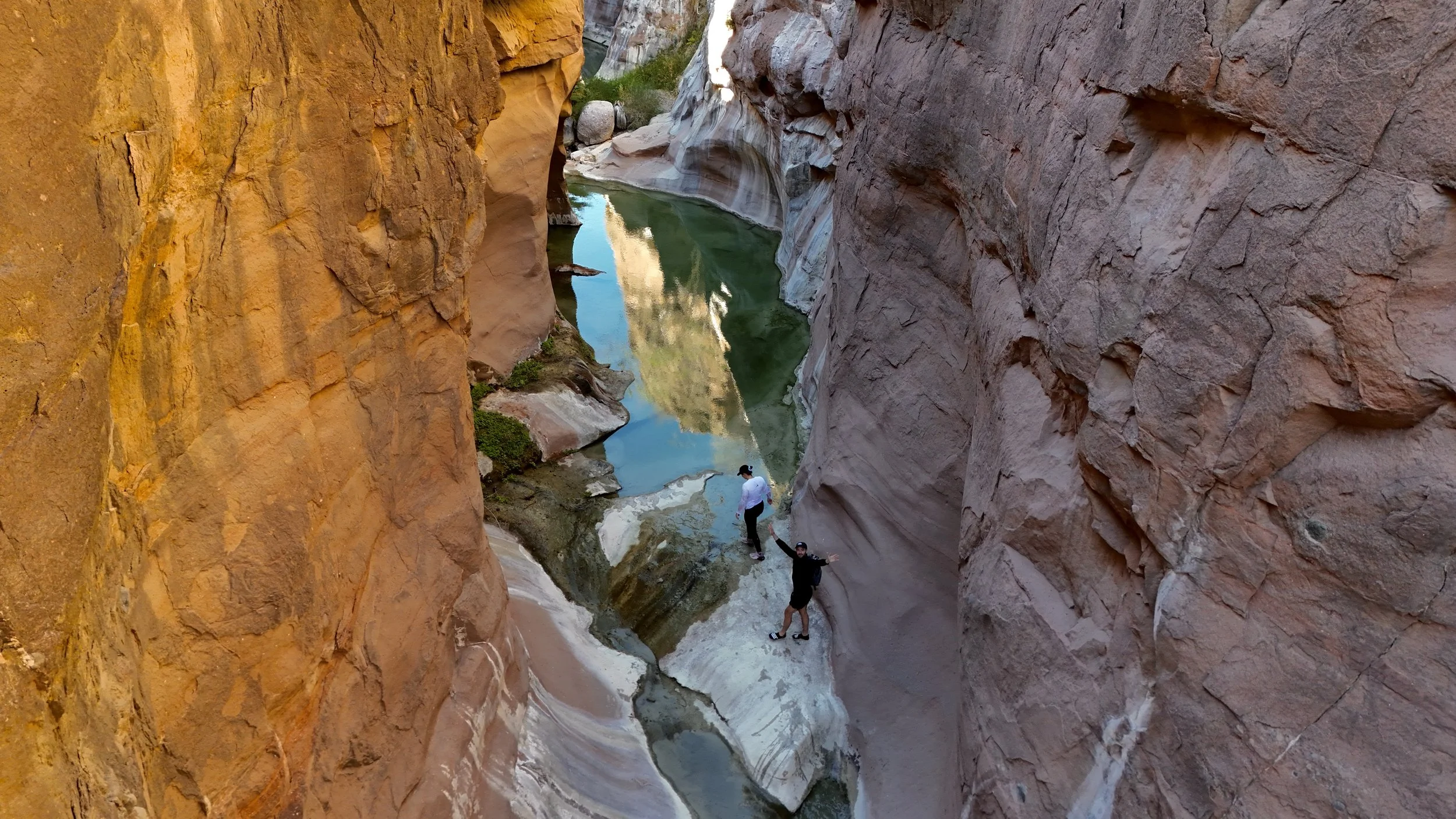
Travelers exploring a desert canyon in the Sierra de la Giganta near Loreto, Baja California Sur
Loreto Marine Mammals Wildlife Calendar
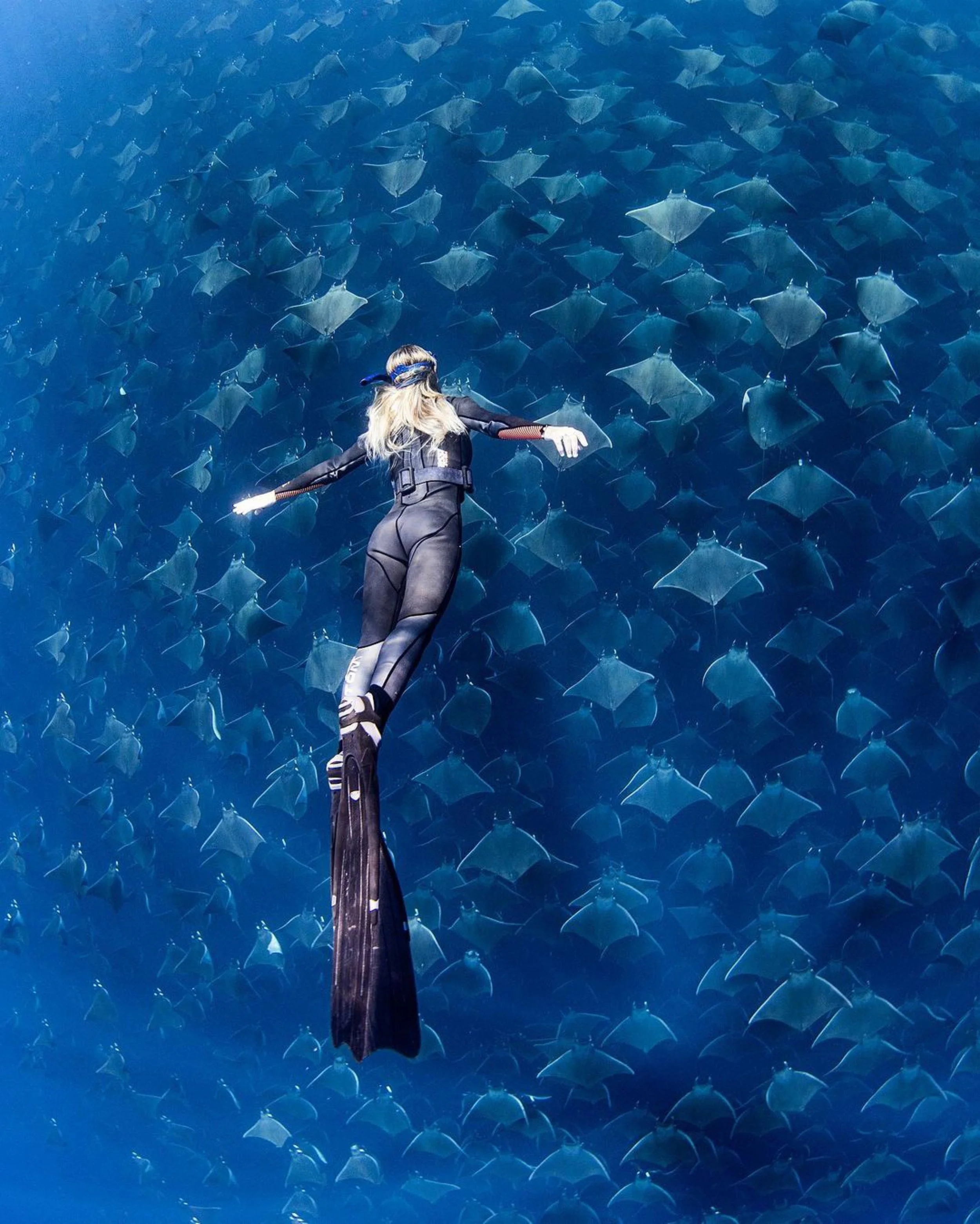
A freediver surrounded by mobula rays in the Gulf of California. Seasonal mobula aggregations are one of the extraordinary wildlife events that can occur during the warmer months around Loreto.
Wildlife in Loreto changes throughout the year as water temperature, productivity, prey availability and seasonal movements transform the Gulf of California. This calendar is a general guide based on the patterns we observe during our expeditions—not a guarantee of sightings.
BLUE WHALES
January–March · Peak activity typically during winter and early spring.HUMPBACK WHALES
January–April · Primarily encountered during the winter and spring whale season.FIN WHALES
Winter–Spring-Summer · Seasonal and variable, with encounters depending on ocean conditions and prey availability.BRYDE’S WHALES
Spring–Summer–Autumn · More frequently encountered during the warmer months and an important part of Loreto’s summer marine biodiversity.SPERM WHALES
Spring–Summer · Occasional visitors, particularly during long-distance exploration of deeper and more pelagic waters.PILOT WHALES
Spring–Summer · More frequently encountered during warmer months and long-distance marine expeditions.ORCAS
Year-round · Possible at any time of year but highly unpredictable. Different pods may move through the region in response to different prey and ecological conditions.DOLPHINS
Year-round · Common and bottlenose dolphins can be encountered throughout the year.MOBULA RAYS
Spring–Summer · Seasonal aggregations can occur during the warmer months, creating some of the Gulf of California’s most spectacular wildlife encounters.CALIFORNIA SEA LIONS
Year-round · Resident in Loreto Bay National Park, including two sea lion colonies within the park.Wildlife Is Wild
Seasonality reflects the ecological patterns we observe around Loreto, not guaranteed encounters. Wildlife distribution can change from year to year, and even from one day to the next as ocean conditions, productivity and prey availability change.
That unpredictability is part of what makes exploring Loreto Bay National Park so extraordinary.
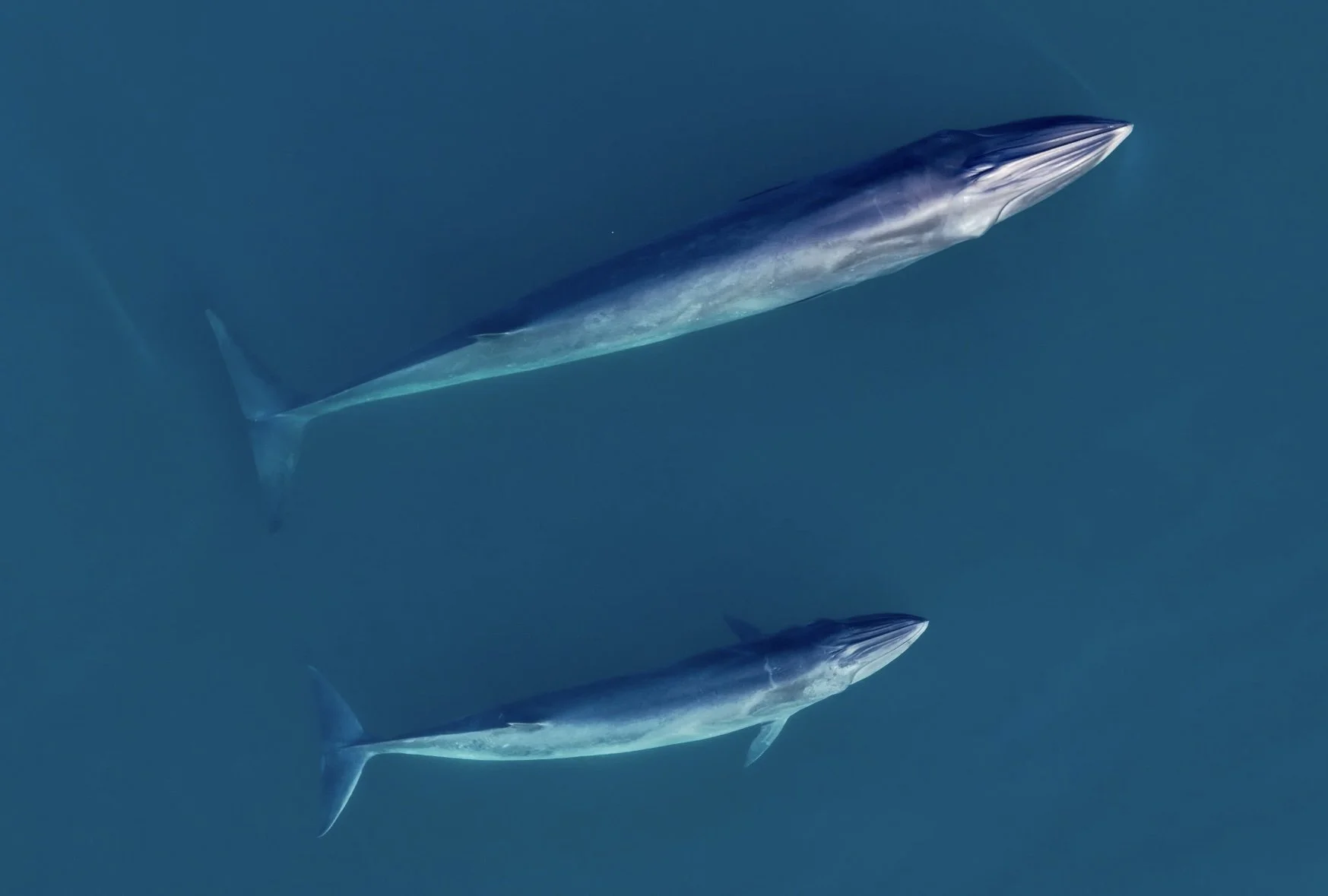
Bryde’s whales observed in the Gulf of California near Loreto. Marine mammal presence changes throughout the year as productivity, prey availability and ocean conditions shift.
How Many Days Do You Need in Loreto?
You can experience some of Loreto in two days, but three to five days gives you much more flexibility for weather, wildlife and exploring both marine and terrestrial environments.
2 Days in Loreto
Combine one marine adventure with one Sierra experience.
EXPLORE OUR → Loreto Essentials – 2 Days adventure
3 Days in Loreto
Combine marine wildlife, island exploration and the Sierra for a broader introduction to the destination.
EXPLORE OUR → Loreto 360 – 3 Days adventure
Travelers particularly interested in the islands can instead dedicate more time to marine exploration.
EXPLORE OUR → Loreto Island Hopping – 3 Days adventure
4–5 Days in Loreto
With four or five days, you can slow down, explore farther and retain flexibility for changing weather and wildlife conditions.
This is where Loreto becomes less about checking attractions off a list and more about understanding the destination.
EXPLORE OUR → Sierra and Sea – 4 Days adventure
EXPLORE OUR→ Loreto Wild Islands – 5 Days adventure
During winter:
EXPLORE OUR → Whales and oases – 4 Days adventure
EXPLORE OUR → Whales of Loreto – 5 Days adventure
How to Experience Loreto Responsibly
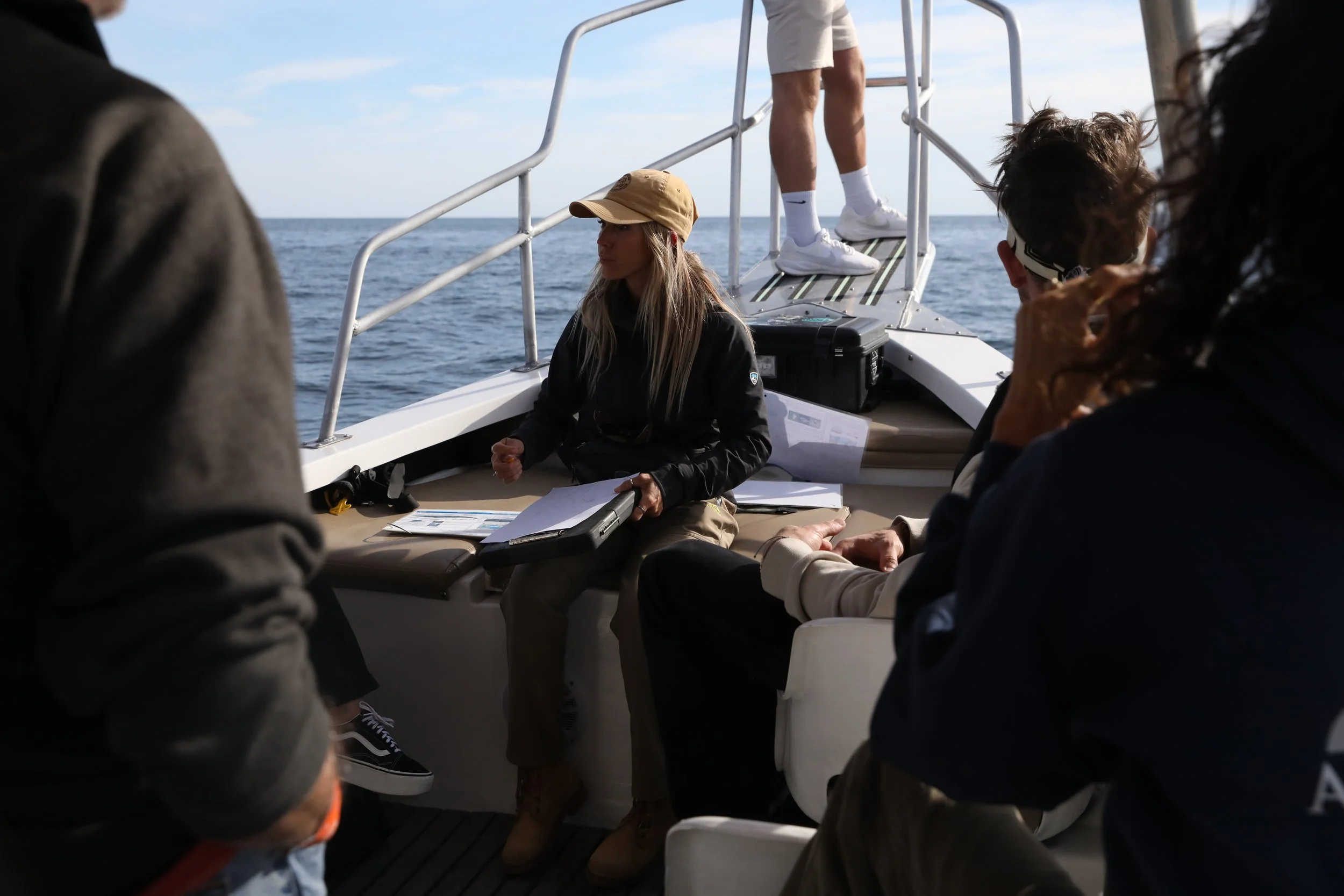
Expedition leader Regina Domingo sharing naturalist interpretation with guests aboard La Puma. Our approach combines small groups, wildlife observation, citizen science and environmental education.
Loreto’s growing popularity creates both opportunities and responsibilities.
Tourism can support communities, conservation and environmental education—but only if we protect the ecosystems that make people want to visit in the first place.
At Baja Adventures, our approach to regenerative tourism in Loreto is based on small groups, responsible wildlife observation, citizen science and meaningful connections with local landscapes and communities.
That means respecting protected-area regulations, minimizing wildlife disturbance, avoiding swimming with whales, respecting sensitive marine habitats, supporting local communities and ranches, and helping visitors understand what they are seeing.
Through Nakawe Project and our scientific collaborations, observations collected during expeditions can also contribute to our broader understanding of wildlife distribution and the changing ecology of the region.
For us, regenerative tourism asks a simple question:
Can visiting a place contribute to understanding and protecting it?
We believe it can.

La Puma, our purpose-equipped expedition vessel, exploring the waters of Loreto Bay National Park. Designed for small-group wildlife expeditions, she provides an observation bow, shade, comfortable seating and an onboard WC.
Explore Loreto, Not a Checklist
Explore Loreto With Us
The most important advice we can give travelers is simple:
Don’t try to control Loreto too much.
Choose the season that matches your interests. Give yourself enough time. Pay attention to weather, wildlife and conditions. Talk to people who are regularly in the field—and allow nature to change your plans.
Some of our most memorable expeditions have started with one idea and become something completely different because dolphins appeared offshore, seabirds revealed feeding activity, wildlife moved or weather changed our route.
That isn’t a failure of planning.
That is what exploring a wild ecosystem actually means.
At Baja Adventures, we are a small, owner-operated boutique expedition company based in Loreto. We created our adventures for travelers who want to go beyond conventional tours and experience Baja California through the eyes of people who explore these ecosystems year-round.
You’ll adventure with experienced naturalist guides and expedition leaders aboard our purpose-equipped expedition vessel, La Puma, or explore the Sierra aboard our premium 4x4 expedition vehicle, La Cachalote.
We operate only one expedition per day, because we believe meaningful exploration requires time, flexibility and attention, not a schedule of boats coming and going.
Whether we are following signs of wildlife across the Gulf of California, listening beneath the surface with our hydrophone, documenting cetaceans for citizen science or traveling deep into the Sierra de la Giganta, our goal is the same:
We want you to feel less like a tourist and more like an explorer.
Come discover Loreto with us. We’ll provide the knowledge, equipment and experience; nature will decide the adventure.
EXPLORE ALL OUR ADVENTURES → HERE
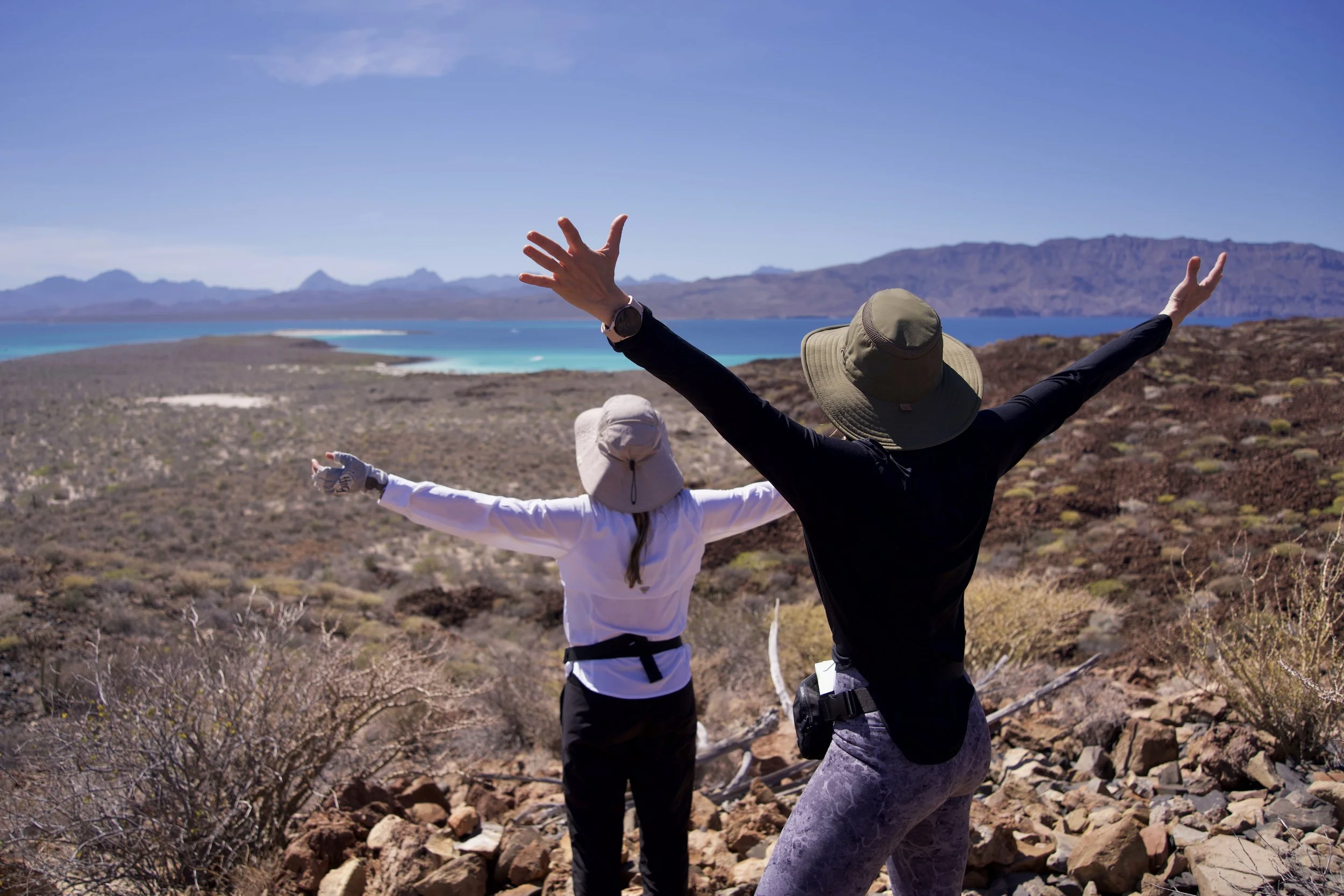
Exploring Coronados Island with Loreto Bay National Park stretching into the distance. Our goal is simple: to help you experience Loreto less like a tourist and more like an explorer.
Planning Your Adventure?
Find answers about weather, wildlife, departure times, what to bring, private and collective adventures, safety and more in our complete adventure guide.
EXPLORE OUR ADVENTURE FAQs → here